wayground logo

Free Printable Worksheets

Font size

S
M
L
XL
Worksheets

Semester Exam

Total questions: 88

Worksheet time: 48mins

Name
Class
Date
1.
Which of the following do geographers use to compare a variety of spatial data by creating digitized representations of the environment by combining layers of spatial data, and creating maps in which patterns and processes are superimposed?
a)
GPS
b)
GIS
c)
Scale
d)
Mental Map
2.
Which of the following uses a coordinate system to precisely plot where something is?
a)
Relative Location
b)
Absolute Location
c)
Generalized Maps 
d)
GIS
3.
 Representation of a real world phenomenon at a certain level of reduction or generalization (ex. local, regional, global)
a)
Mental Maps
b)
Scale
c)
GPS
d)
Regions
4.
The French-speaking region of Europe is what type of region?
a)
Formal
b)
Functional
c)
Perceptual
d)
Rescale
5.
Which type of region is defined by a particular set of activities or interactions that occur within it?
a)
Formal
b)
Functional
c)
Perception
d)
Rescale
6.
Which of the following is a perceptual region?
a)
South China Karst Region
b)
City of Denver
c)
Southern United States
d)
French-speaking region in Europe
7.
What is expansion diffusion?
a)
When an innovation or idea develops in a hearth and remains strong there while also spreading outward.
b)
a pattern in which the main channel of diffusion is some segment of those who are susceptible to what is being diffused.
c)
The distance controlled spreading of an idea, innovation, or some other item through a local population by contact from person to person-- analogous to the communication of a contagious illness.
d)
A form of diffusion in which a cultural adaptation is created as a result of the introduction of a cultural trait from another place.
8.
What is hierarchical diffusion?
a)
a pattern in which the main channel of diffusion is some segment of those who are susceptible to what is being diffused.
b)
When an innovation or idea develops in a hearth and remains strong there while also spreading outward.
c)
The distance controlled spreading of an idea, innovation, or some other item through a local population by contact from person to person-- analogous to the communication of a contagious illness.
d)
A form of diffusion in which a cultural adaptation is created as a result of the introduction of a cultural trait from another place.
9.
What is contagious diffusion?
a)
The distance controlled spreading of an idea, innovation, or some other item through a local population by contact from person to person-- analogous to the communication of a contagious illness.
b)
When an innovation or idea develops in a hearth and remains strong there while also spreading outward.
c)
a pattern in which the main channel of diffusion is some segment of those who are susceptible to what is being diffused.
d)
A form of diffusion in which a cultural adaptation is created as a result of the introduction of a cultural trait from another place.
10.
TV stations are __ regions
a)
formal 
b)
functional
c)
perceptual
d)
vernacular
11.
Oxford, Ohio, is located five miles east of the Indiana state line and thirty-five miles northwest of Cincinnati.  This is an example of which of the four ways of indication location?
a)
absolute 
b)
site
c)
situation
d)
longitude
12.
A systematic transformation of locations on the surface of a round 3-D Earth on a flat piece of paper.
a)
Map projection
b)
Scale
c)
Remote Sensing
d)
Generalized map
13.
A great spatial device for sea navigation that accurately shows shape and direction, but distorts distance and sizes of places especially near the poles.
a)
Peter's Projection
b)
Mercator Projection
c)
Robinson Projection
d)
Cassini Projection
14.
A compromise projection that attempts to minimize several typical projection errors such as shape, size, direction, or distance.  Used by National Geographic until 1998
a)
Robinson
b)
Fuller
c)
Peters
d)
Mercator
15.
Belief that they physical geography and climate have the ultimate determining factor over the success or failure of humans in regions.
a)
Spatial interaction
b)
Sense of place
c)
Environmental determinism
d)
Possibilism
16.
A thematic map that uses tones or colors to represent spatial data as average values per political unit area.
a)
Proportional symbol
b)
Choropleth
c)
Isoline
d)
Topographic
17.
What is the following an example of?
-In Canada, 520 people are supported by a unit of arable land. 
a)
Physiological Density
b)
Physiological Concentration
c)
Physical Density
d)
Agricultural Density
18.
What are the four population clusters within which two-thirds of the world are clustered?
a)
South Asia, West Asia, North America, Sub-Saharan Africa
b)
East Asia, Southeast Asia, South America, Africa
c)
South America, Europe, East Asia, South Asia 
d)
Europe, Southeast Asia, South Asia, East Asia
19.
What is the ecumene?
a)
Name for a place on Earth's surface
b)
Portion of Earth that is permanently occupied
20.
What is step migration?
a)
Occurs when an individual walks on a flight of stairs during the migration process
b)
A series of shorter, less extreme migrations from a person's place of origin to final destination
c)
When a group of people migrate through rice terracing steps to get to their destination
d)
Migration of animals from one destination to another
21.

How is the NIR calculated?

a)

Crude Death - Crude Birth

b)

Crude Birth + Crude Death

c)

Crude Birth - Crude Death

d)

Crude Death + Crude Birth

22.
Every country has moved out of Stage 1 of the Demographic Transition Model.
a)
True
b)
False
23.
In what way was
Malthus' Theory of Overpopulation incorrect?
a)
Population grew faster than he predicted
b)
Food supply grew faster than he predicted
24.
The money migrants may send to their family or community members from the new country they are in is called: 
a)
a visa tax
b)
a form of global compensation
c)
reimbursement for travel
d)
a remittance
25.
The two most populous countries in the world are:
a)
United States & Cambodia
b)
Burma & Indonesia
c)
South Korea & Ghana
d)
China & India
26.

Which theorist claimed that the world's rate of population increase was higher than the development of food supplies?

a)

Zelinsky

b)

Malthus

c)

Ravenstein

d)

Lee

27.

A rectangle-shaped population pyramid indicates a country that is

a)

growing slowly or not at all

b)

growing rapidly

c)

experiencing high immigration rates

d)

composed mainly of elderly

28.

The shape of a country's population pyramid is determined primarily by its

a)

crude birth rate

b)

sex ratio

c)

dependency rate

d)

demographic ratio

29.

Stages 1 and 4 of the Demographic Transition Model are similar in that

a)

both have low life expectancies

b)

neither are presently observed

c)

both have low growth rates

d)

both have high dependency ratios

30.

Which of the following profiles characterizes the population group that is the most likely to migrate?

a)

married, twenty-five years old

b)

single, fifty years old

c)

married, sixty-five years old

d)

single, twenty-five years old

31.

Latinos and Hispanics are clustered in what areas of the United States?

a)

Northwest

b)

West, Southwest

c)

Southwest, Southeast

d)

Mid-Atlantic Region

32.
What is the average number of births women bear in their lifetimes known as?
a)
total increase rate
b)
total fertility rate
c)
crude fertility rate
d)
crude birth rate
33.
In what stage of the demographic transition are most European countries?
a)
1
1
b)
2
c)
3
d)
4
34.
Which of the following is a pull factor?
a)
Insufficient Food Supply
b)
High Crime Rate in Native Country
c)
Higher Paying jobs in New Country
d)
High Crime Rate in New Country
35.
Which of the following are part of EG Ravenstein’s (The Beard) Laws of Migration?
a)
most migrants are male
b)
most migrants move short distances
c)
most long distance migrants move to large urban areas
d)
all of the above
36.
Which of the following is a PULL factor?
a)
A hurricane
b)
failed harvest
c)
increase in taxes
d)
opening a new factory
37.
The main PUSH factor for a refugee is 
a)
economic
b)
environmental
c)
natural disaster
d)
political
38.
Arithmetic density is 
a)
 the number of people per square mile of inhabitable land.
b)
 the number of people per square mile of arable land. 
c)
 the number of farmers per square mile of arable land. 
d)
the number of people per unit of measurement. 
39.
People who quickly flee their country because of violence or fear are considered
a)
illegal immigrants
b)
draft dodgers
c)
refugees
d)
war criminals
40.
Highest population growth occurs during stage
a)
1
b)
2
c)
3
d)
4
41.
What describes people who are leaving the country where they live?
a)
international migration
b)
pull factor
c)
immigrating
d)
emigrating
42.
On average, since 1950, the world infant mortality rates have
a)
slightly decreased
b)
drastically decreased
c)
stayed the same
d)
incresed slightly
43.
a)
population if growing rapidly
b)
population is growing slowly
c)
population is decreasing (negative growth)
d)
population is staying the same (zero growth)
44.
a)
population if growing rapidly
b)
population is growing slowly
c)
population is decreasing (negative growth)
d)
population is staying the same (zero growth)
45.
a)
population if growing rapidly
b)
population is growing slowly
c)
population is decreasing (negative growth)
d)
population is staying the same (zero growth)
46.
Small, incorporates a homogeneous population, is typically rural, and has cohesive cultural traits is called
a)
Pop Culture
b)
Folk Culture
c)
Material Culture
d)
Non Material Culture
47.
Large, incorporates heterogeneous populations, is typically urban, and experiences quickly changing cultural traits is called
a)
Pop Culture
b)
Folk Culture
c)
Material Culture
d)
Non Material Culture
48.
Melting pot, take on aspects of a new culture
a)
assimilation
b)
acculturation
c)
distance decay
d)
commodification
49.
The visible imprint of human activity on the landscape; how people have changed and shaped the environment to the buildings, signs, fences, and statues people erect is called....
a)
Placelessness
b)
Cultural Landscape
c)
Commodification
d)
Cultural Appropriation
50.
An identity stems from the notion that people are closely bounded, even related, in a certain place over time, comes from a Greek word meaning people or nation is called...
a)
ethnicity
b)
gender
c)
race
d)
identity
51.
Variants of a standard language along regional or ethnic lines are called...
a)
dialects
b)
standard language
c)
dialect chains
d)
language family
52.
Indo European, Afro-Asiatic, Japanese and Korean, Dravidian are examples of 
a)
language families
b)
subfamilies
c)
Language branch
d)
Mother tongue
53.
Romance languages, Germanic languages, and Slavic languages are examples of...
a)
Language families
b)
sub languages
c)
Mother Tongue
d)
Language branch
54.
Lingua Franca is....
a)
a language used among speakers of different languages for the purposes of trade and commerce. 
b)
A language that is published, widely distributed, and purposely taught is most common in technologically advanced societie
c)
Variants of a standard language along regional or ethnic lines
d)
When people speak two or more languages are in contact and they combine parts of their language in a simplified structure and vocabulary
55.
Pidgin language is...
a)
When people speak two or more languages are in contact and they combine parts of their language in a simplified structure and vocabulary
b)
a language used among speakers of different languages for the purposes of trade and commerce. 
c)
Variants of a standard language along regional or ethnic lines
d)
A language that is published, widely distributed, and purposely taught is most common in technologically advanced 
56.
Monotheistic religions....
a)
worship a single deity or God
b)
Worship more than one deity, even thousands
c)
centered on the belief that inanimate objects, such as mountains, boulders, rivers, trees, possess spirits and should therefore be revered.
d)
A religion that is practiced by one particular culture group
57.
This religion is a local religion in Japan and is related to Buddhism, focuses on nature and ancestor worship
a)
Hinduism
b)
Shintoism
c)
Taoism
d)
Christianity
58.
This religion began with several nomadic Semitic tribes living in Southwest Asia about 4000 years ago and rely on the teachings of Abraham.
a)
Judaism
b)
Buddhism
c)
Christianity
d)
Confucianism
59.
This religion is the youngest of the major religions, it can be traced back to a single founder, the Qu'ran is its holy book, the hearth is Mecca, it is the second largest religion in the world
a)
Christianity
b)
Islam
c)
Hinduism
d)
Buddhism
60.
The diffusion of this religions started as expansion diffusion combined with relocation diffusion, after the fall of the Roman Empire it began as contagious diffusion
a)
Christianity
b)
Islam
c)
Hinduism
d)
Judaism
61.
What caused the distribution of English language speakers throughout the world?
a)
Native English Speakers
b)
British colonization
c)
Decision to make English the lingua franca
d)
U.S. World dominance
62.
This Romance Language would dominate the highlighted regions.
a)
English
b)
Spanish
c)
French
d)
Italian
63.
The Lingua Franca that dominates the use of the internet is...
a)
English
b)
Chinese
c)
Spanish
d)
Japanese
64.
What is culture?
a)
Set of beliefs/values/practices a group has in common
b)
People who share similar culture traits
c)
Activity/behavior in which people take part
d)
Area in which people share culture traits
65.
Which of the following is the belief that one’s own culture is the best or better than other cultures?
a)
Ethos
b)
Prejudice
c)
Ethnocentrism
d)
Stereotyping
66.
Which cultural component is generally NOT associated with folk culture? 
a)
music
b)
television 
c)
architecture 
d)
food 
67.
What is the largest language family?
a)
Sino-Tibetan
b)
Indo-European
c)
Balto-Slavic
d)
Altaic
68.
What is the number one 'thing' a country must have in order to be considered a state?
a)
Global connections
b)
Sovereignty
c)
Government funding
d)
Population of at least 500,000
69.
Which of the following groups of countries are ALL microstates?
a)
the Grenadines, Taiwan, Micronesia
b)
Sri Lanka, Puerto Rico, Cuba, Jamaica, Bosnia & Herzegovina
c)
Malta, the Seychelles, Bahrain, Barbuda, Singapore
d)
Madagascar, Australia, Canada, India
70.
A nation is a state whose territory corresponds to that occupied by a particular ethnicity.
a)
True
b)
False
71.
Which of the following is an example of a nation seeking its own territory? 
a)
Mexicans
b)
Palestinians
c)
English
d)
New Jersey
72.
What do the the three words, 'God, gold, and glory' refer to?
a)
The three motives European states had for colonizing
b)
The three motives European states had for existing
c)
The three motives European colonies had for revolution
d)
The three motives allies of Europe had to invade European land
73.
Fragmented states can help create which type of forces within a state? 
a)
Centripetal
b)
Centrifugal
c)
Backwash effects
d)
Irredentism
74.
Is the perforated state South Africa or Lesotho?
a)
Lesotho
b)
South Africa
75.
A boundary that is drawn after the development of a cultural landscape is a(n)...?
a)
antecedent boundary
b)
geometric boundary
c)
subsequent boundary
d)
relic boundary
76.
The Berlin Wall is an example of a ____________ boundary.
a)
religious
b)
antecedent
c)
relic
d)
geometric
77.
What is the best example of a nation state?
a)
Japan
b)
USA
c)
Russia
d)
China
78.
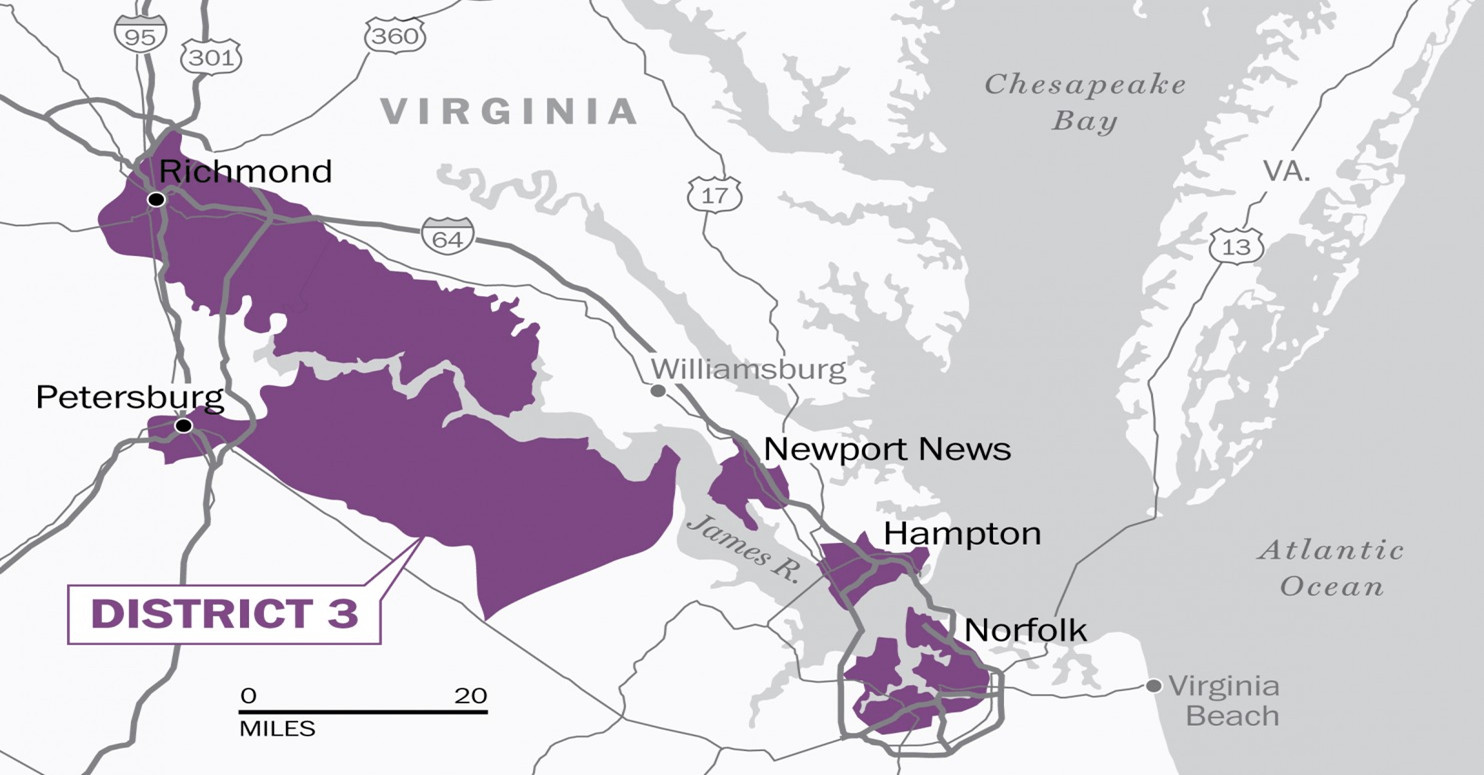
The map above illustrates which concept that was designed to give political advantage to a particular group?
a)
Devolution
b)
Political enclave
c)
Gerrymandering
d)
Cultural landscape
79.
Which of the following ethnic conflicts gave rise to the term “balkanization”?
a)
Soviet Union
b)
Sudan
c)
Serbia
d)
Yugoslavia
80.

Which of the following regions of Spain are currently pushing for autonomy?

a)

Catalonia

b)

Madrid

c)

Valencia

d)

Galicia

e)

Andalusia

81.

The following is the definition of which type of boundary: A boundary drawn by outside powers

a)

Superimposed

b)

Relic

c)

Antecedent

d)

Militarized

e)

Open

82.

The following is the definition of which type of boundary: A boundary drawn before there was a large population present.

a)

Antecedent

b)

Subsequent

c)

Relic

d)

Superimposed

e)

Open

83.

Which best describes the Federal form of Government?

a)

A string central government with no local participitation

b)

Autonomous regional government within a State

c)

Governments that support devolutionary practices

d)

Laws that promote a single language, custom or religion to support a unified culture

e)

Substates, Regions or Localities have local control and are unified for the common goals of the State

84.

The African Union is an example of what type of organization?

a)

Global

b)

Supranational

c)

National

d)

State

e)

Local

85.

The following is the definition for what word: a region that suffers instability because it is located between two very different regions

a)

Shatterbelt

b)

Democracy

c)

Anaocracy

d)

Autocracy

e)

Colony

86.

In the United States congressional districts are redrawn every 10 years after the United States conducts which of the following

a)

Census

b)

Gerrymandering

c)

Elections

d)

Amending the Constitution

e)

Devolutionary Elections

87.

forces that break apart states or keep one form forming: is the definition of which word

a)

Balance of Power Forces

b)

Evolutionary Forces

c)

Democratic Forces

d)

Centripetal Forces

e)

Sovereign Forces

88.

the use of economic, political, cultural, or other pressures to control or influence other countries, especially former dependencies; is the definition for which word

a)

Neo-Colonialism

b)

Colonialism

c)

Imperialism

d)

Democratization

e)

Judification