
 Worksheets
Semester Exam 1 Review
Total questions: 35
Worksheet time: 21mins
Plants found in the New World included the following:
tomatoes, corn, squash
cocoa beans, lima beans, sweet peas
nuts and wild berries
magnolia trees, cypress trees, pine trees

When did Columbus make his first voyage to the New World?
1492 AD
1492 BC
1606 AD
1606 BC

Which of the following is a negative impact that the Columbian Exchange had on the native peoples of the Americas?
The spread of disease killed millions of people.
Agriculture spread to more regions.
The use of the horse caused native peoples to leave.
Native peoples were no longer allowed to use their languages.
Europeans established global trade networks that brought maize to Europe, chili peppers to India, and wheat to the Americas.
Adapt means...
to rely on
to change to fit a new situation
to change or make different
Modify means...
to rely on
to change to fit a new situation
to change or make different
Most sources of energy today are
fossil fuels
wind powered
from the developed world
reneweable

Which is NOT a trait of culture?
Language
Music
Beliefs
Healthcare
Spreading cultural traits from one group to another is?
Multiculturism
Cultural Diffusion
Culture
Pluralism
The gathering of different cultures in a common place is?
Cultural diffusion
Culture
Multiculturism
Multidiffusion
Individuals from Spain are dominantly what?
Jewish
Muslim
Buddhist
Catholic

What group was conquered by Cortes
Maya
Inca
Anasazi
Aztecs
Where did Johannes Gutenberg live most of his childhood?
Mainz, Germany
Strasbourg, Georgia
Strasbourg, France
Columbia
What did Johannes Gutenberg invent?
Libraries
Paper
The Printing Press
Whiteboards
The specific location on the Earth is an example of what type of location?
Relative
Cardinal
Absolute
75 Degrees South, 90 Degrees W is an example of which type of location?
Absolute
Relative
Northwest of South America is an example of what type of location?
Absolute
Relative
Two plates come together or collide at what boundary?
Convergent
Divergent
Transform
What is a cash crop?
crops full of money
a crop people use to make dye
a crop people grow to sell
a crop people grow to eat

This map is an example of a . . .
Population Map
Thematic Map
Climate Map
Road Map
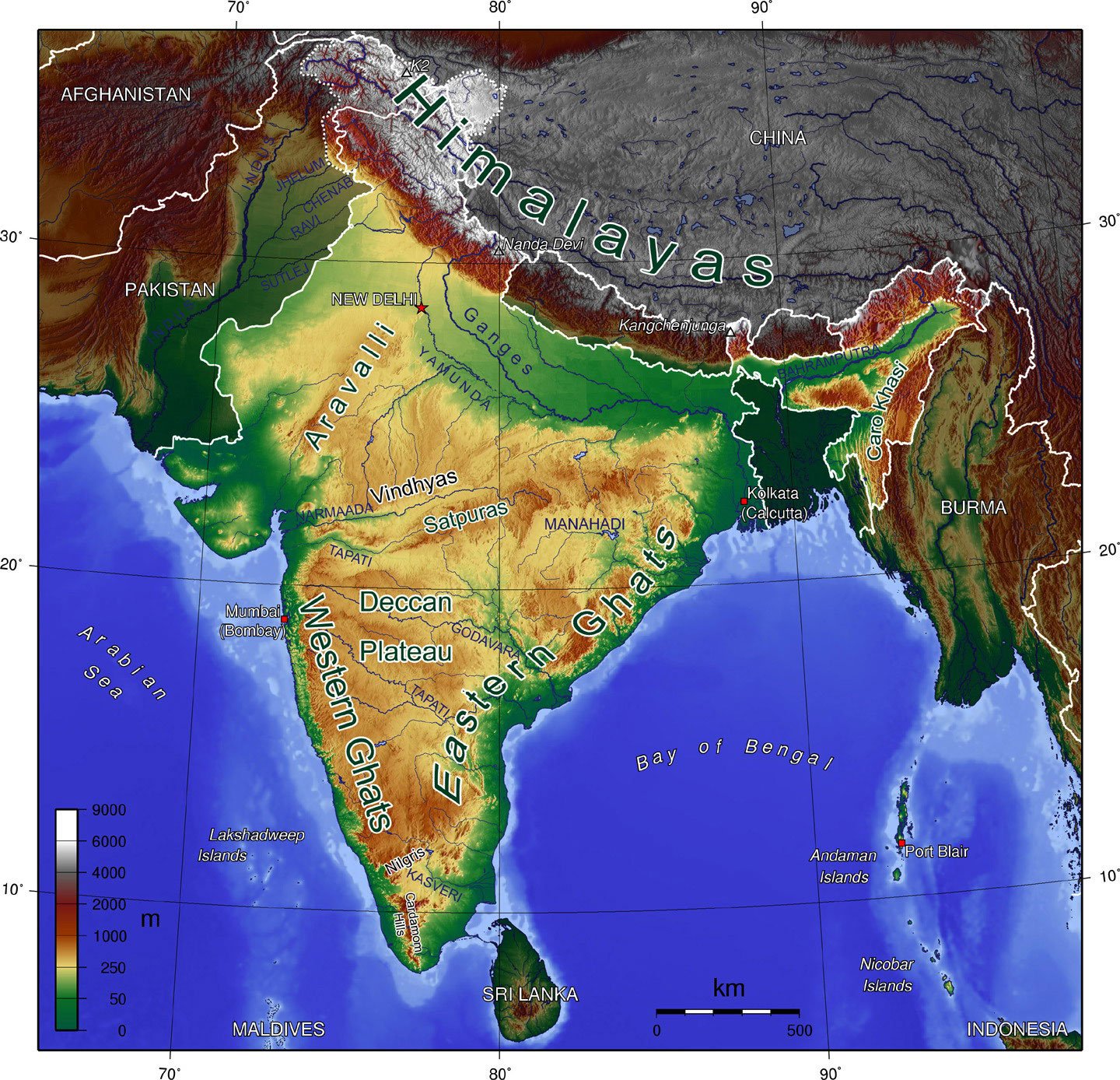
This map is an example of a . . .
Political Map
Physical Map
Population Map
Road Map
A map showing boundaries of countries is what type of map?
Political
Physical
Population
Climate

What does the red line in the picture show?
states
Equator
continents
countries

What is the name of the map feature that is circled in blue?
scale
key
ocean
title
What is the purpose of a map scale?
to show the distance between places
to show where the next lake is
to tell you what the symbols on a map mean
to help you find south



