wayground logo

Free Printable Worksheets

NEW

Font size

S
M
L
XL
Worksheets

8th Grade Science Semester Exam

Total questions: 50

Worksheet time: 39mins

Name
Class
Date
1.
In convection, COOL air
a)
Rises
b)
Sinks
2.
In convection, WARM air
a)
Rises
b)
Sinks
3.
Warm air is __________ dense than cold air and rises creating convection currents.
a)
more
b)
less
4.
a)

cold front

b)

warm front

c)

high pressure

d)

low pressure

5.
a)

cold front

b)

warm front

c)

high pressure

d)

low pressure

6.
a)

cold front

b)

warm front

c)

high pressure

d)

low pressure

7.
a)

cold front

b)

warm front

c)

high pressure

d)

low pressure

8.

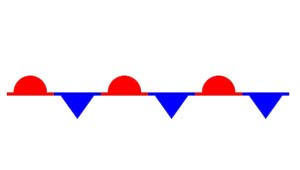
LABEL THE FOLLOWING FRONTS AND/OR WEATHER MAP SYMBOLS.

a)

warm front

b)

cold front

c)

stationary front

d)

occluded front

9.

The movement of the tectonic plates is caused by

a)

the rotation of the Earth.

b)

convection currents in the Asthenosphere

c)

the gravity of the iron-nickel core.

d)

the Moho discontinuity.

10.
Which explains that the continents were once joined together and over time they broke up and then drifted apart?
a)
Plate Tectonic Theory
b)
Continental Drift 
11.
Which of these explains that Earth's outer layer is broken into large slowly moving pieces? 
a)
Plate Tectonic Theory
b)
Continental Drift 
12.
Mid Ocean Ridge Formation  is created at this type of  boundary.
a)
Divergent 
b)
Convergent
c)
Transform 
13.
What type of boundary occurs when two plates slide past each other?
a)
divergent
b)
transform
c)
lateral
d)
convergent
14.
Outer most layer of the earth.
a)
Core
b)
Mantle 
c)
Crust
15.

Which layer of the Earth is the THICKEST?

a)

crust

b)

mantle

c)

outer core

d)

inner core

16.
Name the boundary
a)
convergent boundary
b)
divergent boundary
c)
transform boundary
d)
sergent boundary
17.
Name the boundary
a)
convergent boundary
b)
divergent boundary
c)
transform boundary
d)
sergent boundary
18.
Name the boundary
a)
convergent boundary
b)
divergent boundary
c)
transform boundary
d)
sergent boundary
19.
This is the process of dropping sediment in a new location.
a)
Weathering
b)
Erosion
c)
Deposition
20.
This is the process of breaking rock into smaller pieces.
a)
Weathering
b)
Erosion
c)
Deposition
21.
This is the process of moving sediment from one place to another.
a)
Weathering
b)
Erosion
c)
Deposition
22.
If contour lines are close together, then the slope is
a)
gentle
b)
steep
c)
flat
d)
going up and down
23.
What are the curved lines on a topographic map called?
a)
contour lines
b)
contour intervals
c)
slope
d)
elevation
24.
What are the darker lines called?
a)
roads
b)
index contour
c)
contour interval
d)
waves
25.
What do contour lines that are farther apart represent?
a)
waterfall
b)
steep area
c)
gentle slope
d)
river
26.
Rotation
a)
Causes day and night
b)
Causes seasons
27.
Revolution
a)
Causes seasons
b)
Causes day and night
28.
In this simple diagram, the motion of both the Earth and Moon can be described as -
a)
Rotation
b)
Revolution
29.
In this diagram, the motion of the EARTH can best be described as -
a)
Rotation
b)
Revolution
30.
What are the reasons for the season?
a)
Earth's tilt & rotation
b)
Earth's tilt & revolution
c)
Earth's rotation & rovolution
d)
Earth's tilt & resolution
31.
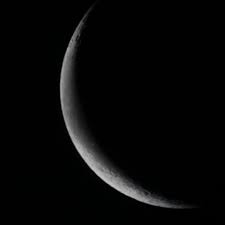
Name the moon phase
a)
waning crescent
b)
waxing crescent
c)
waning gibbous
d)
waxing gibbous
32.
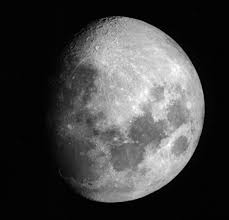
Name the moon phase
a)
waning crescent
b)
waxing crescent
c)
waning gibbous
d)
waxing gibbous
33.
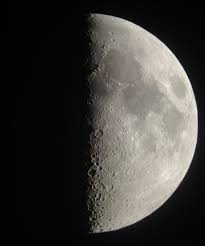
Name the moon phase
a)
First Quarter
b)
Last Quarter
c)
New Moon
d)
Full Moon
34.
Name the moon phase
a)
waning crescent
b)
waxing crescent
c)
waning gibbous
d)
waxing gibbous
35.
Which electromagnetic waves have the highest frequencies and the shortest wavelengths?
a)
microwaves
b)
visible light
c)
gamma rays
36.

Longest Wavelengths and Lowest Frequencies?

a)

Visible Light

b)

Microwaves

c)

X-Rays

d)

Radio Waves

37.
Which section of the spectrum is the ONLY one we can see?
a)
X-rays
b)
Visible Light
c)
Gamma Rays
d)
Ultraviolet Rays
38.
High frequency waves have _________ wavelengths.
a)
varying
b)
long
c)
the same
d)
short
39.
The distance between two crests or two troughs of a wave is called:
a)
frequency
b)
amplitud
c)
wavelength
d)
hertz
40.
The height of the wave from the rest position is known as the _____________.
a)
amplitude
b)
crest
c)
trough
d)
wavelength
41.
Which category is our Sun located in?
a)
White Dwarfs
b)
Supergiants
c)
Main Sequence
d)
Giants
42.
In the diagram given, what happens as we move to the left?
a)
Stars Get Larger
b)
Stars get Colder
c)
Stars get hotter
43.
Which spectral class does our star, the sun, belong to?
a)
M
b)
K
c)
G
d)
F
44.
A relationship between two organisms in which one organism benefits and the other is unharmed...
a)
Mutualism 
b)
Competition
c)
Parasitsm 
d)
Commensalism 
45.
A relationship between two organisms in which both organisms benefit. 
a)
Mutualism 
b)
Competition
c)
Parasitsm 
d)
Commensalism 
46.

A living, or once-living, organism in an ecosystem is a/an ---

a)

abiotic factor.

b)

biotic factor.

47.

A nonliving element in an ecosystem is a/an ---

a)

biotic factor.

b)

abiotic factor.

48.

Something that regulates the size of a population is called...

a)

a limiting measure

b)

a limiting factor

c)

carrying capacity

d)

biodiversity

49.

A relationship between organisms where one organism benefits and the other is harmed?

a)

Mutualism

b)

Commensalism

c)

Parasitism

d)

Host

50.
The largest number of individuals that an area can support is called its _______.
a)
limiting factor
b)
abiotic factor
c)
resource availability
d)
carrying capacity