
 Worksheets
Homeostasis- Transport
Total questions: 30
Worksheet time: 45mins
What mechanisms does a cell use to move these small potassium molecules into the cell against the concentration gradient?

The cell in diagram 2 has been placed in a solution that contains __________ the interior of the cell.
Cholesterol is an important component of the cell membrane because __________ .
it makes the membrane more fluid and adds to its flexibility
it aids in diffusion
it aids in cell recognition
it transports large, polar molecules
What will be the effect of placing a plant cell in a hypotonic solution?
The plant will wilt.
The cell will shrink in size.
The cell will remain unaffected.
The cell will expand and become turgid.

Which way will the water molecules move during osmosis? The dashed line is the cell membrane. The mickey mouse heads represent a water molecule.
Out of the cell, so the cell shrinks.
Out of the cell, so the cell swells.
Into the cell, so the cell shrinks.
Into the cell, so the cell swells.
During diffusion ______.
substances moves from high to low concentration
water moves when energy is used
large or oddly shaped molecules move across a cell membrane
water moves from high to low concentration
Something is ___________ ____________ when some molecules can cross the membrane while others cannot.
selectively permeable
really small
anaerobic respiration
actively transported
In which case would a cell most likely shrink? I encourage you to draw a picture of cell in a solution that is losing water.
when placed in a solution containing a high solute concentration
when placed in a isotonic solution
when placed in a solution containing a low pH
when placed in a solution containing distilled water
Which type of transport requires energy from ATP?
osmosis
facilitated diffusion
active transport
diffusion

An investigation was set up to study the movement of water through a membrane. The results are shown in the diagram below.
Based on these results, which statement correctly predicts what will happen to red blood cells when they are placed in a beaker containing a water solution in which the salt concentration is much higher than the salt concentration in the red blood cells?
The red blood cells will absorb water and increase in size.
The red blood cells will lose water and decrease in size.
The red blood cells will first absorb water, then lose water and maintain their normal size.
The red blood cells will first lose water, then absorb water, and finally double in size.

A biologist observed a plant cell in a drop of water as shown in diagram A. The biologist added a 10% salt solution to the slide and observed the cell as shown in diagram B.
The change in appearance of the cell resulted from
more salt moving out of the cell than into the cell
more salt moving into the cell than out of the cell
more water moving into the cell than out of the cell
more water moving out of the cell than into the cell
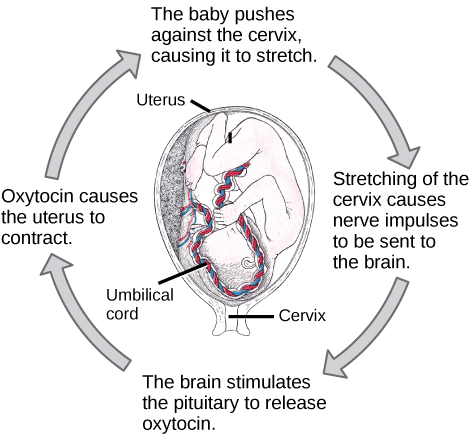
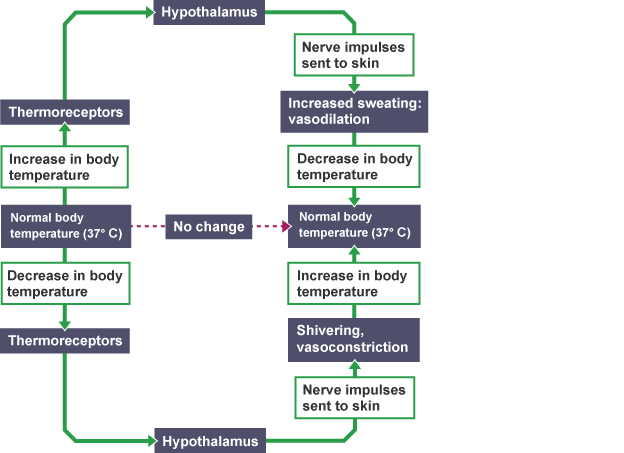
When you get cut, your skin cells release hormones that signal platelets to come and stop the bleeding. Platelets then release more hormones that signal even more platelets to help stop bleeding. The hormone signals continue until the cut is closed. This is an example of what type of feedback?
Positive Feedback Response
Negative Feedback Loop
If the calcium in your blood decreases below homeostasis levels, a gland in the brain will sense the decrease and send a chemical message to your bones. Your bones will release calcium into the blood, bringing blood calcium levels back up. This is an example of what type of feedback?
Positive Feedback Response
Negative Feedback Loop
As you get dehydrated, your blood becomes thicker and harder to pump. Your kidneys will respond by stopping urine production, sending the water from urine into your bloodstream to thin your blood back to normal level. This is an example of what type of feedback?
Positive Feedback Response
Negative Feedback Loop

Detects change and sends a message to the control center
receptor
control center
effector
regulation
Receives the message from the receptor and coordinates a response
control center
effector
glucagon
homeostasis
The organ/cells that carry out the response
control center
receptor
thermoregulation
effector
_____________ is released by your pancreas when blood glucose levels get too high.
glucose
glucagon
oxygen
insulin

