wayground logo

Free Printable Worksheets

Font size

S
M
L
XL
Worksheets

Chapter 7 Review

Total questions: 77

Worksheet time: 3hrs 33mins

Name
Class
Date
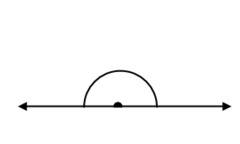
1.
What type of angle is shown?
a)
acute
b)
obtuse
c)
right 
d)
straight
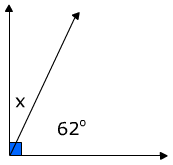
2.
What type of angle is shown?
a)
acute
b)
obtuse
c)
right
d)
straight
3.
What type of angle is shown?
a)
acute
b)
obtuse
c)
right
d)
straight
4.
What type of angle is shown?
a)
acute
b)
obtuse
c)
right
d)
straight
5.
The angle relationship shown is -
a)
complementary angles
b)
supplementary angles
c)
vertical angles
d)
angle bisector
6.
∠1 and ∠3 can best be described as -
a)
complementary angles
b)
supplementary angles
c)
vertical angles
d)
adjacent angles
7.
The angle relationship shown is - 
a)
complementary angles
b)
supplementary angles
c)
vertical angles
d)
adjacent angles
8.
Find the value of x.
a)
18°
b)
28°
c)
38°
d)
118°
9.
Angle 1 = 27o
Find the measure of angle 4
a)
27o
b)
153o
c)
63o
d)
90o
10.
Which pair of angles are alternate exterior angles?
a)
Angle 7 and Angle 4
b)
Angle 2 and Angle 6
c)
Angle 8 and Angle 1
d)
Angle 2 and Angle 8
11.
Which pair of angles are alternate interior angles?
a)
Angle 7 and Angle 4
b)
Angle 3 and Angle 6
c)
Angle 8 and Angle 1
d)
Angle 2 and Angle 8
12.
Which pair of angles are corresponding?
a)
Angle 7 and Angle 4
b)
Angle 3 and Angle 6
c)
Angle 8 and Angle 1
d)
Angle 4 and Angle 8
13.
Which of these angles is NOT congruent to angle 5?
a)
Angle 6
b)
Angle 8
c)
Angle 1
d)
Angle 4
14.
Determine the missing angle.
a)
47
b)
57
c)
53
d)
133
15.
The Triangle Sum Theorem states that the sum of all angles in a triangle is ______. 
a)
45°
b)
90°
c)
180°
d)
360°
16.
Angles inside a pair of lines on the opposite sides of a transversal and are congruent are called _____.
a)
Vertical angles
b)
Corresponding Angles
c)
Supplementary Angles
d)
Alternate Interior Angles
17.

Identify the angle relationship between a and b.

a)

alternate interior

b)

corresponding

c)

alternate exterior

18.

Identify the angle pairs below that represent a vertical relationship. Select 2.

a)

∠1

b)

∠8

c)

∠6

d)

∠5

19.

Identify the angles below that represent a supplementary relationship. Select 2.

a)

∠1

b)

∠3

c)

∠8

d)

∠5

20.

Identify the angles below that represent a corresponding relationship. Select 2.

a)

∠1

b)

∠3

c)

∠8

d)

∠5

21.

Identify the angles below that represent a alternate interior relationship. Select 2.

a)

∠1

b)

∠2

c)

∠7

d)

∠8

22.

Identify all the congruent angles to ∠1.

a)

∠6

b)

∠3

c)

∠7

d)

∠8

23.
∠3 and ∠5
a)
Alternate Interior Angles
b)
Alternate Exterior Angles
c)
Same Side Interior
d)
Same Side Exterior
24.
∠4 and ∠5
a)
Alternate Interior Angles
b)
Alternate Exterior Angles
c)
Same Side Interior
d)
Same Side Exterior
25.
If the sum of the interior angles of a polygon equals 900°, how many sides does the polygon have? 
a)
7
b)
9
c)
10
d)
12
26.
Look at this convex polygon.How many triangles are formed by drawing all the diagonals from a single vertex?
a)
2
b)
3
c)
4
d)
1
27.
Find the value of one angle measurein a pentagon
a)
108
b)
60
c)
120
d)
135
28.
Find the sum of interior angles in a heptagon
a)
900
b)
720
c)
540
d)
180
29.
Find the sum of the interior of angles in a 12-gon
a)
1800
b)
1080
c)
1620
d)
1260
30.
 What is the name of this polygon?
a)
a pentagon
b)
a quadrilateral
c)
an octagon
d)
a triangle
31.

What is the name of a 6 sided polygon?

a)

Hexagon

b)

Heptagon

c)

Pentagon

d)

Octagon

32.

How many sides does a quadrilateral have?

a)

3

b)

4

c)

5

d)

6

33.
What is the measure of ONE interior angle in a regular pentagon (5-sides)?
a)
90°
b)
108°
c)
120°
d)
180°
34.
What is the measure of ONE interior angle in a regular hexagon (6 sides)?
a)
60°
b)
80°
c)
108°
d)
120°
35.
What is a polygon?
a)
A closed figure made up of straight line segments
b)
An open figure made up of straight line segments
c)
A closed figure made up of curved edges
d)
An closed figure made up of crossed line segments
36.
What do we call a shape with two pairs of parallel lines?
a)
A trapezoid
b)
A rhombus
c)
A ray
d)
A parallelogram
37.
What is this shape?
a)
ray
b)
trapezoid
c)
parallelogram
d)
rhombus
38.
Name that shape.
a)
quadrilateral, rectangle
b)
quadrilateral, rectangle, square
c)
quadrilateral, parallelogram, rectangle
d)
quadrilateral, parallelogram, rectangle, square
39.
If a quadrilateral has 4 equal sides, then it is a square. 
a)
TRUE
b)
FALSE
40.
Identify the polygon.
a)
Triangle
b)
Quadrilateral
c)
Rectangle
d)
Pentagon
41.
The figure in the picture is a square.
A square can be called all of the following except--
a)
a rhombus
b)
a rectangle
c)
a trapezoid
d)
a quadrilateral
42.
Name the polygon.
a)
Rhombus
b)
Pentagon
c)
Hexagon
d)
Heptagon
43.
Name the polygon.
a)
Heptagon
b)
Hexagon
c)
Pentagon
d)
Trapezoid
44.
Which figure has less than four angles?
a)
Triangle
b)
Square
c)
Rhombus
d)
Rectangle
45.
Determine where X' would be if you translated X 3 units to the left and 9 units down.
a)
(-4, 4)
b)
(-10, 2)
c)
(-4, -5)
d)
(-1, 5)
46.
How is triangle ABC being translated to triangle A'B'C'?
a)
up 3, left 8
b)
up 9, left 4
c)
down 3, right 8
d)
down 9, right 4
47.
What is a reflection?
a)
When you turn an object around a point.
b)
When you slide an object form one place to another.
c)
When you flip or mirror an object across a line.
d)
When you resize an object.
48.
Translate the point A (-3, 4) right 5 and up 1
a)
(-2, 9)
b)
(-8, 5)
c)
(8, 3)
d)
(2, 5)
49.
Identify the transformation.
a)
Reflection across y axis
b)
Reflection across x-axis
c)
180 Rotation
d)
Translation 2 units down
50.
Translations, reflections and rotations are all known as ________________________.
a)
Geometry
b)
Transformations
c)
Congruent
51.
Translation are always _______
a)
Congruent
b)
Bigger
c)
Smaller
d)
Rotated
52.
When you reflect a shape, you ______ over an axis or line.
a)
Flip
b)
Rotate
c)
Slide
d)
Expand
53.
Identify the transformation from ABCD to A'B'C'D'.
a)
Translation
b)
Reflection across the y-axis
c)
Reflection across the x-axis
d)
90o counter clockwise Rotation
54.
Name the transformation.
a)
Translation
b)
Reflection
c)
Rotation
55.
Identify the transformation.
a)
Reflection across y-axis
b)
90 Rotation counter clockwise
c)
Translation 5 units left, 1 unit up.
d)
Translation 5 units right, 1 unit down
56.
How many degrees was the figure rotated?
a)
90 degrees counterclockwise 
b)
180 degrees
c)
90 degrees clockwise
57.
What is this picture an example of? 
a)
An angle
b)
A cat vertex 
c)
Rotation 
d)
Dilation
58.
How many lines of symmetry does this shape have?
a)
0
b)
1
c)
2
d)
4
59.
How many lines of symmetry does this shape have?
a)
1
b)
2
c)
3
d)
4
60.
How many lines of symmetry does this shape have? 
a)
0
b)
1
c)
2
d)
3
61.
How many lines of symmetry does this shape have? 
a)
0
b)
1
c)
2
d)
4
62.
How many lines of symmetry does the butterfly have?
a)
1
b)
2
c)
3
d)
4
63.
What is the order of rotation in the recycling symbol?
a)
1
b)
2
c)
3
d)
1,000
64.

Find the order of rotational symmetry in this shape.

a)

1

b)

2

c)

3

d)

4

65.

Find the order of rotational symmetry in this shape.

a)

2

b)

3

c)

4

d)

5

66.

Find the order of rotational symmetry in this shape.

a)

3

b)

2

c)

1

d)

0

67.
What is the order of rotational symmetry for the shape below?
a)
0
b)
1
c)
2
d)
3
68.
Two angles added together to produce 90 degrees
a)
Supplementary
b)
Complementary
c)
Right
d)
Vertical
69.
These angles are...
a)
Complementary
b)
Supplementary
c)
Neither
70.
What is the measure of the missing angle?
a)
79
b)
89
c)
9
d)
19
71.
What is the measure of the missing angle?
a)
76
b)
86
c)
166
d)
156
72.
complementary, supplementary, or neither?
a)
Complementary
b)
Supplementary
c)
Neither
73.
∠1 and ∠3 can best be described as what?
a)
complementary angles
b)
supplementary angles
c)
vertical angles
d)
adjacent angles
74.
Tell whether the angles are complementary or supplementary. Then find the value of x.
a)
Complementary; x=25
b)
Complementary; x=5
c)
Supplementary; x=25
d)
Supplementary; x=5
75.
Find the value of x.
a)
15
b)
30
c)
45
d)
60
76.

What are complementary angles?

a)

Angles that add up to 180°

b)

Angles that add up to 90°

c)

Angles that are equal to each other

d)

Angles that are opposite of each other when lines intersect.

77.

What are supplementary angles?

a)

Angles that add up to 180°

b)

Angles that add up to 90°

c)

Angles that are equal to each other

d)

Angles that are opposite of each other when lines intersect