
 Worksheets
Intro to 2D CQA 2
Total questions: 23
Worksheet time: 12mins
The relation of the parts of an artwork to each other and to the whole with regard to size, placement, and amount
Proportion
Balance
Variety
Unity
The arrangement of the parts of an artwork to give a sense of overall equality in visual weigh
Balance
Proportion
Perspective
Triad

Importance given to certain objects or areas in an artwork
Actual line
Emphasis
Perspective
Depth
The quality of seeming whole and complete, with all the parts looking right together
Unity/Emphasis
Unity/Proportion
Unity/Harmony
Unity/Balance
Guidelines that artists use to organize the elements of art in a composition
Principles of design
Principles of elements
Elements of Principles
Elements of perspective
The repetition of elements, such as lines, shapes, or colors, that creates a feeling of visual motion in an artwork
Rhythm/Movement
Rhythm/Contrast
Movement/Balance
Emphasis/Unity
The use or combination of element/s of art to provide interest in an artwork. This is 6 of 6 of the Principles of Design
Variety/contrast
Unity/Harmony
Rhythm/Movement
Balance
The choice of colors used in various artistic and design contexts.
Color scheme
Principles of design
Color Emphasis
Color chart
The process of adding color on top of other colors to give the sense of depth and value
Layering
Paint wash
Stacking
Overlapping
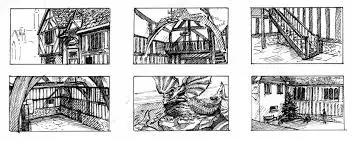
A basic or initial sketch or drawing used to develop ideas for a final design
Thumbnail sketch
Beginners sketch
Thumbdrive sketch
Layered sketch
Drawing and painting process where the artist roughly establishes the composition and structure of the subject. It’s a popular technique with portrait artists.
Blocking in
Layering
Undersketching
Layered scheme
initial layer of paint applied to a ground, which serves as a base for subsequent layers of paint. This is often monochromatic and help to define color values for later painting
Underpainting
Base layer
Blocking in
Tonal range
An artistic process based on the principle of transferring images from a matrix onto another surface, most often paper or fabric. Traditional techniques include woodcut, etching, engraving, and lithography, while modern artists have expanded available techniques to include screenprinting.
Printmaking
Transferring
Printcutting
Masking
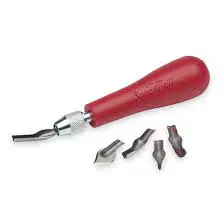
A knife having a short stiff blade with a curved point used for cutting linoleum.
Linoleum cutter
Brayer
File cutter
Baren
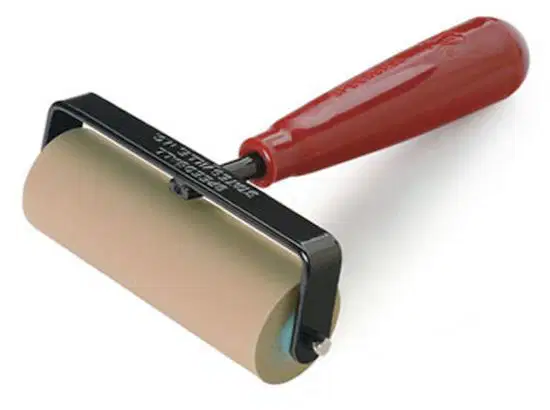
Printmaking tool used to thinly apply ink or paint onto a printing surface
Brayer
Baren
Roller
Bench hook
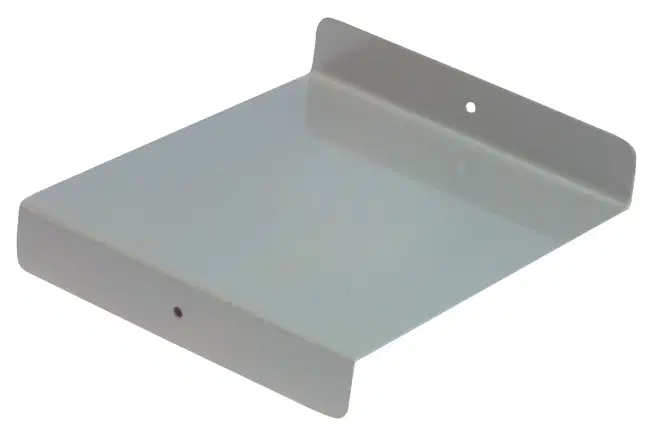
A device that fits over the front edge of a workbench as a means of preventing an object from slipping toward the rear of the bench. This can also be used to roll out ink
Bench hook
Brayer
Linoleum print hook
Baren
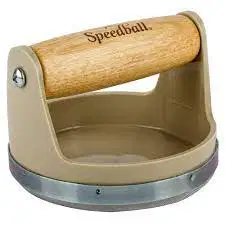
Traditionally used in Japanese woodblock printing, a __________________is a circular tool with a flat face used for rubbing paper to effectively transfer ink
Baren
Printing disk
Brayer press
Block printer
A printing technique where part of the surface is carved away and the raised area is then inked and printed.
Relief printing
Screen printing
Lithograph
Raised printing
The use of the techniques of perspective and overlapping to show deep space on a 2D surface
Depth
Overlapping
Perspective
Negative Space
The use or combination of element/s of art to provide interest in an artwork. This is a Principle of Design
Variety/Contrast
Unity/Harmony
Proportion
Emphasis
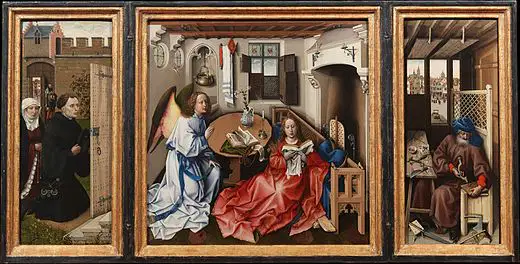
A work of art or presented in three parts or panels that are meant to be viewed together as a whole
Triptych
Trifecta
Three space
Three Panel
Various shades of color between absolute saturated color and absolute white.
Tonal Range
Shade Range
Color Plan
Variation
Placement of lines or shapes in front of other shapes. If one shape overlaps another it communicates an illusion of depth.
Overlapping
Overbearing
Overseeing
Foreground

