Wayground logo

Free Printable Worksheets

Font size

S
M
L
XL
Worksheets

Thermal Energy, Insulators, and Conductors

Total questions: 28

Worksheet time: 29mins

Name
Class
Date
1.
An insulator is a material that:
a)
Transfers thermal and electrical energy
b)
Transfers electrical energy and slows thermal energy
c)
Slows electrical energy and allows thermal energy to pass
d)
Slows thermal and electrical energy from transfering
2.
A great conductor of energy is:
a)
wood
b)
plastic
c)
metal
d)
cloth
3.
What is NOT an example of an insulator in the kitchen?
a)
An oven mitt
b)
Pots and pans
c)
A wooden spoon
d)
A plastic measuring cup
4.
The plastic covering is there to:
a)
Provide a conductor for electrical energy to flow.
b)
Provide an insulator so that electrical energy will not pass outside of the wires.
c)
Provide a conductor so that electrical energy can NOT flow.
d)
Provide an insulator so that electrical energy can flow.
5.
The metal copper is there to:
a)
Provide a conductor for energy to flow from one place to another.
b)
Provide an insulator for energy to flow from one place to another.
c)
Provide an insulator to slow the flow of energy.
d)
Provide a conductor so slow the flow of energy.
6.
Olivia wanted to complete her circuit with a conductor.  What object is her best option?
a)
Wood stick
b)
Glass bead
c)
Aluminum foil
d)
Styrofoam
7.
All of the following are conductors except _______.
a)
metal spoon
b)
wire
c)
humans
d)
plastic spoon
8.
We measure ______ with Celsius or Fahrenheit degrees.
a)
Temperature
b)
Thermometer
c)
Barometer
9.
Heat moves easily through materials called ____
a)
Conductors
b)
Insulators
10.
Why does a metal lawn chair get hot in the sun when the grass sitting in the same sunlight remains cool to the touch?
a)
Heat travels easily through plants but not metals.
b)
Heat travels easily through both plants and metals.
c)
Heat travels easily through metal objects but not through plants.
11.
What is heat?
a)
a basketball team
b)
thermal energy
c)
electricity
d)
light energy
12.
Heat transfer in boiling water.
a)
Conduction
b)
Convection
c)
Radiation
13.
When you use a microwave, what is the main way that heat is transferred?
a)
Convection
b)
Conduction
c)
Radiation
14.
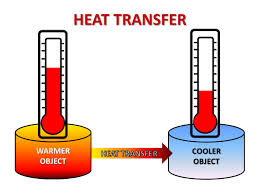
Heat transfers from an area of ____temperature to an area of ___ temperature.
a)
high to low
b)
low to high
c)
high to high
d)
It can travel high to low and low to high. 
15.
A cup of tea with a temperature of 80 degrees Celsius is placed on a table in a 20 degree Celsius room.  What happens to the thermal energy and the molecular motion of the tea when it is left on the table?
a)
The thermal energy increases and the molecules move faster.
b)
The thermal energy decreases and molecules move more slowly.
c)
The thermal energy increases and the molecules move more slowly.
16.

Everything has thermal energy

a)

False

b)

True

17.

All matter is made up of atoms that are constantly moving

a)

True

b)

False

18.

Thermal energy is the __________ _________ energy of moving particles

a)

total potential

b)

average potential

c)

average kinetic

d)

total kinetic

19.

Hot things have ____________ thermal energy than cold things

a)

more

b)

less

c)

same

d)

potato

20.

Temperature is a way we ____________ energy

a)

eat

b)

measure

c)

gain

d)

lose

21.

Cold things often have a _________ kinetic energy because_______

a)

lower; particles are moving around less

b)

lower; particles are moving around more

c)

higher; particles are moving around the same

d)

higher; particles do not move

22.

As temperature increases, molecules _____________

a)

move slower

b)

move the same

c)

move faster

d)

stop moving

23.

What happens to the molecules inside bridges when temperature increases? Why are there joints in these structure?

a)

Molecules move more and the joints prevent the molecules from hitting each other

b)

Molecules move less and the joints shrink in size

c)

Molecules move more and the joints allow them room to expand without breaking the bridge

d)

Molecules are not affected by temperature

24.
Jenny poured some hot chocolate into a cup and stirred it with a metal spoon.  She noticed the spoon was really warm.  What is the best explanation for this?
a)
The spoon is a conductor.
b)
The spoon reflects heat.
c)
The spoon is an insulator.
d)
She touched the spoon first and waited to touch the cup.
25.
The transmission of energy by two objects touching is called
a)
conduction
b)
convection
c)
contraction
d)
radiation
26.
What happens to the molecules of a solid when it is heated?
a)
Slow down
b)
Speed up
c)
Don't change speed
d)
Shrink
27.
The liquid in a thermometer ______________ as the temperature increases.
a)
expands
b)
disappears
c)
freezes
d)
explodes
28.
An increase in the volume of a substance when the temperature increases is called ___________________________________.
a)
kinetic energy
b)
thermal expansion
c)
temperature
d)
heat