
 Worksheets
Openstax Biology 2e 44.1, 45.1-45.5
Total questions: 18
Worksheet time: 15mins
The study of nutrient cycling though the environment is an example of which of the following?
organismal ecology
population ecology
community ecology
ecosystem ecology

Counting hawks with and without bands on their legs is
direct observation
quadrant sampling
sampling
mark and recapture
How is a clumped population distribution beneficial for prey animals?
Being a member of a larger group provides protection for each individual from predators.
Prey animals rely on each other to acquire food.
Prey animals live in small family groups to raise young.
Clumped population distributions ensure that at least one member of the population knows how to identify the seasonal migration route.
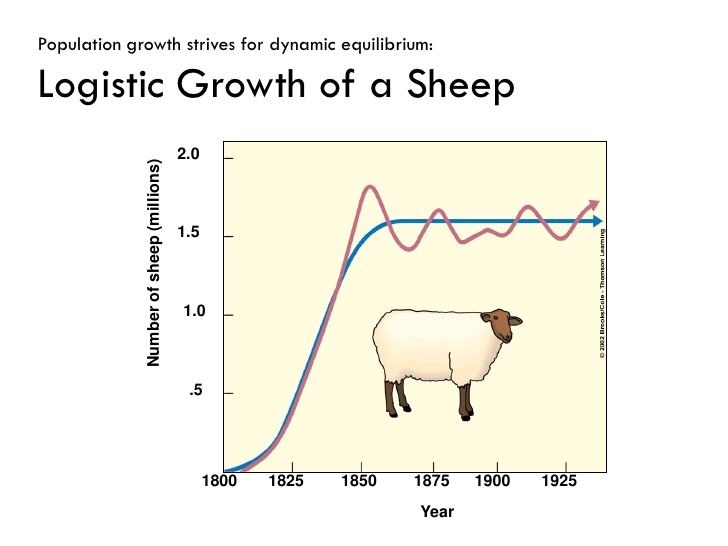

In logistic growth the graph is represented as a
S curve
J curve
A blue crab produces a lot of offspring at one time and has zero parental care. the blue crab is
an r-selected species.
a k-selected species.
Elephants typically have 1 to 2 offspring at one time and raise them until they are adults. Elephants are
an r-selected species.
a k-selected species.
Many fish die due to a drastic change in water temperature.
Density-Dependent
Density-Independent
An extensive drought in the plains threatens wildebeest, giraffe, zebra, and springbok populations.
Density-Dependent
Density-Independent
Due to stress, large numbers of female lemmings miscarry their young and fail to reproduce.
Density-Dependent
Density-Independent
Which of the graphs below shows logistical growth?


Which organism has the lowest fecundity?
African elephant
Eastern cottontail rabbit
House mouse
American robin
Spotted owl
Which organism has the greatest fecundity?
African elephant
Eastern cottontail rabbit
House mouse
American robin
Spotted owl

