wayground logo

Free Printable Worksheets

Font size

S
M
L
XL
Worksheets

Texas Cattle & Railroad

Total questions: 60

Worksheet time: 53mins

Name
Class
Date
1.
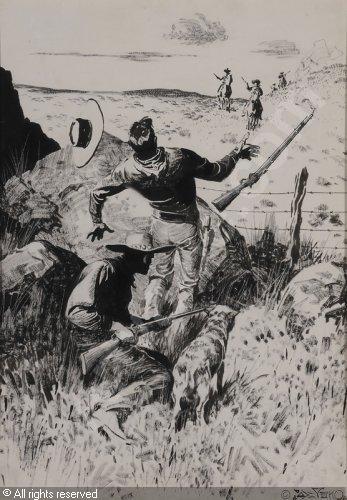
What kind of conflicts would take place between Farmers & Ranchers?
a)
Fighting over water rights & cutting barbed wire
b)
Fighting over reservation land
c)
Fighting corrupt Railroad companies
2.
After the Civil War the supply of beef was very low in Northern states.  What will happen to the price of Texas cattle if they could be sold up North?
a)
Price will increase
b)
Price will decrease
c)
Price will stay the same
3.
Which of the following explains a change in lifestyle of American Indian tribes in Texas, after the Civil War in 1865? 
a)
Many tribes experienced drought and famine
b)
Tribes were removed to reservations
c)
Tribes switched to farming after the buffalo herds disappeared
d)
Many tribes moved eastward to find buffalo
4.
Which American belief was one of the contributing factors behind the hostile relationships between American Indians and Texans? 
a)
Emancipation Proclamation
b)
Manifest Destiny
c)
Reconstruction Amendments
d)
A.  Gettysburg Address
5.
What vocabulary word means "A place where livestock are penned before they are slaughtered or shipped elsewhere?"
a)
Open Range
b)
Stockyards
c)
Segregated
d)
Syndicate
6.
What is a small, hardy horse of the West, descended from horses brought by the Spanish?
a)
Mustang
b)
Drift Fence
c)
Wrangler
d)
Ranchero
7.
What is the movement of cattle in large herds to a stockyard or market?
a)
Cattle drive
b)
Ranchero
c)
Sharecropper
d)
Wrangler
8.
Which statement would be true about the price of cattle?
a)
Cattle would cost more in an eastern urban area than a ranch in Texas.
b)
Cattle would cost less in an eastern urban area than a ranch in Texas.
9.
Which method of transportation was used to move cattle?
a)
Steamboats
b)
Railroads
c)
Cars
d)
Planes
10.
Describe the purpose of the cattle trails.
a)
To feed the people in Texas.
b)
To transport cattle from Kansas and Oklahoma to Texas.
c)
To help increase the population of cattle in the United States.
d)
To move cattle from the ranches in Texas to the railheads in Kansas and Oklahoma.
11.
Which trail stretched from San Antonio and Abeline, Texas to Kansas? 
a)
The Chisolm Trail
b)
The Great Western Trail
12.
Which two items led to the end of cattle trails?
a)
The steamboat and airplane
b)
Railroad expansion and barbed wire
c)
Barbed wire and the airplane
d)
Railroad expansion and steamboats
13.
What was the purpose of the Texas Rangers?
a)
To defend the frontier from Mexican Attacks
b)
To fight lawlessness along the border with Mexico
c)
To defend the frontier from Indian Raids
d)
All of the Above
14.
Two breeds of cattle brought by the Spanish and Anglos combined to produce___________________
a)
The Texas Longhorn
b)
The Texas Bison
c)
The Texas Rangers
d)
The Texas Steer
15.
What is a place designated for Indians to live on called?
a)
Hotel
b)
Reservation
c)
Housing Land
d)
Village
16.
What is the name for a Mexican Cowboy?
a)
Cowboy
b)
Rancher
c)
Vaquero
d)
Conquistador
17.

The land given to the Native Texans to live on was known as Indian Territory. This land is found in what present day state?

a)

Oklahoma

b)

Alaska

c)

New Mexico

d)

Florida

18.

What invention caused the closing of the Open Range?

a)

Telegraph

b)

Colt Revolver

c)

Cotton Gin

d)

Barbed Wire

19.
What role did railroads play in Texas’ economy?
a)
Railroads brought very few people to Texas.
b)
The trains were made to transport people only.
c)
The railroads made it harder to transport goods to the East.
d)
A way to transport good to market
20.
The demand for beef ______ in the years immediately following the Civil War.
a)
increased
b)
decreased
21.

How did Texans get their cattle to market?

a)

Mailed them

b)

Cattle drives

c)

Trucks

d)

Shipped them on boats

22.

What contribution did Charles Goodnight make to the cattle industry?

a)

Blazed the Goodnight Loving trail

b)

Invented barbed wire

c)

Invented condensed milk

d)

Founded the largest ranch

23.

What was Richard king known for?

a)

Having the largest ranch in Texas

b)

Inventing condensed milk

c)

Blazing the Goodnight Loving trail

d)

The first woman in Texas to own a ranch

24.
What was the cowboys' job?
a)
Their job was to entertain people as they traveled west watching rodeos.
b)
Their job was to steal cattle before it made it to market.
c)
Their job was to keep the herd together, protect the herd, and keep it moving.
25.
How was life rough for cowboys?
a)
Rough?  Being a cowboy was easy and lots of fun.
b)
They spent months on the trail, faced bad weather, risky river crossings, stampedes, and attacks.
c)
They worked five hours each day and only got a thirty-minute lunch break.
d)
All of these answer are correct.
26.
Which of the following describes a Texas Longhorn?
a)
long legs, strong, can last a long time without water
b)
aggressive, short legs, short horns
27.
What did ranchers use to tell the difference between their cattle?
a)
brands
b)
collars
c)
fences
28.

What was the main purpose of the Transcontinental Railroad?

a)

To make China more powerful.

b)

To help with transportation, communication, and to connect the nation.

c)

To make Native Americans move off their land.

d)

To give immigrants a job, to feel important, and needed in America.

29.

Which innovation (invention) was used to send news that the Transcontinental Railroad was DONE?

a)

pony express

b)

stage coach

c)

Liberty Bell

d)

telegraph

30.

What caused Native Americans to attack the railroad and its workers?

a)

The railroad was built in the middle of their land and was destroying it.

b)

The workers started fighting with them.

c)

The railroad kept them from migrating.

d)

Native Americans didn't like trains.

31.

What are Boom Towns?

a)

Towns that popped up along the railroads.

b)

Towns that exploded.

c)

Towns where people moved away from because there weren't any jobs left.

d)

Towns with a lot of gold.

32.

How did people travel before the Transcontinental Railroad was built?

a)

bikes and scooters

b)

boats and planes

c)

horses and cars

d)

boats and wagons

33.
What do the lines on this map represent?
a)
The major rivers in the Southwest. 
b)
The major routes for railroads
c)
The routes of major cattle trails.
d)
The major battle lines in the Civil War. 
34.
"The Chisholm Trail" and "Goodnight-Loving Trail" are two important examples of what kind of route?  
a)
Cattle trails leading out of Texas. 
b)
Patterns of migration of American Bison. 
c)
Foot trails that became the roads traveled by settlers. 
d)
The railroad lines that stretched into the American West. 
35.

To whom in the American West did the term "cowboy" originally refer?

a)

men who raised cattle on plantations in the American South

b)

men who sold cattle to merchants at ports along the Texas coast

c)

men who sailed cattle up the Mississippi to communities in the north

d)

men who drove cattle from Texas to Kansas along the Chisholm Trail

36.

The reason for high cattle prices in the East was...

a)

low demand

b)

high supply

c)

high demand

37.

The reason cattle were cheap in Texas was because of ...

a)

high supply

b)

high demand

c)

low supply

38.

Cattle were herded along trails and then put on ...

a)

planes

b)

trains

c)

cars

d)

boats

39.

Which description best fits with the Black Cowboys of Texas?

a)

Cattle trails allowed former slaves the opportunity to make money while providing meat to busy cities along the East coast.

b)

Light bulbs powered by electricity improved the ability to work, read, and even play after dark.

c)

The Panama Canal improved the speed of shipping supplies and improved business with other countries.

d)

The telephone improved the ability to communicate. It was much more user friendly then the telegraph and Morse Code.

40.
Where did cattle drives begin? (Which state)
a)
Missouri
b)
Georgia
c)
Oklahoma
d)
Texas
41.
What breed of cattle mainly lived in Texas?
a)
Longhorns
b)
Brangus
c)
Black Angus
d)
Brahma
42.
DID BLACK AND WHITE COWBOYS WORK ALONG SIDE EACH OTHER?
a)
YES
b)
NO
43.

In what direction did the cattle trails go?

a)

West

b)

South

c)

East

d)

North

44.

Why were the rivers important on the Goodnight-Loving Trail?

a)

They provided a path for the trail

b)

They were used for moving cattle north

c)

They provided water for the cattle

d)

They were used as landmarks to travel along

45.

What helped cities boom in the late 1800s?

a)

Cities grew with railroad expansion.

b)

Cotton became the number on industry in Texas

c)

American Indians removed to reservataions

d)

Population dropped due to loud noise of trains
46.

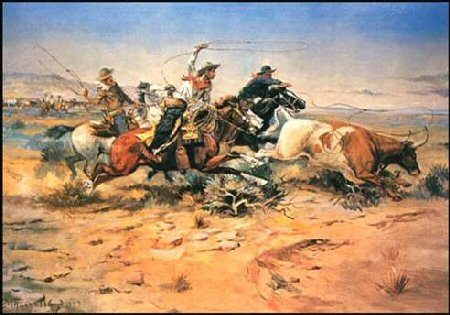
Bad weather, cattle rustlers, Indians, and stampedes are all causes of what?

a)

Dangers on an oil rig

b)

Dangers during the battle of the Alamo

c)

Dangers on a Cattle Drive

d)

Dangers of farming

47.

Barbed wire helped close off most of the western frontier, as a result, farmers and ranchers engaged in....

a)

Peace Talks

b)

Range Wars

c)

Elections

d)

Celebrations

48.

Packing house is

a)

A factory in a major city where meat was prepared for market

b)

The place where cattle were loaded on trains

c)

The original ranch in South Texas

d)

a Kansas town where trails connected with trains

49.

What was the largest ranch in Texas during the 1880s?

a)

TX

b)

PHT

c)

XLT

d)

XIT

50.

Who originally brought cattle to Texas?

a)

Mexicans

b)

Spanish

c)

Americans

d)

French

51.

What does transcontinental mean?

a)

flying to another continent

b)

extending or going over a continent

c)

visiting a continent for research

d)

writing about a continent

52.

What made it possible for the meatpacking industry to grow in Texas?

a)

railroads and refrigeration

b)

syndicates

c)

refrigeration

d)

fencing and barbed wire

53.

What is the Spanish word for rancher?

a)

vaquero

b)

vacas

c)

ranchero

d)

corrales

54.

What do you call the cowboys that ride in the back of the cattle drive?

a)

Wrangler

b)

Drag Rider

c)

Point Rider

d)

Trail Boss

55.

Windmills allowed......

a)

Irrigation of land that was previously too dry. Encouraged farmers to move west.

b)

Farmers to use wind to power their farms

c)

Cowboys used the windmill blades to cut barbed wire fences

d)

Ranchers used windmill to mark their property

56.

How did the cattle industry begin in Texas?

a)

It didn't begin in Texas

b)

Crops were dying so Texans needed a new job

c)

The Spanish brough cattle to Texas and the vaquero took care of them on ranches

57.
What are cattle?
a)
lots of horses
b)
lots of cows
58.
Which of the following describes a Texas Longhorn?
a)
long legs, strong, can last a long time without water
b)
aggressive, short legs, short horns
59.
What did ranchers use to tell the difference between their cattle?
a)
brands
b)
collars
c)
fences
60.
leader the cattle drive? 
a)
Chuck Wagon 
b)
Point 
c)
Trail boss
d)
Flank