wayground logo

Free Printable Worksheets

NEW

Font size

S
M
L
XL
Worksheets

NS and SB

Total questions: 33

Worksheet time: 27mins
Name
Class
Date
1.
Which is not an example of an adaptation?
a)
A bird's beak allows it to crack open hard nuts.
b)
A zebra's stripes allow it to confuse its predators.
c)
A frog's large hind legs allow it to jump from danger.
d)
A cat sleeps on the sofa to avoid the vacuum cleaner.
2.
What is it called when better adapted organisms survive to pass traits along to their offspring.
a)
Evolution
b)
Natural Selection
c)
Extinction
d)
Artifical Selection
3.
"Survival of the Fittest" describes which theory
a)
a) natural selection
b)
b) gravity
c)
c) heredity
d)
d) string theory
4.
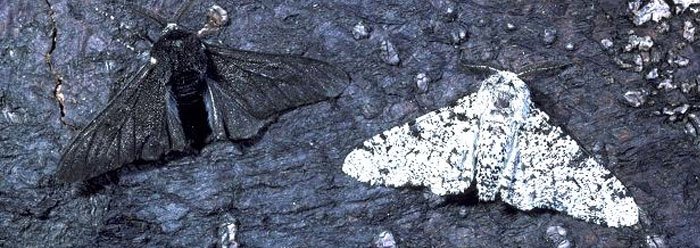
Why did the population of peppered moths in England change from light to dark after the Industrial Revolution?
a)
Light moths were easy to see against sooty trees and were eaten
b)
Light moths were killed by soot
c)
The birds that ate the dark moths were killed by soot
d)
Dark moths were produced by industrial processes
5.
Which organisms are most likely to survive?
a)
the best adapted
b)
the fastest
c)
the strongest
d)
the most domesticated (tamed)
6.
Any inherited trait that gives an organism an advantage in its environment is called ___.
a)
a mutation
b)
an adaptation
c)
evolution
d)
natural selection
7.
The trees these moths used to live on were white, but have been covered in soot from coal factories. Which moth will be more successful in this environment?
a)
Dark moth
b)
Light moth
c)
Both will be equally successful
d)
Neither will be successful
8.
Since the 1800s humans have stopped burning coal, and the trees have returned to their original color. Which moth will be more successful in this environment?
a)
Dark moth
b)
Light moth
c)
Both will be equally successful
d)
Neither will be successful
9.
Natural selection is where ___________ decides which traits should be passed on
a)
Nature
b)
A human
c)

Coach K

d)
The illuminati
10.

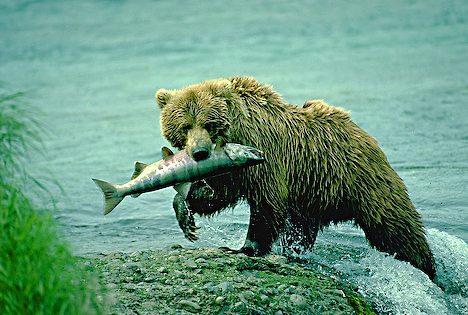
A grizzly bear survives because he is well-adapted to his environment. When he reproduces he passes on those traits to his offspring. this process is called

a)

Natural Selection

b)

Selective Breeding

c)

Random mutations

d)

Variations in a species

11.

What animal is camouflaged in this picture?

a)

Skunk

b)

Squirrel

c)

Owl

d)

Snake

12.

Where are hereditary traits stored in all organisms?

a)

In the blood

b)

In the brain

c)

In the DNA

d)

In the heart

13.

Which beak is probably best suited to crack open big seeds?

a)

1

b)

2

c)

3

d)

4

14.

Another term for Natural Selection is:

a)

Breeding

b)

Commensulism

c)

Communism

d)

Survival of the fittest

15.
Drawn observed several different types of finches.  Why are there so many different types?
a)
Finches live in different places, but eat the same food.
b)
Finches live in the same place, but eat different types of food.
c)
Finches live in different habitats and eat different types of food.
d)
Finches are found all over the world.
16.
The differences among a species, like different bird beaks, are called
a)
genes.
b)
variations.
c)
traits.
d)
theories.
17.
This scientist developed the theory of evolution as he studied the finches.
a)
Charles Darwin
b)
Isaac Newton
c)
Albert Einstein
d)
Marie Curie
18.
Where the better adapted organisms survive to pass traits along to offspring.
a)
Evolution
b)
Natural Selection
c)
Extinction
d)
Artifical Selection
19.
Do organisms "decide" to evolve and change?
a)
Yes, they know they need to change to survive 
b)
No, they change because of natural selection
20.
The purpose of selective breeding is to 
a)
Get bigger animals
b)
get smaller animals
c)
create animals with desirable traits
d)
create animals with bad traits
21.
All of the following statements are reasons for selective breeding except:
a)
To produce offspring with desirable characteristics
b)
Farmers increase their profit by improving crops
c)
To improve the quality of food products
d)
To increase migration patterns
22.
Where humans have bred organisms together based on traits we like.
a)
Evolution
b)
Natural Selection
c)
Extinction 
d)
Artificial Selection
23.
The evolution of dogs from wolves is due to:
a)
Natural Selection
b)
Sexual Selection
c)
Artificial Selection
d)
Vestigial Structures
24.
Which is another term for selective breeding?
a)
Artificial selection
b)
Natural Selection
c)
Intelligent selection
25.
The overall function of selective breeding is to
a)
Create organisms with desirable traits
b)
Create bigger organisms
c)
Create smaller organisms
d)
Create animals with more genetic mutations
26.
A farmer has bred his pineapple plants from the sweetest pineapples from his last harvest to get even sweeter pineapple plants. What is this an example of?
a)
Selective breeding
b)
Natural selection
c)
Extinction
d)
Mutagenesis
27.

The figure below shows four different species of finches found on the Galapagos Islands. Each of these finches evolved from a common ancestor through natural selection. Which of these finches is best suited to pick small insects off a cactus?

a)
b)
c)
d)
28.

Which is not a result of selective breeding?

a)

Large seedless watermelons that consumer demand

b)

Bright oranges that are all about the same size

c)

An insect that matches the color of the environment

d)

A dog that has been bred to have short hair

29.
Scientists genetically engineer corn to be immune to corn diseases. This is BENEFICIAL because
a)
This causes corn to be less likely to reproduce
b)
This causes corn to be less likely to survive
c)
This causes corn to be smaller
d)
This allows increased production of corn
30.
Which of these would be considered an adaptation of an animal that lives in the snowy tundra?
a)
a thick coat
b)
green colored skin
c)
large, flat leaves
d)
webbed feet
31.
Which of the following is an example of selective breeding?
a)
populations of lizards that have a certain trait become more numerous after a change in climate
b)
a population of insects develops resistance to a pesticide after farmers repeatedly use the same pesticide to kill the insects
c)
a population of bacteria develops resistance to an antibiotic
d)
farmers allow only sheep that produces the best wool to breed.
32.
The graph shows how a finch population changed during the past 50 years. What can you infer based on the graph? 
a)
Thin-beaked finches prey on wide-beaked finches.
b)
Wide-beaked finches are better suited for life in an ocean environment.
c)
Thin-beaked finches are better suited to the environment in Burke Lake.
d)
Wide-beaked finches are better suited to the environment in Burke Lake. 
33.

Put these in order:

A. Repeat the process.

B. Choose the best offspring from parents to produce the next generation.

C. Decide what traits are important to select.

D. Choose parents that have these traits.

a)

A - B - C - D

b)

C - D - B - A

c)

D - A - C - B

d)

A - B - D - C