wayground logo

Free Printable Worksheets

Font size

S
M
L
XL
Worksheets

Topic 1 Matter

Total questions: 79

Worksheet time: 42mins

Name
Class
Date
1.
The melting point refers to
a)
the point at which a liquid turns into a gas.
b)
the point at which a solid turns into a liquid.
c)
a substances ability to conduct thermal electricity.
d)
the amount of space something takes up.
2.
Which of the following terms best describes a change in shape, size, form, or state of matter in which the identity of the substance stays the same?
a)
chemical change
b)
element
c)
physical change
d)
conductivity
3.
The ________________ is best described as particles are neither created nor destroyed during a physical or chemical change.
a)
Law of Conservation of Mass
b)
Chemical Reaction
c)
Chemical Equation
d)
Change in Thermal Energy
4.
A _______________ is a characteristic of matter that can only be observed when a substance becomes a different substance.
a)
chemical property
b)
chemical equation
c)
chemical change
d)
chemical reaction
5.
Which of the following is NOT an indication that a chemical change may have taken place?
a)
bubbles
b)
odor
c)
solubility
d)
color
6.
Which of the following is NOT a factor that can affect the speed of a chemical reaction?
a)
state of matter
b)
temperature
c)
concentration
d)
surface area
7.

One example of a chemical change is

a)

filtering

b)

burning wood

c)

boiling water

d)

crushing a can

8.

One example of a physical change is

a)

burning paper

b)

baking cookies

c)

heating table sugar

d)

dissolving salt in water

9.

Which of the following is NOT an example of a chemical change?

a)

gas burning on a stove

b)

rust forming on an iron fence

c)

salt dissolving in a glass of water

d)

using electricity to break down water into hydrogen and oxygen

10.

Anything that has mass and takes up space is called

a)

matter

b)

energy

c)

heterogeneous

d)

homogeneous

11.

If you heat a liquid and measure the temperature at which it boils, you are measuring a(n)

a)

atomic property

b)

physical property

c)

chemical property

d)

molecular property

12.

If you describe methane as a gas that easily catches fire, you are describing a

a)

state of matter

b)

physical property

c)

chemical property

d)

chemical formula

13.
What does the Law of Conservation of Mass state?
a)
Matter cannot be gained or lost in a chemical reaction.
b)
Matter can only be lost in a chemical reaction.
c)
Matter can only be gained in a chemical reaction.
d)
Matter can be gained and lost in a chemical reaction. 
14.
When the temperature of matter decreases the particles ...
a)
speed up and move farther apart
b)
speed up and move closer together
c)
slow down and move farther apart
d)
slow down and move closer together
15.
Molecules move quickest in which state of matter
a)
solid
b)
liquid
c)
gas
d)
solid, liquid and gas
16.
The molecules in the picture are tightly held together with little movement. They have shape and energy.  Therefore, the picture represents _________.
a)
solid
b)
liquid
c)
gas
d)
plasma
17.
Molecules are closest together in a 
a)
Solid
b)
Liquid
c)
Gas
d)
plasma
18.

If I add heat to a solid, how will the motion of the particles be affected?

a)

They will move slower

b)

They will stop moving

c)

They will move faster

d)

They will move to a different container

19.

Which process could cause a material to change state from gas to liquid?

a)

Adding heat

b)

Adding energy

c)

Removing particles

d)

Removing energy

20.
What is condensation?
a)
gas to solid
b)
gas to liquid
c)
liquid to solid 
d)
solid to liquid 
21.

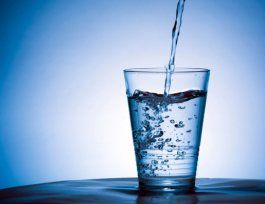
How might temperature changes affect a glass of iced tea?

a)

Making it warmer could cause the ice cubes to melt.

b)

Making it colder could cause the ice cubes to melt.

c)

Making it much warmer could cause the liquid to freeze.
22.
A mixture that appears to be evenly mixed throughout:
a)
an atom
b)
a compound
c)
a homogeneous mixture
d)
a heterogeneous mixture
23.
A pure substance...
a)
is an element or a compound
b)
is an element or a mixture
c)
is a compound or a mixture
d)
is a mixture
24.
1 A substance made up of two or more chemically combinedelements is —
a)
an element
b)
mixture
c)
compound
d)
solution
25.
 A substance that cannot be broken down into any other substance by ordinarychemical means is called —
a)
molecule
b)
mixture
c)
element
d)
compound
26.
Two or more physically combined substances form —
a)
a compoud
b)
an acid
c)
an element
d)
a mixture
27.
NaHCO3 is an example of —
a)
an abbreviation
b)
a compound
c)
a mixture
d)
an element
28.
What is an example of a mixture?
a)
Table salt
b)
Salt water
c)
Oxygen
d)
Air
29.
A substance made of only one type of atom is called —
a)
an element
b)
a mixture
c)
a compound
d)
a salt
30.
Which of these substances is an example of a solution?
a)
milk
b)
sweet tea
c)
mercury
d)
concrete
31.
Which of the following is a way in which elements and compounds are similar?
a)
Elements and compounds are pure substances.
b)
Elements and compounds are both made up of different kinds of atoms.
c)
Elements and compounds can both be broken down by physical means.
d)
Elements and compounds are listed on the periodic table.
32.
Which of the following is an example of a colloid?
a)
Trail mix
b)
Kool-aid
c)
Fog
d)
Oxygen
33.
What is an example of an element?
a)
Oxygen
b)
Pure water
c)
Air
d)
Table salt
34.
Two or more substances in the same place but NOT chemically combined or in a specific ratio is called —
a)
a compound 
b)
a pure substance
c)
an element
d)
a mixture
35.
a)
Element
b)
Compound
c)
Mixture
36.

Which of the following are examples of elements?

a)

acid, base and salt

b)

silicon, iron, and aluminum

c)

water, methane, and glucose

d)

proton, neutron, and electron

37.

Use the photo to identify the image with the element

a)

A

b)

B

c)

C

d)

A & B

38.

Which of the following statements is true of compounds?

a)

Compounds will have the same properties as individual atoms that bonded together to make compounds

b)

Compounds are mixtures of two or more different substances that are NOT chemically bonded

c)

Compounds are new substance with different properties from the atoms that bonded to make them

d)

Compounds are only created when one substance dissolves into another

39.

Which of the following would represent a compound?

a)

Model 1 (left)

b)

Model 2 (middle)

c)

Model 3 (right)

40.

Which of the following can be separated by physical means?

a)

pure substance

b)

element

c)

compound

d)

mixture

41.
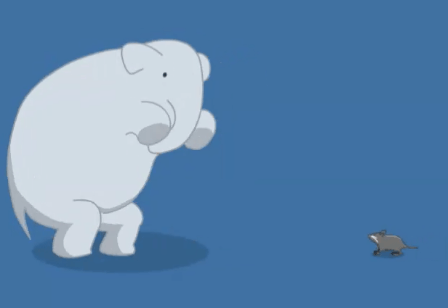
Which objects have a STRONG force of gravity?
a)
Objects with GREATER mass, like elephants
b)
Objects with LESS mass, like mice
42.
As distance between two objects increase the pull of gravity 
a)
Increases
b)
Decreases
c)
Stays the same
43.
The force of gravity acting on an object is the object's ______.
a)
mass
b)
matter
c)
weight 
d)
friction 
44.
Which of the following never changes no matter where in the universe?
a)
weight
b)
force
c)
mass
d)
pounds
45.
Two factors effecting the magnitude of the force of gravity between 2 objects are...
a)
mass and distance 
b)
mass and matter
c)
distance and weight 
d)
weight and mass
46.
A mixture that appears to be evenly mixed throughout:
a)
an atom
b)
a compound
c)
a homogeneous mixture
d)
a heterogeneous mixture
47.
A pure substance...
a)
is an element or a compound
b)
is an element or a mixture
c)
is a compound or a mixture
d)
is a mixture
48.
1 A substance made up of two or more chemically combinedelements is —
a)
an element
b)
mixture
c)
compound
d)
solution
49.
 A substance that cannot be broken down into any other substance by ordinarychemical means is called —
a)
molecule
b)
mixture
c)
element
d)
compound
50.
Two or more physically combined substances form —
a)
a compoud
b)
an acid
c)
an element
d)
a mixture
51.
NaHCO3 is an example of —
a)
an abbreviation
b)
a compound
c)
a mixture
d)
an element
52.
What is an example of a mixture?
a)
Table salt
b)
Salt water
c)
Oxygen
d)
Air
53.
A substance made of only one type of atom is called —
a)
an element
b)
a mixture
c)
a compound
d)
a salt
54.
Which of these substances is an example of a solution?
a)
milk
b)
sweet tea
c)
mercury
d)
concrete
55.
Which of the following is a way in which elements and compounds are similar?
a)
Elements and compounds are pure substances.
b)
Elements and compounds are both made up of different kinds of atoms.
c)
Elements and compounds can both be broken down by physical means.
d)
Elements and compounds are listed on the periodic table.
56.
Which of the following is an example of a colloid?
a)
Trail mix
b)
Kool-aid
c)
Fog
d)
Oxygen
57.
What is an example of an element?
a)
Oxygen
b)
Pure water
c)
Air
d)
Table salt
58.
Two or more substances in the same place but NOT chemically combined or in a specific ratio is called —
a)
a compound 
b)
a pure substance
c)
an element
d)
a mixture
59.
a)
Element
b)
Compound
c)
Mixture
60.

Which of the following are examples of elements?

a)

acid, base and salt

b)

silicon, iron, and aluminum

c)

water, methane, and glucose

d)

proton, neutron, and electron

61.

Use the photo to identify the image with the element

a)

A

b)

B

c)

C

d)

A & B

62.

Which of the following statements is true of compounds?

a)

Compounds will have the same properties as individual atoms that bonded together to make compounds

b)

Compounds are mixtures of two or more different substances that are NOT chemically bonded

c)

Compounds are new substance with different properties from the atoms that bonded to make them

d)

Compounds are only created when one substance dissolves into another

63.

Which of the following would represent a compound?

a)

Model 1 (left)

b)

Model 2 (middle)

c)

Model 3 (right)

64.

Which of the following can be separated by physical means?

a)

pure substance

b)

element

c)

compound

d)

mixture

65.

Which of the following is a homogeneous mixture?

a)

Saltwater

b)

Granite

c)

Sand and iron filings

d)

Salad

66.

What is the smallest unit of a compound that retains its properties?

a)

Mixture

b)

Element

c)

Molecule

d)

Atom

67.

Which of the following is NOT a pure substance?

a)

Air

b)

Distilled water

c)

Gold

d)

Sodium chloride

68.

Elements

a)

are made of two or more types of atoms bonded together

b)

are made of one type of atom

c)

are made of two or more types of molecules

d)

are always individual atoms

69.

Which is the smallest particle of an element that has the same properties as that element?

a)

atom

b)

molecule

c)

compound

d)

chemical

70.

A substance that cannot be broken down further chemically is known as...

a)

an element

b)

a compound

c)

a molecule

d)

a mixture

71.

Which of the following are examples of ELEMENTS? Choose all that are correct.

a)

Oxygen (O)

b)

Water

(H2O)

c)

Flourine

(F)

d)

Lemonade

e)

Sulfur Dioxide (SO2)

72.

Compounds

a)

are made of two or more types of atoms chemically bonded together

b)

are made of one type of atom

c)

are found on the periodic table

d)

can be separated into their individual parts through physical means

73.

Which of the following are examples of compounds? Check all that apply.

a)

Salt

(NaCl)

b)

Salt Water

(NaCl and H2O)

c)

Sugar

(C6H12O6)

d)

Carbon Dioxide

(CO2)

74.

The bonds of compounds can be broken easily because they are not chemically bonded.

a)

True

b)

False

75.

When substances combine chemically...

a)

they form a mixture and their properties change

b)

they form a compound and their properties change

c)

they form a mixture where their properties stay the same

d)

the form a compound where their properties stay the same

76.

Which of the following are examples of Mixtures?

a)

The atmosphere

(N + O + Ar + H2O...)

b)

Carbon Dioxide (CO2)

c)

Oxygen

(O2)

d)

Lemonade

(sugar, lemon juice, water)

e)

Anything on the Periodic Table

77.

Mixtures

a)

are made of two different types of atoms chemically bonded together

b)

Are only liquids

c)

Cannot be separated

d)

Can be separated using physical properties

78.

Pure Substances

a)

Are only made of one type of atom

b)

Have the same properties throughout

c)

Can never be broken down into something simpler

d)

Are only made of molecules

79.

Which of the following are examples of a Pure Substance?

a)

Water

(H2O)

b)

Helium

(He)

c)

Orange Juice

(oranges, water)

d)

Uranium

(Ur)

e)

Sugar

(C6H12O6)