
 Worksheets
Benchmark Review
Total questions: 71
Worksheet time: 36mins

Which pair of actions best completes this graphic?
1—Enslaved native populations 2—Organized utopian societies
1—Established Catholic missions 2—Focused primarily on fur trading
1—Promoted political freedom 2—Participated in the triangular trade
1—Became commercial shipbuilders 2—Created an early system of public school

Which document completes this excerpt?
A Declaration of Independence
B Treaty of Ghent
C Northwest Ordinance
D Louisiana Purchase Treaty
Which American colony’s economy was based primarily on shipbuilding and fishing?
Virginia
Maryland
Georgia
Massachusetts

Those who agreed with this point of view were known as —
Minutemen
Loyalists
Federalists
Patriots

This statement is most likely from a handbook designed to prepare citizens for —
voting in elections
jury duty
paying income taxes
military service

What was the purpose of this amendment?
To encourage citizens to monitor the federal government
To prevent conflicts between state and local governments
To limit the authority of the federal government
To increase the participation of citizens in state government
Which law would be considered unconstitutional on the basis of First Amendment guarantees?
A ban on the publication of classified information by government employees
A requirement that church employees pay income tax
A requirement that churches get a permit before building a new chapel
A prohibition on electing religious leaders to government office
How did mercantilist policies create tension between Great Britain and the colonies?
By introducing indentured servitude to the middle colonies
By requiring colonists to enlist in the military
By limiting the amount of farmland each colonist could have
By preventing colonists from trading with most other foreign countries

Which sentence completes this diagram?
People cannot be forced to be witnesses against themselves.
Cruel and unusual punishment cannot be inflicted.
Warrants cannot be issued unless probable cause is established.
A defendant cannot be denied a speedy and public trial.

The colonies in this list were founded primarily to offer settlers a greater degree of —
freedom from debts
religious freedom
economic freedom
freedom of speech
Which argument would a Federalist make to support ratification of the Constitution?
The Constitution will enable states to nullify laws that are harmful to citizens.
A strong federal government will be more stable than a loose confederation of states.
The Constitution will allow states to establish banks to stabilize the national economy.
A republican system of government will better represent large states.

Which amendment prohibits federal and state governments from carrying out these actions?
The First Amendment
The Second Amendment
The Fifth Amendment
The Tenth Amendment
Why is the Battle of Saratoga considered a turning point in the Revolutionary War?
The British victory extended the fighting for another year.
The American defeat led many soldiers to desert the Continental army.
The British defeat marked the beginning of a steady decline in British military superiority.
The American victory convinced France to ally with the United States.
Which of the following contributed most to the expansion of the transatlantic slave trade during the 1700s?
A lack of skilled labor in the American colonies
Demand for slaves in the American colonies that produced cash crops
A lack of protective tariffs in the American colonies
Demand for slaves in the industrialized American colonies
How did the provisions of the Northwest Ordinance affect U.S. expansion?
By funding a transportation network in uninhabited regions
By establishing a process for territories to govern themselves
By promoting the growth of southern plantation economies
By creating a national bank to loan money to land investors
Why were southern delegates to the Constitutional Convention willing to accept the Three-Fifths Compromise?
It increased the political influence of the South.
It allowed indentured servants in the South to become citizens.
It decreased the federal tax on property in the South.
It allowed the South to expand its industrial output.
Which of these is a grievance from the Declaration of Independence?
Colonists born in America were prohibited from holding elected office.
Colonists were forced to quarter troops in their homes.
Colonists were not eligible to become officers in the British army.
Colonists were required to serve a year in their colony’s militia.

Which reason best completes this list?
To spread democratic ideals
To improve efficiency in manufacturing
To locate potential military allies
To claim new territory
During the Constitutional Convention of 1787, George Mason argued —
against increased power for the national government
for the dissolution of state governments
against the passage of a bill of rights
for the creation of a strong executive branch
What was one result of the Treaty of Paris of 1783?
Great Britain recognized the United States as an independent country.
Competing Seminole and Spanish claims in West Florida were resolved
The British navy agreed to stop pressing American sailors into service.
British territory in eastern Canada was ceded to France.
The Northwest Ordinance established guidelines for the orderly expansion of the United States by instituting a —
method to purchase territory from foreign powers
procedure for military takeovers of existing countries
process through which states could be added to the Union
compromise line that prohibited slavery in the West
•Unreasonable searches and seizures are illegal.
•Search warrants may not be issued without probable cause.
•The place to be searched and the people or items to be seized must be described in a warrant.
Which amendment provides for the protections described in this list?
First Amendment
Fourth Amendment
Fifth Amendment
Tenth Amendment
Primary Motives of European Exploration:
1. To Increase Wealth
2. Promote Christianity
3. ?
Which motive best completes the diagram?
To promote free enterprise
To extend democracy
To expand empires
To found utopian communities
Which of these is a guarantee in the First Amendment?
States have the power to regulate public education
People can choose whether and how to participate in religious services.
Persons accused of a crime are presumed innocent until proven guilty.
Citizens have the right to be judged by a jury of their peers.

Why did the delegates at the Constitutional Convention decide to abandon the Articles of Confederation?
In hopes that they could return to Great Britain as colonies.
To create a strong central government in their new nation.
The delegates wanted to create a monarchy.
They were looking to become part of the French Empire.

Which of the following decided how slaves would be counted into the figuring a state’s population?
The Virginia Plan
Three-fifths Compromise
The New Jersey Plan
The Great Compromise

Division of Government between the National and state governments
Unicameral
Bicameral
Federalism
Separation of Powers

Division of Power between the 3 branches of government
Checks & Balances
Separation of Powers
Federalism
Bicameral Legislature

Prevents any one branch of government from becoming too powerful
Separation of Powers
Federalism
Checks & Balances
Natural Rights

Describes the process for amending the Constitution
Article I
Article V
Article IV
Article II
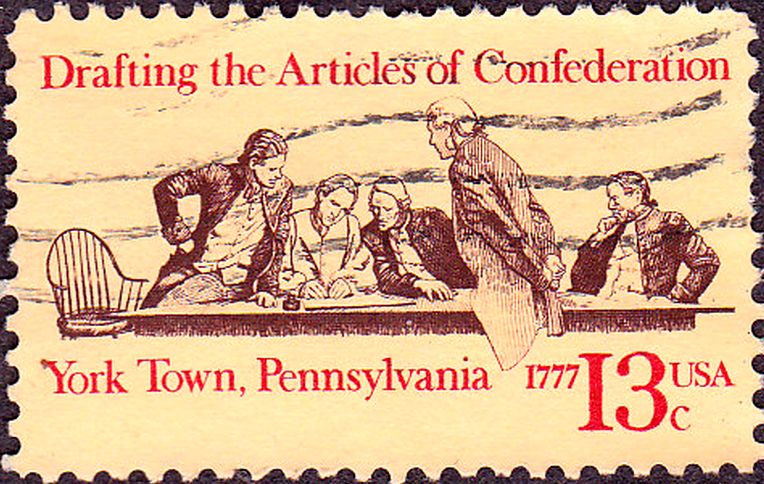
Why did the Anti-Federalists demand a bill of rights
They wanted to keep the government small
They wanted to keep the government big and strong
They wanted a provision for Taco Tuesday
They wanted to make sure individual and state rights were protected
The French and Indian War was very _______________ for the British.
cheap
expensive
long
What famous phrase did the colonists come up with?
Ain't nobody got time for that
No Taxation without Representation
Free the people
British people SMELL
The Stamp Act taxed all ________ goods.
paper
plastic
pollution
The colonists hope that the tax would be taken away, or ____________
repealed
lost
given
refocused
What was the main goal of the settlers at Jamestown
To convert the natives to Christianity
To establish a community with representative government
to establish a successful agriculturally-based colony
to find gold and riches
Which of the colonies was founded as a refuge for imprisoned debtors?
Connecticut
Delaware
Pennsylvania
Georgia

