
 Worksheets
Imperialism
Total questions: 200
Worksheet time: 5hrs 11mins
Which of these best describes the Scramble for Africa?
Imperialist powers sliced Africa amongst themselves by drawing borders on a map
Diplomats worked with tribal leaders to determine how to colonize countries in Africa
European countries worked to finance capital expansion in African nations through loans.
The United States used the Roosevelt Corollary to prevent nations from colonizing Africa.
Define "colony."
a country which is controlled by a more powerful country.
the policy of extending the rule or authority of an empire or nation over foreign countries, or of acquiring and holding colonies.
An area of land under the jurisdiction (rule) of a ruler or state.
Having power and influence over others.
Which of these was NOT a reason European powers colonized Africa and Asia?
They wanted to acquire power and prestige
They wanted to gain access to natural resources such as gold, rubber, timber, and metals
They had a mission to civilize "inferior races"
They wanted to protect weaker nations from other foreign influences
Define "imperialism."
the policy of extending the rule or authority of an empire or nation over foreign countries, or of acquiring and holding colonies.
loyalty and devotion to a nation
the power to do as one pleases
an area of land under the jurisdiction (rule) of a ruler or state.
Define "territory."
An area of land under the jurisdiction (rule) of a ruler or state.
A country which is controlled by a more powerful country.
A very large or unlimited space or quantity.
To gain or acquire by force of arms.
Define "dominant."
Having power and influence over others.
Everywhere equally distant.
Lowest in importance or position.
Regarding or affecting all objects in the same way
Racist
Prejudice, discrimination, or antagonism directed against someone of a different race based on the belief that one's own race is superior
Of, relating to, or based on a race
A category of humankind that shares certain distinctive physical traits
A widely held but fixed and oversimplified image or idea of a particular type of person or thing.
Define "expansion."
The action of becoming larger or more extensive
To contract to less extent
To attain higher altitude.
To defeat by force or violence.
A settlement on foreign land is known as a
colony
empire
"mother" country
alliance
A group of countries under a single authority is known as
empire
colony
"mother country
alliance
The desire and attempt to expand a country’s territory
patriotism
expansionism
nationalism
colonialism
How were European nations able to dominate Africa and Asia? they were...
industrialized
socialist
communist
all of these are tru
Why did many industrialized or advanced countries need to takeover less advanced countries?
For better climate and cleaner environment
To create a democratic government
To teach the local population about recycling
To claim or takeover natural resources located in those countries
Why were European countries interested in colonizing Africa during the Age of Imperialism?
They wanted Africa's natural resources
They wanted land to develop new types of ships
They wanted to create a perfect society
They wanted to learn new languages
The race for European countries to claim land in Africa was called the _________.
Scramble for Africa
African Marathon
Great Competition
Monopoly
Which of the following is true about the Boxer Rebellion?
The rebellion took place in Japan.
The Boxers were trying to keep Christianity in China.
The Boxers were unhappy with foreign influence in China.
The Boxers were able to drive out the foreigners from China.
What resource did Britain want from India?
cotton
tea
wheat
coal
The Berlin Conference split up ________ among European nations.
Africa
Asia
Australia
South America
The Monroe Doctrine prevented Europe from taking over countries in __________________
North America only
South America only
Asia
North and South America
What does the phrase "the sun never sets over the British Empire" mean?
it's always sunny in Britain
it shows how large their empire was
it shows how dangerous they were
is a reference to the shiny money they had
The Opium War was caused by Britain continuing to sell opium to China.
True
False

Which of the following events led to Japan being opened up to foreign trade?
Admiral Matthew Perry landing in Tokyo with warships
The Boxer Rebellion
Queen Liliuokalani being overthrown
The Sepoy Mutiny
About how much of Africa was controlled by European nations?
60%
70%
80%
90%

China and Britain fought a war over:
the Korean peninsula
conquests along the Nile River
opium production and distribution
the elimination of the samurai
To say that foreign countries seized “spheres of influence” in China means that they...
had secret agreements with the Chinese government.
created a new territorial government to prevent the U.S. from entering the trade market.
gained control of trade and resources in specific areas of China.
established a circular discussion forum.
What are the three reasons for imperialism?
economical, political and cultural.
economical, political and cultural.
zooilogical, regional and demographical.
agricultural, economical and cultural.
Why did America annex Hawaii in 1898?
Beautiful beaches
Sugar Cane plantations
It's location in the Pacific Ocean
Tourism benifits
Why did the U.S. want to open trade with Japan in the 1850's?
The U.S. wanted access to Japanese markets before European nations.
The U.S. wanted to create naval bases in Asia.
The U.S. wanted to create an alliance with Japan's govt.
The U.S. wanted new raw materials.
Why was the purchase of Alaska criticized at the time?
It was too expensive.
It was too far away.
It was seen as worthless.
It was seen as too cold.
These types of exaggerated news stories helped push the U.S. into war with Spain.
Red Journalism
Orange Journalism
Yellow Journalism
Green Journalism
After the Spanish-American War, the U.S. annexed which former Spanish territories?
Cuba
Columbia
Puerto Rico
Philippine Islands
America first attempted to buy land to build the Panama Canal from what country ?
Cuba
Columbia
Croatia
Cambodia
How did America end up getting the land it needed to build the Panama Canal?
We supported a revolution in Columbia.
We supported a revolution in Cuba
We supported a revolution in Croatia
We supported a revolution in Cambodia
This was the name of the ship that exploded by Havana Harbor before the Spanish-American War
U.S.S. Declaration of Independence
U.S.S. Maine
U.S.S. Arizona
U.S.S Constitution
After the Spanish American War, America gained control of all of these places EXCEPT...
Guam
Puerto Rico
Canada
Phillipines
These two countries were fighting prior to America getting involved in 1898
Spain and Portugal
Cuba and Mexico
Mexico and Portugal
Spain and Cuba
Exaggerated, sensationalized, and not backed up by facts in the media is considered what?
Yellow Journalism
Narrative
Newspaper Articles
Red Analysis
Who was in control of Panama before America intervened before building the Panama Canal
Columbia
Mexico
China
Dominican Republic
A waterway that is "man-made" or created by humans that helps with transportation and trade is called a what
River
Vessel
Stream
Canal
annexation means:
adding on to a country
giving up land or territory
moving to a new country
moving from city to city
What were two causes of the Spanish-American War?
The sinking of the U.S.S. Arizona and Wanted to free Cubans from Spanish rule
The sinking of the U.S.S. Maine and Wanted to free Cubans from Spanish rule
The sinking of the U.S.S. Maine and Wanted to free Hawaiians from Spanish rule
The sinking of the U.S.S. Arizona and Wanted to free citizens of Alaska from Spanish rule
Why was the Panama Canal important?
Shortcut from New York to Chicago
Shortcut from Arctic to Pacific
Shortcut from Pacific Ocean to Indian Ocean
Shortcut from the Atlantic to the Pacific Ocean
How did Latin America feel about the U.S. getting involved in Latin America?
They enjoyed having the U.S. "policing" Latin America
They did not want Great Britain "policing" Latin America
They did not want the U.S. "policing" Latin America
They did want the U.S. "policing" Latin America
Why was the Panama Canal important in U.S. imperialism?
Slower route to get new territories (Guam, Hawaii, Philippines, etc.)
Quicker route to Scramble for Africa
Quicker route to get new territories (Guam, Hawaii, Philippines, etc.)
Slower route to China
Why did many industrialized or advanced countries need to takeover less advanced countries?
For better climate and cleaner environment
To create a democratic government
To teach the local population about recycling
To claim or takeover natural resources located in those countries
Why were European countries interested in colonizing Africa during the Age of Imperialism?
They wanted Africa's natural resources
They wanted land to develop new types of ships
They wanted to create a perfect society
They wanted to learn new languages
The race for European countries to claim land in Africa was called the _________.
Scramble for Africa
African Marathon
Great Competition
Monopoly
Which of the following countries was the only to remain independent in Africa?
Angola
Chad
South Africa
Ethiopia and Liberia
India was a ___________ of Great Britain.
colony
sphere of influence
protectorate
predator
Which of the following is a cause of the Sepoy Rebellion?
The Europeans were using spoiled grease that was making them sick
They were being taxed without representation
The native people were angry because of English tea imports
The British army did not respect the indigenous peoples' cultures and government

The white man's burden is illustrated in this picture. What was the white man's burden?
the belief that imperialism was motivated by a high-minded desire of whites to uplift people of color.
the white man's struggle to cook dinner
The title of a poem written by Edgar Allan Poe
The endless journey of trying to improve
Which of the following best describes the relationship between the Industrial Revolution and Imperialism?
the industrial revolution created an increased demand for raw materials, which led Europeans to conquer new lands in search for them in the late 1800s
the industrial revolution created an access of raw materials, which led Europeans to trade raw materials with new nations in the late 1800s
the industrial revolution led to decreased trade with Africa, which led Europeans to go to war with many African nations in the late 1800s
Europeans conquered new lands in the late 1800s, which led to a growth in factories in the industrial revolution
The Opium War was caused by Britain continuing to sell opium to China.
True
False
the policy of setting up overseas settlements for raw materials and markets
imperialism
colonialism
sphere of influence
protectorate
Where did the Industrial Revolution begin?
Germany
France
Great Britain
United States
Europeans wanted to civilize the African people.
Nationalism in European nations led to imperialism because
the nations wanted fueling stations for their naval ships.
the people of Africa and Asia were poor and in need of help.
the countries of Europe were competing to become the most powerful
because the Europeans wanted a market for goods made in factories

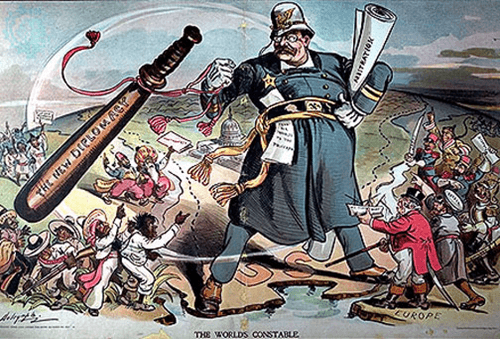
Which of the following defines Yellow Journalism?
Writing about bad stuff to cause change
Exaggerating events to sell newspapers
Investigative journalism
Reporting only the truth
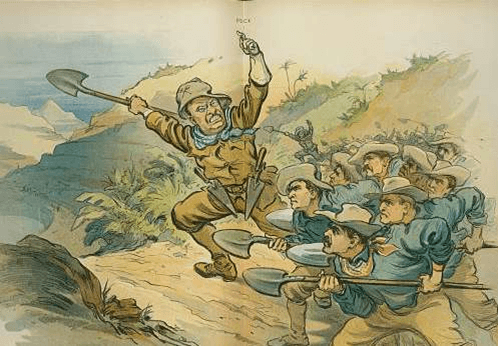

This foreign policy idea promotes staying out of world affairs.
Imperialism
Isolationism
Globalism
Communism
America first attempted to buy land to build the Panama Canal from what country ?
Cuba
Columbia
Croatia
Cambodia
Countries in Europe wanted to show they were better by showing that they had more colonies (land). This extreme pride in one’s country is called:
Ethnocentrism
Nationalism
Social Darwinism
Racism
This racist theory that some people are meant to be the ‘rulers’ and some were meant to be the ‘slaves’ in a society was based on the mistaken social myth of the time- “survival of the fittest”:
Nationalism
Missionaries
Apartheid
Social Darwinism
These Christians believed that Africans needed to be saved and taught the “correct” religion of Christianity:
Nationalists
Steelers
Boxers
Missionaries
The Industrial Revolution was a very large motivator for the Imperialism. It needed colonies for both markets (people to sell to) and for:
Natural Resources
Missionaries
Weapons
Animals
Why did Europeans and the United States look to imperialize Africa, Asia and Latin America as the Industrial Revolution continued?
They needed more natural resources to fuel their production of goods and more people to buy the extra goods produced in Europe.
The Africans wanted to sell their land for factory building.
Europeans wanted to use more African cultural practices.
They needed the Africans to help create a democratic government in the Congo.
3:
_________________ was the major economic factor that led nations to take over weaker nations. It led to the need for additional raw materials, markets and cheap labor.
Nationalism
Missionary work
Industrialism
Social Darwinism
9:
This was a trade agreement between the United States, China, Japan, and several European countries in 1899/1900 in order to allow these countries equal trade access to China, a country that previously had no trade agreements.
New Deal
Opium Wars
Open Door Policy
Boxer Rebellion
What document did the Roosevelt Corollary expand on?
US Constitution
Treaty of Paris
Monroe Doctrine
Good Neighbor Policy
What was the purpose of the Great White Fleet?
ships were to protect European allies from Germany
Roosevelt wanted to show the world how powerful the American Navy was and send a message that America was a powerful force to be reckoned with
mission was to test out the new ships and their guns to make sure they worked correctly
the appearance of the large fleet was meant to intimidate other countries

Where did the British Empire control an entire continent?
North America
Africa
Europe
Australia
- Opium War (1839–1842)
- Taiping Rebellion (1850–1864)
- Boxer Rebellion (1898–1901)
This series of events is most closely associated with the
spread of communism to China and Korea
growing concerns about the influence of the West in China
alliance formed between Vietnam and China
increasing expansion of civil and political rights in China
The 19th century term “white mans burden” reflects the idea that
Asians and Africans were equal to Europeans
Asians and Africans would be grateful for European help
imperialism was opposed by most Europeans
Europeans had a responsibility to improve the lives of their colonial peoples
Which area of Africa is known for successfully resisting European imperialism?
South Africa
Egypt
Morocco
Ethiopia
Social Darwinists in the late 1800s and early 1900s used the philosophy of “survival of the fittest” to justify which national action?
supporting local humanitarian aid
creating regional trade partnerships
expanding existing colonial empires
legislating progressive political reform
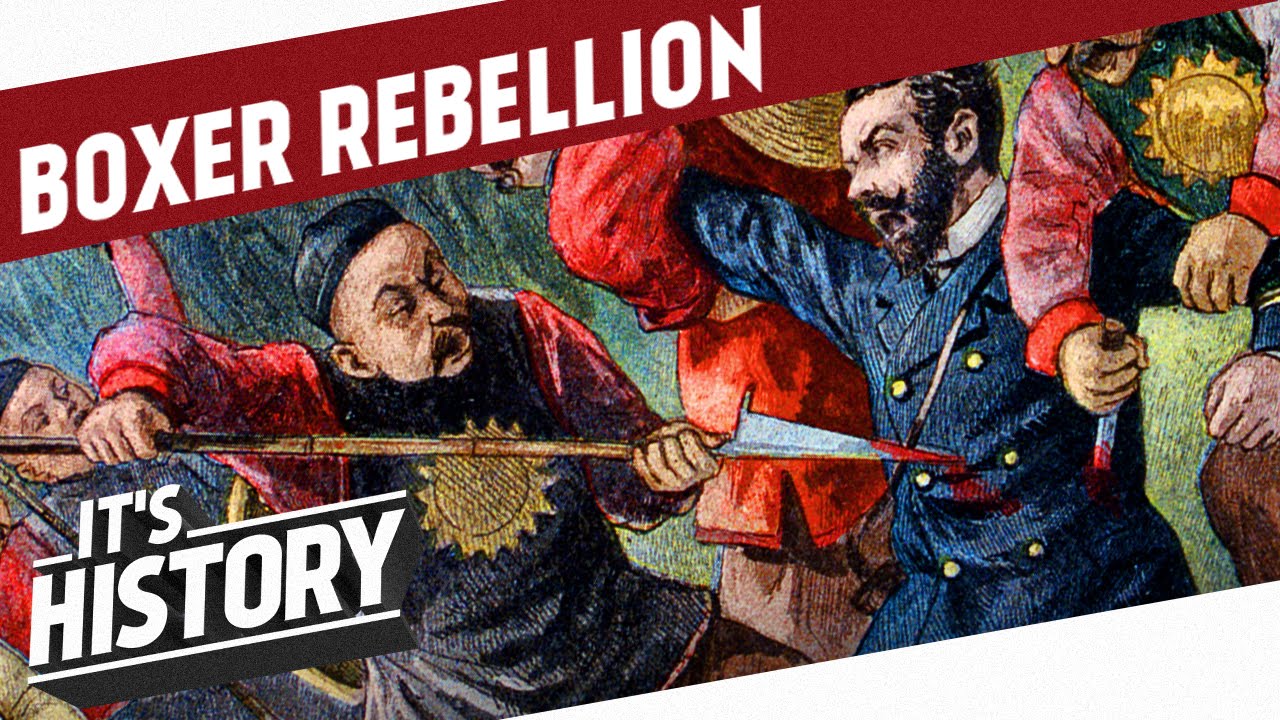

Which country is forced to open up trade by the United States?
Japan
Korea
China
India
__________= an outside power claims exclusive trading rights in another country
Sphere of Influence
Puppet Government
Communism
Protectorate

What movement tried to rid European influence from China?
Boxer Rebellion
Peoples Republic of China
Black Hand Society
Buddhists

Europeans control Spheres of Influence in which country?
China
Japan
India
Korea

During imperialism, many Chinese joined the Boxers. How would the boxers treat foreigners?
Foreign visitors did not bother Chinese citizens
The U.S asked nations to follow a Closed Door Policy
Many foreigners were killed before the uprising was put down
The Chinese liked foreigners in their country.

What European movement created a need for resources from Africa and Asia?
Industrial Revolution
Nationalism
Scientific Revolution
Age of Enlightenment

What did industrialized European powers demand from their African colonies?
Raw Resources
Slaves
Independence
Manufactured Goods

What event made the United States a leading economic power?
Glorious Revolution
Agricultural Revolution
Scientific Revolution
Industrial Revolution
What happened to the size of the U.S. territory?
The U.S. lost many territories.
The U.S. gained one new territory.
The U.S. lost one territory.
The U.S. gained many new territories.
After Imperialism, how did the way the U.S. get along with other countries change?
No conflicts arose with new countries
Peace was brought to the entire world
Conflicts arose with new countries
Hawaiians celebrated being taken over
What were the benefits of annexing Hawaii?
Sugarcane (economic interest) Military base (pit stop to Asia- military interest)
Tobacco plants (economic interest) Military base (pit stop to Asia- military interest)
Tobacco plants (economic interest) Build new White House
Sugarcane (economic interest) Possible site for new capital building (pit stop to Asia)
What were two causes of the Spanish-American War?
The sinking of the U.S.S. Arizona and Wanted to free Cubans from Spanish rule
The sinking of the U.S.S. Maine and Wanted to free Cubans from Spanish rule
The sinking of the U.S.S. Maine and Wanted to free Hawaiians from Spanish rule
The sinking of the U.S.S. Arizona and Wanted to free citizens of Alaska from Spanish rule
What countries gained their independence?
Cuba and Philippines
Cuba and Guam
Philippines and Hawaii
Alaska and Philippines
Why was the Panama Canal important?
Shortcut from New York to Chicago
Shortcut from Arctic to Pacific
Shortcut from Pacific Ocean to Indian Ocean
Shortcut from the Atlantic to the Pacific Ocean
How did Latin America feel about the U.S. getting involved in Latin America?
They enjoyed having the U.S. "policing" Latin America
They did not want Great Britain "policing" Latin America
They did not want the U.S. "policing" Latin America
They did want the U.S. "policing" Latin America
Why was the Panama Canal important in U.S. imperialism?
Slower route to get new territories (Guam, Hawaii, Philippines, etc.)
Quicker route to Scramble for Africa
Quicker route to get new territories (Guam, Hawaii, Philippines, etc.)
Slower route to China
Europeans wanted to civilize the African people.
What country was the economic leader in the 1800's?
Great Britain
Germany
United States
Japan
Imperialism started because of which of the following reasons?
Nationalism - Empire Building
Economic - desire for new markets and resources
Western belief in cultural superiority
None of the options are a reason the policy of Imperialism was adopted
Which two non-European countries adopted the policy of Imperialism?
Australia and Japan
China and Japan
United States and Japan
China and the United States
How many countries were present at the Berlin Conference?
10
14
50
39
The Meiji Restoration included all of the following EXCEPT:
ending feudalism
modernization of the military
absolute rule
restoration of Shogun (Samurai) power
Who were the Sepoys?
British soldiers
Hired Indian soldiers
French soldiers
German soldiers
Who won the Sepoy Rebellion?
France
Great Britain
India
Japan
Emperor Meiji promoted what in Japan?
isolation and nationalism
capitalism and democracy
revolution and absolutism
reform, nationalism, and modernization
Why was Imperialism "necessary" following the Industrial Revolution?
Great Britain was on a power kick
Great Britain had too much money
Great Britain and Europe needed resources to continue expansion
None of the above
Europe
True or False: The U.S. did not want to annex Cuba as part of the Spanish American War
True
False
Identify the best explanation of imperialism from the options below:
A shift from an agrarian society to an industrial society
The complete control of one ruler or political party of the citizens of a country.
Control of one country or political, economic, or cultural life of another country or region.
Which of the following statements best describes the political benefits of imperialism?
"The more land we take the more power we will have."
We can spread our religious beliefs.
we can bring the natural resources from the mother country to the colony.
imperialism helps the territories because they learn our language and our culture.

Ethnic conflict in Africa is most likely the effect of which European policy?
Carving up Africa with little regard for traditional patterns of settlement or ethnic boundaries.
Production of cash crops as opposed to traditional crops.
Policy of converting indigenous people of Africa to Christianity.
The idea that imperial domination (taking control of another country ) of weaker races is nature's way of improving humanity is most closely tied to which of the following theories?
Mercantilism
Absolute monarchy
Social Darwinism
Democracy

Why did Britain call India the jewel in the crown?
India was the only country that didn't resist British control
India had a vast supply of diamonds and emeralds
India's population and natural resources made it the most valuable of all of the British colonies.
The race for European countries to claim land in Africa was called the _________.
Scramble for Africa
African Marathon
Great Competition
Monopoly
Which of the following countries was the only to remain independent in Africa?
Angola
Chad
South Africa
Ethiopia and Liberia
During the 1800s, colonies were generally seen as
a sign of a country's relative power
a place to train the military
a location to banish criminals
method for suppressing nationalism
This was the name of the ship that exploded by Havana Harbor before the Spanish-American War
U.S.S. Declaration of Independence
U.S.S. Maine
U.S.S. Arizona
U.S.S Constitution

How did the Roosevelt Corollary impact the role of the United States in Latin America?
It allowed Latin America to use United States ports for trade.
It gave the United States the authority to police the region with force.
It prevented the United States from further involvement in Latin America.
It forced Latin American nations to use the American dollar as currency.

What was the purpose of President Theodore Roosevelt's decision to parade the American Great White Fleet around the world?
It was a display of American power designed to intimidate other nations.
It was a mission designed to end conflict in Asia between Japan and Russia.
It was an economic decision, using the ships to open trade routes with new nations.
It was a strategic move designed to win him votes in the upcoming election.

How did the Monroe Doctrine impact European colonization?
It began a new era of European colonization in the Americas.
It prevented the United States from expanding and protected European colonies.
It discouraged further European colonization of the Americas.
It opened up new trading partnerships with all European nations.

Why did the United States help Cuba in its war for independence from Spain?
The United States believed the Spanish were preventing the Cubans from establishing their own monarchy.
The United States believed the Spanish were using Cuba as a base from which to invade the United States.
The United States believed the Monroe Doctrine gave Cuba the right to become part of the United States.
The United States believed the Monroe Doctrine gave them the right to have influence over the Americas.

Which headline is an example of the yellow journalism used by American newspapers to encourage the United States to go to war with Spain?
"Spanish Military Brutally Butchers Innocent Civilians"
"President McKinley Supports Cuban Independence"
"Most Americans Believe Imperialism in Beneficial"
"Sailors Die after Maine Sinks off Coast of Cuba"

What was the result of American victory in the Spanish-American War?
The Great Depression started.
World War I began.
America became a world power and gained the Philippines, Guam and Puerto Rico.
America lost a large amount of territory.
What was the most dominant
United States
France
Italy
Great Britain
What two continents did the Europeans focus their imperialistic tactics on?
Asia and Africa
Africa and Europe
Asia and Europe
Europe and America