wayground logo

Free Printable Worksheets

Font size

S
M
L
XL
Worksheets

Homostasis and the nervous system

Total questions: 15

Worksheet time: 21mins

Name
Class
Date
1.

Homeostasis

a)

allows for a wildly fluctuating internal environment

b)

is impossible in vertebrates

c)

is the maintenance of a relatively stable internal environment and often incorporates a form of feedback regulation

2.
The two types of feedback systems that help organisms maintain homeostasis are:
a)
positive and negative 
b)
receptor and effector
c)
static and dynamic
d)
minor and major
3.
Homeostasis
a)
allows for a wildly fluctuating internal environment
b)
is impossible in vertebrates
c)
is the maintenance of a relatively stable internal environment and often incorporates a form of feedback regulation
d)
is the maintenance of a relatively stable external environment and often incorporates a form of feedback regulation
4.

The cells in the body work best when they have the correct

a)

temperature, glucose and water levels

b)

temperature and glucose levels

c)

temperature, blood and glucose levels

d)

energy levels

5.
The nervous system is composed of the ___, ___, and ___.
a)
heart, brain, kidneys
b)
lungs, liver, stomach
c)
brain, spinal cord, nerves
d)
eyes, pancreas, veins
6.

Our ______ receive messages and send them to the brain. The brain sends messages to our body on how to respond.

a)

heart

b)

lungs

c)

nerves

7.

These three parts work together to make up the Central Nervous System. They are the ________, ______, and _______.

a)

Brain, Spinal Cord, and Nerves

b)

Heart, Lungs, Brain

c)

Cerebrum, Cerebral Cortex, Cerebellum

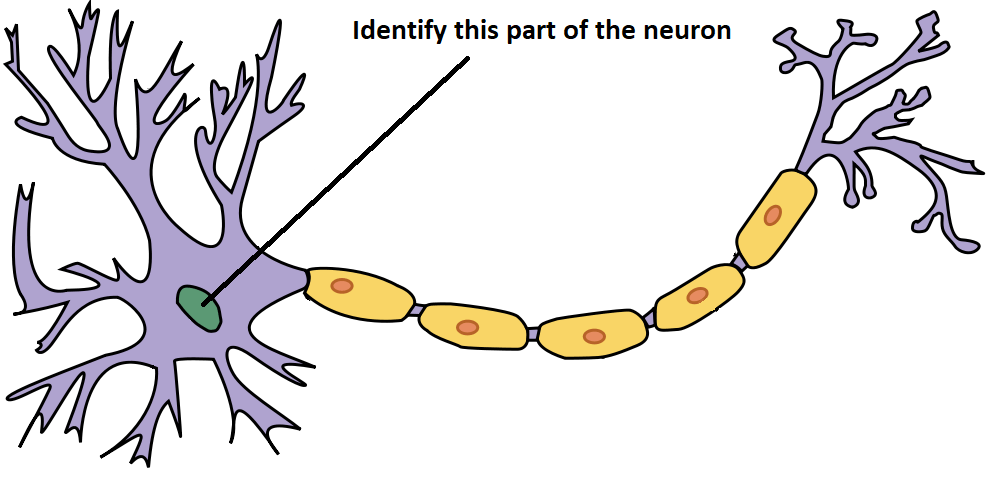
8.
a)

Nucleus

b)

Cell Body

c)

Axon

d)

Node of Ranvier

9.
What do plants give off after photosynthesis?
a)
Oxygen
b)
carbon
c)
nitrogen
d)
hydrogen
10.
Plants need ________from the air for photosynthesis
a)
oxygen
b)
soil
c)
carbon dioxide
d)
sugar
11.
What molecule absorbs sunlight during photosynthesis?
a)
Epidermis
b)
thylakoid
c)
the leaf
d)
chlorophyll
12.
What are the three (3) main parts of the nervous system?
a)
cerebellum, cerebrum, medulla
b)
cochlea, nerves, vestibule
c)
brain, spinal cord, nerves
13.
What sense organ is responsible for our sense of touch?
a)
Ears
b)
Face
c)
Nose 
d)
Skin
14.

What does the nervous system do?

a)

Pumps blood from your heart to your body

b)

Carries messages back and forth between your brand and the rest of your body

c)

Breaks up food

d)

Secrete hormones.

15.

What are the senses that the nervous system receives messages from? (mark all that apply)

a)

Vision

b)

Hearing

c)

Smell

d)

Taste

e)

Touch