
 Worksheets
Macromolecule Quiz
Total questions: 25
Worksheet time: 45mins
Proteins are composed of what smaller building blocks?
amino acids
nucleic acids
fatty acids
nucleotides
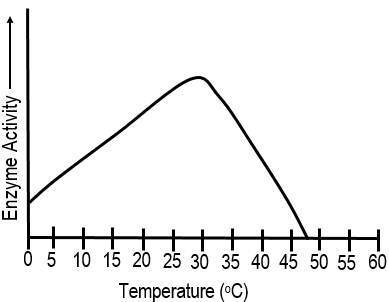
Based on the graph, what temperature does this enzyme work best?
15 C
40 C
30 C
Enzymes are
nucleic acids
proteins
lipids
carbohydrates
Enzymes are _________ that __________ chemical reactions.
proteins, slow down
proteins, speed up
lipids, slow down
lipids, speed up
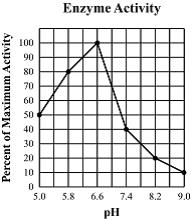
Which of the following conclusions can be drawn from this graph?
The optimum pH of the enzyme is 6.6.
The optimum pH of the enzyme is 5.8
The enzyme’s activity increases as pH increases 5.0 to 9.0
The enzyme’s activity is greater around pH of 8.0 .
What happens when enzymes are heated to a high temperature?
The enzymes die.
The shapes of the enzyme are altered or denatured
The enzymes' amino acid sequence changes.
The enzymes remain the same
Which factors can change the shape of an enzyme and thus denatures a enzyme?
Excessive heat and changes in pH
Nothing can
Exposure to light and sound
Exposure to bacteria and amoebas
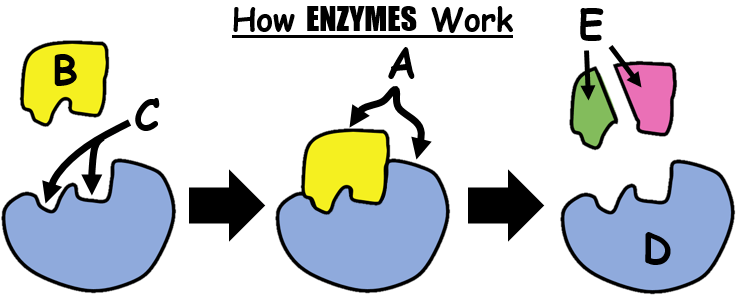
Letter D...
active site
enzyme
substrate
products

The graph shows how the activity of an enzyme changes over a range of pH values. Which of the following conclusions can be drawn from this graph?
pepsin works best at a pH near 2
pepsin works best at a pH of 9

The function of the nucleic acid is --
to store and transmit genetic information inherited from your parents
to maintain our body temperature
to build up muscles bones and other body parts
to regulate sugar in your blood and give your cells energy

Which of the following is a characteristic of protein?
Made up of amino acids and regulate cellular processes
Fats, oils, and waxes
Complex carbohydrates known as starches
DNA and RNA

Which group of biomolecules is important in the composition of the cell membrane?
Protein
Carbohydrate
Lipid
Nucleic acid
Which biomolecule is helpful for long term energy storage?
Nucleic acid
Protein
Carbohydrate
Lipid

Which biomolecule is useful for a fast source of energy?
Lipid
Nucleic acid
Protein
Carbohydrate
What is the monomer for proteins?
Amino acid
Nucleotide
Fatty acid
Monosaccharide
Which monomer makes up nucleic acids?
Amino acid
Nucleotide
Fatty acid
Monosaccharide
What is the monomer for carbohydrates?
Amino acid
Nucleotide
Fatty acid
Monosaccharide
Which two biomolecules are made up only of carbon, hydrogen, and oxygen?
Protein and Nucleic Acid
Protein and Lipid
Carbohydrate and Lipid
Carbohydrate and Nucleic Acid
Carbon, hydrogen, oxygen, nitrogen, and phosphorous make up which group of biomolecules?
Protein
Carbohydrates
Lipids
Nucleic acid
Which of the following macromolecule is NOT correctly matched with its function and monomer?
Carbohydrates:
Monomer- Monosaccharide/glucose
Function- provide short term energy
Lipids:
Monomer- fatty acids and glycerol
Function- provide long term energy and a major component of cell membrane
Proteins:
Monomer- DNA
Function- provide energy for protein synthesis
Nucleic Acids:
Monomer- nucleotide
Function- store the genetic information needed for protein synthesis
Keratin is a protein found in hair, nails, and feathers of animals. Which of the following elements is most abundant in keratin?
Carbon
Aluminum
Phosphorus
Zinc
Milk contains a high concentration of the carbohydrate lactose. What is the basic structure of lactose?
a chain of amino acids in a helix shape
two monosaccharides joined together
two fatty acids joined to a phosphate group
a chain of alternating sugar and phosphate groups
Some bacteria produce cellulase, a substance that speeds up the breakdown of cellulose in plant cell walls. Cellulase is an example of which of the following?
a steroid
an enzyme
a hormone
an organelle
Plant species such as the sesame plant and the coconut palm have large amounts of lipids in their seeds. Which of the following is the most likely function of these lipids?
to store energy for the seedlings
to absorb water for the seedlings
to encode most of the genetic information in the seedlings
to speed up most of the chemical reactions in the seedlings

