wayground logo

Free Printable Worksheets

Font size

S
M
L
XL
Worksheets

BENCHMARK REVIEW

Total questions: 125

Worksheet time: 2hrs 27mins

Name
Class
Date
1.
How did the Industrial Revolution change the way we create goods?
a)
we made fewer products
b)
we made better quality products
c)
we made products from home
d)
mass production & cheaper goods
2.
The cotton gin was invented by _____, which helped separate seeds from cotton fiber.
a)
Eli Whitney
b)
Henry Ford
c)
Robert Fulton
d)
Edmund Cartwright
3.
Why did people move to cities during the Industrial Revolution?
a)
People were looking for work.
b)
People were looking for farms.
c)
People wanted to buy a house.
d)
People wanted to sell their crops.
4.
Who started Factory system in the United States? 
a)
Francis Lowell 
b)
Eli Whitney 
c)
James Monroe 
d)
Henry Clay
5.
What state did the U.S. acquire with the Adams Onis Treaty 
a)
Florida 
b)
Missouri 
c)
Illinois 
d)
Kentucky 
6.
Steamboats and Railroads did all the following EXCEPT 
a)
Better relations with natives 
b)
Cities grew 
c)
Cut shipping costs 
d)
Made goods cheaper 
7.
What did Samuel Morse invent?
a)
the steam engine
b)
the steamboat
c)
the telegraph machine
d)
the telephone
8.
Samuel F. B. Morse invented the telegraph. Which area of life was improved by this invention?
a)
communication
b)
farming
c)
industry
d)
transportation
9.
The _____ of the Southern Colonies was based on farming.
a)
economy 
b)
colony
c)
merchant
10.
Which are the Middle Colonies?
a)
Main, New Hampshire, and Rhode Island
b)
Georgia, South Carolina, and Virginia
c)
Pennsylvania, New York, and New Jersey
11.
What was the New England economy shaped by?
a)
Rocky soil, long winters
b)
Fertile Soil, short winters
c)
Forest, mild summers
d)
Mountainous land
12.
Which amendment abolished slavery in 1865?
a)
13th Amendment
b)
14th Amendment
c)
15th Amendment
13.
Which amendment gave African-Americans the right to vote in 1869?
a)
13th Amendment
b)
14th Amendment
c)
15th Amendment
14.
Which amendment said anyone born in United States is a citizen in 1868?
a)
13th Amendment
b)
14th Amendment
c)
15th Amendment
15.
The Southern economy was based MOSTLY on:
a)
Paid workers
b)
Industry
c)
Agriculture
d)
Goods & Services
16.

The Northern economy was based MOSTLY on:

a)

Unpaid workers

b)

Industry

c)

Agriculture

d)

Goods & Services

17.
The President during the Civil War was ______________________.
a)
Thomas Jefferson 
b)
Abraham Lincoln
c)
Henry Clay 
d)
Robert E. Lee
18.
What was the main cause of the Civil War? 
a)
Debate over slavery
b)
Debate over land ownership
c)
Debate over religion
d)
Debate over taxes
19.
How did Harriet Tubman help slaves?
a)
She helped injured and sick slaves hurt their masters.
b)
She brought food to the slaves who were starving.
c)
She offered the escaped slaves a place to live.
d)
She helped them escape through the Underground Railroad.
20.
One of the goals of the women's suffrage movement was to
a)
give women the right to work.
b)
allow women to attend church.
c)
give women the right to vote.
d)
get women out of schools.
21.

What is something that Lucretia Mott, Elizabeth Cady Stanton, Sojourner Truth, and Harriet Tubman have in common? (more than one answer)

a)

They disagreed with slavery

b)

They felt women should have rights, for example, the right to vote

c)

They felt slavery was okay

d)

They agreed that women should NOT have a voice or vote

22.

Ratification means...

a)

To Approve

b)

To Deny

c)

To Block

d)

To Allow

23.
The Federalist Papers were a series of newspaper articles published in 1787 and 1788 to win support for the
a)
right of the colonies to rebel against Great Britain
b)
right of a state to secede from the Union
c)
ratification of the United States Constitution
d)
construction of an interstate canal system
24.

Who wanted strong state government?

a)

Federalist

b)

Anti-Federalist

25.

What was the name of the papers written to support the Constitution?

a)

Lubbock Avalanche Journal

b)

Federalist Papers

c)

Anti-Federalist Papers

26.
Who would say: The President created by the Constitution is really just a king.
a)
Federalists
b)
Anti-Federalists
27.
Which countries came to the colonies to trade furs?
a)
Spanish and English
b)
French and Dutch
28.

The French and Dutch colonized in North America to trade ______ with the Indians.

a)

Cotton

b)

Furs

29.

Under the production method called cottage industry, people worked ______.

a)

in factories

b)

at home

c)

on farms

d)

for free

30.

After the Industrial Revolution, people ___________.

a)

bought food and clothing from stores

b)

lived in cities

c)

worked in factories

d)

all of these

31.
Declaration of Independence
a)
1787
b)
1776
c)
1777
d)
1797
32.
The Bill of Rights are in which document?
a)
Declaration of Independence
b)
U.S. Constitution
c)
Mayflower Compact
d)
Magna Carta
33.

Which is incorrect?

a)

Mayflower = Pilgrims

b)

Fundamental Orders of Connecticut = Thomas Hooker

c)

Declaration of Independence = King George III

d)

Constitution = James Madison

34.
What did the Mayflower Compact include?
a)
It was the first constitution in the colonies
b)
it had a form of self-government
c)
in was the first elected legislative assembly in the colonies
d)
none of these
35.

The city officers were elected by the people on the January ballot. This is an example of which of the principles of government?

a)

Limited Government

b)

Popular Sovereignty

c)

Individual Rights

d)

Republicanism

36.

In November, I will vote for someone to represent my beliefs in government (Example: President, Senators, Representatives). This person will represent me in Congress. Which Constitutional Principle is this an example of?

a)

Federalism

b)

Checks and Balances

c)

Republicanism

d)

Limited Government

37.
Articles of Confederation
a)
1776
b)
1787
c)
1777
d)
1788
38.
U.S. BILL OF RIGHTS
a)
1787
b)
1791
c)
1620
d)
1639
39.

1775-1781

a)

American Revolution

b)

French and Indian War

40.

1787

a)

Declaration of Independence

b)

Maylower Compact

c)

Articles of Confederation

d)

U.S. Constitution

41.
A ban on trade 
a)
Embargo
b)
Tariff
c)
Sedition
d)
Protective Tariff
42.
To legally or officially cancel or void something. 
a)
Nullify 
b)
Sedition
c)
Embargo
d)
Tariff
43.

Policies regarding the US relationship with other countries.

a)

Domestic Policy

b)

Foreign Policy

44.
Who was the leader of France that sold Louisiana to us?
a)
Napoleon Dynamite
b)
King Louis XVI
c)
Napoleon Bonaparte
d)
King George III
45.

Which Indian joined Lewis and Clark to act as a guide and interpreter?

a)

Pocahontas

b)

Nantucket

c)

Black Kettle

d)

Sacagawea

46.

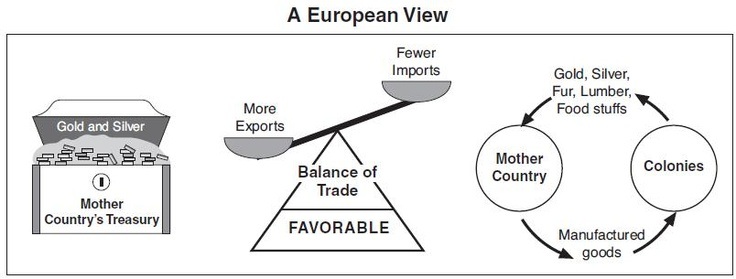
What is mercantilism?

a)

A system where a mother countries gains money and power from natural resources that come from its colonies.

b)

where colonies trade gold and silver with each other.

c)

Wars that start over money.

d)

Plantation colonies trading slaves for money.

47.

The impact of mercantilism was that

a)

The rate of slavery in the Americas went down

b)

Trade was limited in the Atlantic

c)

The Colony grew wealthy

d)

The Mother Country grew wealthy

48.
Wood, water, bricks, corn - are all from the earth. These are called: ____________.
a)
finished products
b)
mercantilism
c)
plants
d)
raw materials
49.

To be a naturalized citizen, a person must--

a)

be 18 years or older

b)

be a resident of the U.S. at least 5 years

c)

all of these

d)

pass a citizenship test

50.

Which of the following is a picture of a jury?

a)
b)
c)
d)
51.

___________ and serving on ___________ are citizenship responsibilities.

a)

running for office, court

b)

voting, juries

52.
a)
MASSACHUSETTS
b)
RHODE ISLAND
c)
DELAWARE
d)
NEW JERSEY
53.

What was James Madison known for?

a)

Being the Father of The Constitution

b)

Divorcing his wife while in office

c)

Serving two terms in the White House

54.
Which future president became a legendary war hero in the Battle of New Orleans?
a)
Andrew Jackson
b)
James Monroe
c)
Andrew Johnson
d)
James K. Polk
55.
Who wrote the Star Spangled Banner?
a)
Francis Scott Kay
b)
Francis Scott Kane
c)
Francis Scott Key
d)
Francis Scott Keen
56.
Which colony is this?
a)
North Carolina
b)
South Carolina
c)
Georgia
d)
Maryland
57.
Who established the Georgia colony for debtors?
a)
Roger Willaims
b)
William Penn
c)
Lord Baltimore
d)
James Oglethorpe
58.
First African-American to be elected into the U.S. Senate, represented Mississippi. 
a)
Abraham Lincoln
b)
Hiram Rhodes Revels
c)
Ulysses S. Grant
59.

1607 the first permanent settlement and successful English Settlement in North America.

a)

Jamestown, Virginia

b)

Plymouth, Virginia

c)

Baltimore, Maryland

60.

Written by the Pilgrims aboard the ship Mayflower in 1620, established their own self-government and laws

a)

Mayflower Compact

b)

Declaration of Independence

c)

Magna Carta

61.
This territory was purchased by Jefferson from France, doubling the size of the United States.
a)
Magna Carta 1215
b)
Civil War 1861-1865
c)
Louisiana Purchase 1803
d)
United States Expansion 
62.
Union (North) vs Confederate (South) over sectionalism, states' rights, tariffs, and slavery.
a)
Louisiana Purchase 1803
b)
The Civil War 1861-1865
c)
The Magna Carta 1215
d)
French and American War
63.
The Second Great Awakening was referring to what?
a)
revival of strong religious feelings
b)
when your mom comes in your room the second time
c)
return to a king
d)
return to law of the land
64.

Which is not a consequences of Eli Whitney's Cotton Gin?

a)

The demand and price of slaves increased

b)

Expansion of cotton production which required more slaves

c)

American economy sees benefit of working with machines.

d)

More Americans start moving East.

65.
This taxed printed papers and documents.
a)
The Olive Branch Petition
b)
The Boston Tea Party
c)
The Intolerable Acts
d)
The Stamp Act
66.
The Declaration of Independence was signed on,
a)
July 4, 1776
b)
July 4, 1770
c)
July 4, 1820
d)
July 4, 1775
67.
What was the common slogan used in the Colonies?
a)
"Give me liberty or Give me death"
b)
"No Taxation without Representation"
c)
"No Stamp Act, No Sugar Act"
d)
"Never eat spinach with a stranger"
68.
The Townshend Acts put taxes on  _________.
a)
cloth
b)
 salt and sugar 
c)
glass, tea, paint, paper
69.

Under the Articles of Confederation there was

NO

-President

-Army

-Court System

- ?

a)

Taxes

b)

Legislative branch

70.
-Issue $
-Declare War
-Make Treaties
-Set up post offices
a)
Strengths of the Articles of Confederation
b)
Weaknesses of the Articles of Confederation
71.
What is the Northwest Ordinance?
a)
New territory was added to the Union
b)
Colonists were not allowed to settle west of the Appalachian Mountains
72.

-60,000 people to make a state

-no slavery

-free education

-added new territory to the Union

a)

Northwest Ordinance

b)

Proclamation of 1763

c)

Shays' Rebellion

d)

Wilmot Perviso

73.

In the American Free Enterprise System, you have the right to buy or sell private property to make a profit.

a)

True

b)

False

74.

_____________ wanted to end slavery

a)

abolitionists

b)

suffragists

75.
What is "suffrage"?
a)
The right to bear arms
b)
The right to drink alcohol
c)
The right to end suffering
d)
The right to vote
76.

The 2nd Great Awakening was a____

a)

Reform movement that only fought for equal rights for women.

b)

Reform movement that only fought for improved prison conditions.

c)

Religious revival that encouraged people to improve themselves and get involved in Reform Movements.

77.
A philosophical and literal movement emphasizing a simple life and truth found in yourself and nature.
a)
Socialism
b)
Libertarianism
c)
Communism
d)
Transcendentalism
78.
What is the first amendment of the Bill of Rights?
a)
Freedom of religion, assembly, petition, press, and speech
b)
the right to bear arms (guns)
c)
no quartering of soldiers
d)
no unreasonable search or seizures
79.
What is the second amendment of the Bill of Rights?
a)
Freedom of religion, assembly, petition, press, and speech
b)
no quartering of soldiers
c)
federalism
d)
right to bear arms (guns)
80.
What is the third amendment of the Bill of Rights?
a)
right to bear arms
b)
no quartering of soldiers
c)
right to a trial by jury
d)
no cruel or unusual punishment
81.
Federalism (power to the states) is part of which amendment?
a)
3rd amendment
b)
10th amendment
c)
9th amendment
d)
7th amendment
82.
Right that are not written in the U.S. Constitution are reserved to the people --
a)
10 amendment
b)
4th amendment
c)
6th amendment
d)
9th amendment
83.
No unreasonable searches or seizures without a warrant
a)
1st amendment
b)
5th amendment
c)
4th amendment
d)
8th amendment
84.
No double Jeopardy and your Miranda Rights ("You have right right to remain silent...") are part of which amendment?
a)
3rd amendment
b)
5th amendment
c)
7th amendment
d)
1st amendment
85.
-the right to a fair and speedy trial
-the right to a lawyer
a)
2nd amendment
b)
10th amendment
c)
4th amendment
d)
6th amendment
86.
-where the value in controversy shall exceed twenty dollars, (make it rain)
-the right of trial by jury in civil cases
a)
7th amendment
b)
8th amendment
c)
9th amendment
d)
10th amendment
87.
8th amendment
a)
right to bear arms
b)
federalism
c)
-no cruel or unusual punishment
-no excessive bail
d)
no unreasonable searches or seizures
88.
What does federalism mean?
a)
the president has the right to declare war
b)
state and national government share power
c)
the three branches of government all have separate powers
89.
18 years or older
Must read, speak, and write in English
Living in the U.S. for 5 years
Oath of Allegiance
a)
Citizenship by birth
b)
Citizenship by Naturalization
90.
Why did President Polk want Mexican territory?
a)
He wanted to expand the US
b)
The land had good resources
c)
He needed room to build a mansion for his cats
d)
To get Shrek'd
91.
Why did the U.S. and Mexico go to war?
a)
All of these answers are correct
b)
The U.S. and Mexico disagreed over their boundary
c)
America's continued desire to achieve manifest destiny
d)
The U.S. recently annexed Texas
92.
What was the cause of the Whiskey Rebellion?
a)
Farmers refused to pay taxes on whiskey
b)
Farmers refused to use grain to produce whiskey
c)
The government wouldn't allow the trade of whiskey
d)
The government made the production of whiskey illegal
93.
What advice did Pres. Washington give to Americans in his Farewell Address?
a)
Pay taxes without complaint
b)
Support the revolution in France
c)
Do not address the president with royal titles
d)
Do not let political party loyalty divide the nation
94.
Which of these was a major issue dividing the Federalist and Republican parties?
a)
How do divide the nation's wealth equally
b)
How many terms a president should serve
c)
How large and powerful the military should be
d)
How large and powerful the federal government should be
95.
What is the practice of kidnapping sailors and forcing them to serve?
a)
Impressment
b)
Isolationism
c)
Sedition
d)
Embargo
96.

Which word means to refuse to recognize a federal law?

a)

Nullify

b)

Sedition

c)

Neutrality

d)

Embargo

97.

The Monroe Doctrines purpose was to remove ALL foreign/European powers from where?

a)

The Eastern Hemisphere

b)

The Western Hemisphere

98.

The ___________ are for the ratification (approval) of the U.S Constitution.

a)

Federalists

b)

Anti-Federalists

c)

Whiggs

d)

Representatives

99.
Which of the following was the first battle to start the American Revolution?
a)
Battle of Trenton
b)
Battle of Yorktown
c)
Battle of Saratoga
d)
Battles of Lexington and Concord
100.
In which battle did Cornwallis surrender?
a)
Battle of Lexington and Concord
b)
Battle of Yorktown
101.
Which of the following was the final battle of the American Revolution?
a)
Battle of Lexington and Concord
b)
Battle of Saratoga
c)
Battle of Yorktown
d)
Battle of Trenton
102.
Who was the leader of the Continental Army during the American Revolution?
a)
Lord Cornwallis
b)
George Washington
103.
How did the Industrial Revolution affect the cities?
a)
Made the crime rate decrease
b)
Led to an increase in farm workers
c)
Make the cities cleaner and safer
d)
Led to an increase in population in the cities
104.

Mrs. Garza moves to an urban area, she moved to the ----

a)

colonies

b)

city

c)

country land

d)

rural area

105.

Rural means

a)

city

b)

countryside

c)

Chicago

d)

Dhaka

106.
Fundamental Orders Of Connecticut
a)
1607
b)
1619
c)
1620
d)
1639
107.
- Believed in equality for all
- Escaped religious persecution
- Leader: William Penn
a)
Quakers
b)
Pilgrims
108.
-Freezing cold winters
-Swift rivers, thick forests
-Rocky soil
-Fishing, shipbuilding, whaling
a)
New England 
b)
Middle
c)
Southern
109.

-Moderate temperature

-Slow rivers, fertile soil

-Livestock, iron, wheat

-Quakers

a)

Middle

b)

New England

c)

Southern

110.
Why did the colonies need slaves from Africa?
a)
To work the plantations
b)
To build ships
111.
Founder of Connecticut
a)
Thomas Hooker
b)
William Penn
112.

-First written Constitution in the colonies

-extended voting rights

-1639

a)

Fundamental Orders of Connecticut

b)

Virginia House of Burgesses

113.

The deal between Henry Clay and John Q Adams that offered the houses support for John Q Adams as president in return for Clay becoming Secretary of State is known as the________?

a)

12th Amendment

b)

Shady Deal

c)

Corrupt Bargain

114.
Why is the path Native Americans moved west on called the Trail of Tears?
a)
The trail was under water
b)
It stands for the loss of land
c)
So many died along the way due to starvation, exposure, and disease
d)
There was much fighting and conflict along the way
115.
Jackson rewarded his supporters with jobs in the ______ which is called the “Spoils System”.
a)
city
b)
court
c)
government
d)
kitchen
116.
Which Supreme Court decision established the principle that the federal government rather than the individual state governments has authority to deal with American Indian affairs?
a)
Marbury v. Madison
b)
Worcester v. Georgia
c)
McCulloch v. Maryland
d)
Gibbons v. Ogden
117.
Which term is connected with a state quitting the United States?
a)
Nullification
b)
Annexation
c)
Manifest Destiny
d)
Secession
118.
Why did three times as many people vote in the presidential election of 1828 as voted in 1824?
a)
By 1828, women had gained the right to vote in some states, while no women could vote in 1824.
b)
By 1828, voting laws had been changed in most states to give all white men the right to vote.
c)
The United States had twice as many states in 1828 as it had in 1824.
d)
The candidates running for president in 1828 were more interesting than those running in 1824.
119.
This term refers to the time before the Civil War where the country was divided over the issue of slavery.
a)
Regionalism
b)
Manifest Destiny
c)
Sectionalism
d)
Spoils System
120.
California achieving enough people to become a state in 1850 was as a result of
a)
The Gold Rush
b)
The Steel Stampede
c)
The Iron Riot
d)
The Silver Race
121.
The Supreme Court case Marbury v. Madison established this power
a)
Judicial Oath
b)
Judicial Precedent
c)
Judicial Review
d)
Judicial Constitution
122.

The Embargo Act of 1807 was a failure of Jefferson's Presidency because...

a)

It caused the U.S. economy to weaken

b)

It increased the U.S. economy

123.

What group of people settled in present day Utah after leaving the east coast because of religious persecution?

a)

The Catholics

b)

The Mormons

124.
Which of the following contributed to the westward expansion of the United States?
a)
European warships attacked the eastern seaboard, forcing citizens to move westward for safety.
b)
Most of the land east of the Mississippi River was not suitable for farming.
c)
Many Americans felt it was their right and duty to move westward.
d)
The standard of living on the Pacific Coast was very high, so many people wanted to move there.
125.

Which of the following would most likely be a strong believer in Manifest Destiny?

a)

A farmer wanting to obtain new land

b)

A Native American