
 Worksheets
hydrologic system
Total questions: 24
Worksheet time: 13mins
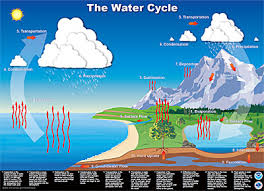
___________________ is the process by which water changes from a liquid to a gas or vapor. __________________ is the primary pathway that water moves from the liquid state back into the water cycle as atmospheric water
Transpiration
Deposition
Percolation
Evaporation
____________________ is the process by which water on the ground surface enters the soil. ________________ rate in soil science is a measure of the rate at which soil is able to absorb rainfall or irrigation.
Infiltration
Percolation
Deposition
Condensation
_____________________ is water released from clouds in the form of rain, freezing rain, sleet, snow, or hail. It is the primary connection in the water cycle that provides for the delivery of atmospheric water to the Earth. Most ________________ falls as rain.
Snowmelt runoff
Precipitation
Surface runoff
Evaporation
__________________ is surface runoff produced from melting snow. It can also be used to describe the period or season during which such runoff is produced.
Surface Runoff
Snowmelt Runoff
Groundwater Flow
Precipitation
___________________ is water taken from the groundwater flow and soil moisture. Only 1% of water the plant draws up is used by the plant. The remaining 99% is passed back into the atmosphere.
Condensation
Infiltration
Surface runoff
Plant uptake
In terms of water, the Earth is a(n) ______________ System
open
closed
Everything is linked to water directly or indirectly. Water is a widespread life sustaining substance comprising ___________% of all living materials and covering a similar percentage of the Earths surface.
20-40
40-60
70-90
80-100
The process in which water moves between places and changes from one form to another is known as the:
geological cycle.
ATP cycle.
carbon cycle.
hydrologic cycle.

What could happen if the water table lowers due to a drought?
There would be more precipitation.
A lake could form in the valley.
The river level could lower.
Transpiration would stop.

Able to allow water to pass through
Impermeable
Runoff
Pores
Permeable

The level in the ground below which is saturated with water.
water table
potable
renewable resource
terrestrial
safe for humans to drink without treatment
potable
renewable resource
water table
hydrologic cycle
a natural source of energy that can be replenished to prevent depletion
renewable resource
potable
polar caps
hydrologic cycle
something related to the land or planet Earth
renewable resource
terrestrial
hydrologic
potable
The study of Earth's oceans is known as
Geology
Hydrology
Meteorology
Oceanography
Any form of water that falls from clouds and reaches Earth's surface like hail, snow, sleet, rain;clouds get heavy and the air cannot hold it any longer.
precipitation
transpiration
condensation
clouds

