
 Worksheets
APES Human Population
Total questions: 17
Worksheet time: 34mins
The replacement-level fertility rate is ____ for developed countries and ____ for developing countries.
1.6; 1.9
2.5; 2.0
2.0; 2.5
2.1; 2.5
1.8; 2.1
Which factor below is least likely to affect birth and fertility rates today?
number of people 60 or older
cost of raising and educating children
religious beliefs
educational and employment opportunities for women
average age at marriage
A metropolitan region of 100,000 people has 2000 births, 500 deaths, 200 emigrants, and 100 immigrants over a 1-year period. Its population growth rate is
1.2 percent.
1.4 percent
1.6 percent.
1.8 percent.
2.0 percent.
Which of the following pairs of indicators best reflects the availability of health care in a country?
Crude death rate and growth rate
Crude death rate and crude birth rate
Growth rate and life expectancy
Infant mortality rate and life expectancy
Infant mortality rate and crude death rate
Which of the following countries best exemplifies phase 4 of a demographic transition?
Argentina
China
India
Mexico
Japan
Using the rule of 70, a population growing at 10% would double in
7 years
10 years
17 years
15 years
not enough information to tell
Populations whose age structure diagrams are narrower at the bottom than at the top have
high death rates
the same proportion of individuals in each age group
a declining population
a high growth rate
all of the above
Which was not a major cause of the population explosion that started with the industrial revolution?
an increase in birth rates
modern preventive medicine
improved sanitation
longer life expectancy
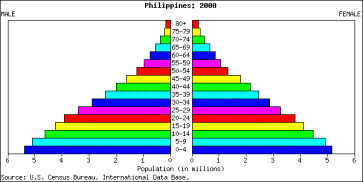

During what stage of the demographic transition, population growth is slow because both death and birth rates are high?
Stage 1
Stage 2
Stage 3
Stage 4
Stage 5

Which of the following statements about total fertility rate is correct
TFR is equal to the crude birth rate minus the crude death rate.
TFR is the average number of children each woman must have to replace the current population.
TFR is generally higher in developed countries than in developing countries
TFR is equal to the growth rate of a country
TFR is the average number of children each woman will give birth to during her childbearing years.
I. women's education
II. increased income
III. advertising campaigns
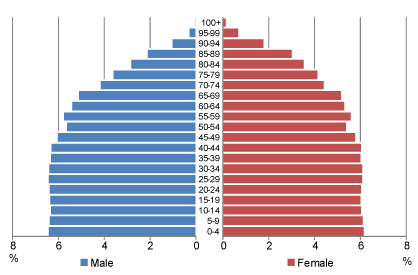
The basic facilities and services that support a community.
arable land
demographic transition
infrastructure
urbanization
Have the highest birth rates
urbanization
developed countries
least-developed countries
arable land

