Wayground logo

Free Printable Worksheets

Font size

S
M
L
XL
Worksheets

Earth, Sun, Moon Interaction Quiz

Total questions: 25

Worksheet time: 47mins

Name
Class
Date
1.
When the Northern Hemisphere is tilted toward the Sun, what season is occurring in Australia?
a)
fall
b)
winter
c)
spring
d)
summer
2.
What causes moon phases?
a)
the rotation of the Moon 
b)
the rotation of the Earth
c)
the revolution of the Moon around the Earth
d)
the tilt of the Earth around the sun
3.

What season is pictured in the Southern Hemisphere?

a)

summer

b)

winter

c)

spring

d)

fall

4.
Which of the following best describes the tilt of the earth when it is summer in the southern hemisphere?
a)
The northern hemisphere is tilted toward the sun
b)
The northern hemisphere is tilted away from the sun
c)
The norther hemisphere is tilted neither toward or away from the sun
d)
Why are you talking about the northern hemisphere when you asked about the southern hemisphere?
5.
What are the reasons for the season?
a)
Earth's tilt & rotation
b)
Earth's tilt & revolution
c)
Earth's rotation & rovolution
d)
Earth's tilt & resolution
6.
If its ____ in the Northern hemisphere, then its summer in the Southern hemisphere. 
a)
spring
b)
summer
c)
fall
d)
winter
7.

Night and day is evidence that the earth is

a)

rotating

b)

revolving

c)

cold

d)

warm

8.

The seasons are caused by the ________ of the axis and the Earth's _____________ around the sun.

a)

tilt, revolution

b)

tilt, rotation

c)

curve, revolution

d)

curve, rotation

9.

The moon does not create its own __________, but reflects the light of the ___________.

a)

phase, sun

b)

light, sun

c)

sun, phase

d)

sun, light

10.
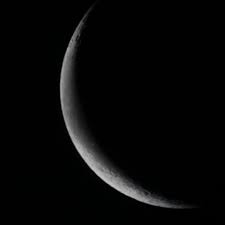
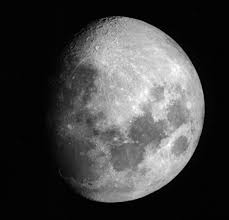
Name the moon phase
a)
waning crescent
b)
waxing crescent
c)
waning gibbous
d)
waxing gibbous
11.
Name the moon phase
a)
waning crescent
b)
waxing crescent
c)
waning gibbous
d)
waxing gibbous
12.
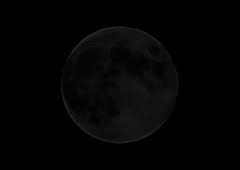
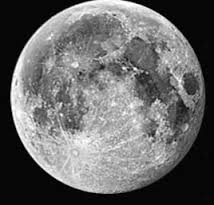
Name the moon phase
a)
First Quarter
b)
Last Quarter
c)
New Moon
d)
Full Moon
13.
Name the moon phase
a)
First Quarter
b)
Last Quarter
c)
New Moon
d)
Full Moon
14.

This model is showing us a...

a)

lunar eclipse

b)

solar eclipse

c)

phases of the moon

d)

earth eclipse

15.

This image is showing us a.....

a)

solar eclipse

b)

lunar eclipse

c)

phases of the moon

d)

earth eclipse

16.

When the moon passes between the earth and the sun, this results in a.....

a)

Waxing moon

b)

lunar eclipse

c)

solar eclipse

d)

sun rise

17.

When the earth is between the sun and the moon, this results in a...

a)

waxing moon

b)

solar eclipse

c)

lunar eclipse

d)

sun rise

18.

In order to have an eclipse, the Moon, Sun and Earth have to be?

a)

Below each other

b)

Above each other

c)

In alignment

19.
What is the central, darker part of a shadow called?
a)
the umbra
b)
the penumbra
20.
What is the lighter part of a shadow where light is partially blocked called?
a)
the umbra
b)
the penumbra
21.

The right side of the Earth is experiencing.

a)

day

b)

night

22.

If you look up at the sky and see this, you are witnessing a....

a)

solar eclipse

b)

total eclipse

c)

lunar eclipse

d)

jupiter

23.

If you are looking up at the sky and see this, you are looking at a....

a)

solar eclipse

b)

total eclipse

c)

lunar eclipse

d)

jupiter

24.
A solar eclipse only happens during a ________ moon.
a)
New
b)
Cresent
c)
Gibbous
d)
Full
25.
A lunar eclipse only happens during a ________ moon.
a)
New
b)
Cresent
c)
Gibbous
d)
Full