wayground logo

Free Printable Worksheets

Font size

S
M
L
XL
Worksheets

amplify chemical reactions chp 1

Total questions: 214

Worksheet time: 2hrs 20mins

Name
Class
Date
1.
A chemical change is different than a physical change because in a chemical change
a)
Chemicals are used
b)
Molecules do not physically touch
c)
A new substance is formed and in a physical change no new substance is formed
d)
The change can be seen but in a physical change it cannot
2.

In a chemical reaction, no new atoms are created, and no atoms are _________________.

a)

Destroyed

b)

Created

3.
The positive particles of an atom are 
a)
electrons 
b)
positrons 
c)
neutrons 
d)
protons 
4.
all matter is made of what 
a)
energy 
b)
atoms 
c)
electrons 
d)
compounds 
5.
the central region of an atom where its neutrons and protons are is its 
a)
nucleus 
b)
electron cloud
c)
core 
d)
center 
6.
an atom with atomic number 6 would have how many protons 
a)
6
b)
12
c)
3
d)
cannot be determined 
7.
Particles in an atom that are neutral and have no charge are 
a)
negatrons 
b)
electrons 
c)
neutrons 
d)
protons 
8.
An atoms overall charge is 
a)
positive 
b)
depends on its mood 
c)
neutral 
d)
negative 
9.
What is the atomic number for an element with three protons?
a)
2
b)
1
c)
3
d)
6
10.
An atom's mass number equals the number of...
a)
protons plus the number of electrons
b)
protons plus the number of neutrons
c)
protons
d)
neutrons
11.
Which statement about the atomic nucleus is correct?
a)
The nucleus is made of protons and neutrons and has a negative charge
b)
The nucleus is made of protons and neutrons and has a positive charge
c)
The nucleus is made of electrons and has a positive charge
d)
The nucleus is made of electrons and has a negative charge
12.
Which statement best describes an electron?
a)
Smaller mass than a proton and a negative charge
b)
Smaller mass than a proton and a positive charge
c)
Greater mass than a proton and a negative charge
d)
Greater mass than a proton and a positive charge
13.
A particle that moves around the nucleus is a(n)...
a)
Proton
b)
Neutron
c)
Electron
d)
Quark
14.
Atoms have no electric charge because they...
a)
have an equal number of charged and non charged particles
b)
have neutrons in their nuclei
c)
have an equal number of electrons and protons
d)
have an equal number of neutrons and protons
15.
What does the nucleus consist of?
a)
Protons + Electrons
b)
Neutrons + Electrons
c)
Atoms
d)
Protons + Neutrons
16.
What is the smallest?
a)
worm
b)
molecule
c)
galaxy
d)
atom
17.
Electrons are___________
a)
Extremely small even in comparison to protons.
b)
part of the nuclues.
c)
Super Positive, like cheerleaders!
d)
very large
18.
What charge does an Electron have?
a)
Negative
b)
Positive
c)
Neutral
d)
Complicated
19.
What charge does a Proton have?
a)
Negative
b)
Positive
c)
Neutral
d)
Contrated
20.
What subatomic particles would you find in the nucleus of an atom?
a)
Protons only
b)
Protons and Neutrons
c)
Neutrons and Electrons
d)
Protons and Electrons 
21.
What is the mass of an atom if it has 11 protons, 12 neutrons, and 11 electrons?
a)
22
b)
11
c)
34
d)
23
22.
If an atom has 10 protons, 10 neutrons, and 10 electrons, what is the mass of the atom?
a)
10
b)
20
c)
30
23.
If an atom has 12 positively charged subatomic particles, which of the following must it also have to be considered a neutral atom?
a)
12 neutrons
b)
12 electrons
c)
12 protons
d)
24 protons and neutrons
24.
The smallest particle of any type of matter is known by which of the following terms?
a)
Element
b)
Compound
c)
Atom
d)
Chemical
25.
Which one of these is NOT located in the element square on the Periodic Table?
a)
Atomic Number
b)
Atomic Mass
c)
Room Temperature
d)
Chemical Symbol
26.
Where are electrons of an atom found?
a)
Nucleus
b)
Electron Cloud
c)
Some are in the nucleus and some in the electron cloud.
d)
They are moving everywhere.
27.
What is the atomic number for an element with three protons?
a)
2
b)
1
c)
3
d)
6
28.
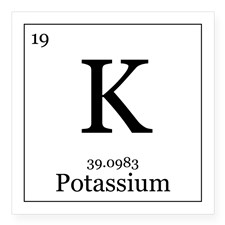
How many neutron are in the atom "K"?
a)
7
b)
2
c)
39
d)
20
29.
all matter is made of what 
a)
energy 
b)
atoms 
c)
electrons 
d)
compounds 
30.

What does the 1.00794 stand for?

a)

mass number

b)

atomic number

c)

average atomic mass

d)

number of protons

31.
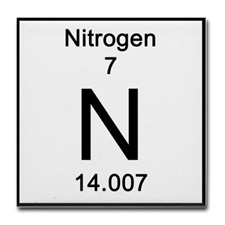
What is the number of protons that the element in this image contain?
a)
14
b)
7
c)
15
d)
18
32.

What makes elements and compounds different from mixtures? Elements & compounds-

a)

have a constant composition (pure substances)

b)

are made of gases

c)

Will not change when heated

d)

conduct electric current

33.

Mixtures are different than pure substances because mixtures-

a)

have lower boiling points

b)

can be separated physically

c)

are less dense than pure substances

d)

contain only one type of atom

34.

Which of the following is an example of the formation of a mixture?

a)

Rust forming on an iron nail.

b)

Sugar crystals dissolving in water.

c)

Sodium and chlorine forming table salt.

d)

Hydrogen and oxygen reacting to produce oxygen.

35.

Which statement identifies why oxygen is classified as a pure substance and air is classified as a mixture?

a)

Oxygen is more reactive than air.

b)

Oxygen has a higher density than air.

c)

Oxygen goes under a phase change, whereas air is always a gas.

d)

Oxygen contains only one substance, but air contains several substances.

36.

Water (H2O), is not found on the periodic table because water is a...

a)

atom

b)

liquid

c)

mixture

d)

compound

37.

Which of the following explains why saltwater is considered a mixture?

a)

It is composed of one element.

b)

It is composed of one compound.

c)

It is composed of two or more substances and has new chemical properties.

d)

It is composed of two or more substances and retains their own chemical properties.

38.

This image is a model of...

a)

an element

b)

a compound

c)

a homogenous mixture

d)

a heterogeneous mixture

39.

This picture is a model of...

a)

an element

b)

a compound

c)

a homogenious mixture

d)

a heterogeneous mixture.

40.

This picture is a model of a...

a)

element

b)

compound

c)

homogeneous mixture

d)

heterogeneous mixture

41.

The image below is an example of

a)

a homogeneous mixture

b)

a compound

c)

a heterogeneous mixture

d)

an element

42.
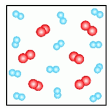
This diagram represents a _____.
a)
pure substance that is a compound
b)
mixture of elements
c)
pure substance that is an element
d)
mixture of compounds
43.
This diagram represents a _____.
a)
pure substance that is a compound
b)
mixture of elements
c)
pure substance that is an element
d)
mixture of compounds
44.
What is CO2 and example of?
a)
element
b)
mixture
c)
compound
45.
A combination of pure substances, not in fixed amounts, that can be easily separated.is a
a)
MIXTURE
b)
COMPOUND
c)
ATOM
d)
PARTICLE
46.
Something made up of two or more substances is called a 
a)
mixture
b)
element
c)
compound
d)
natural
47.
A pure substance made up of only one type of atom e.g. oxygen or carbon
a)
element
b)
emulsion
c)
pure substance
d)
compound
48.
A substance that is made up of two or more different types of atoms bonded together e.g. water
a)
compound
b)
solvent
c)
element
d)
solution
49.

What is an element?

a)

Two or more atoms joined together.

b)

One of over 100 types of atoms

c)

Two or more different elements joined together.

d)

A particle with no charge found in the nucleus of an atom.

50.

What two subatomic particles are found in the nucleus?

a)

proton and electron

b)

electron and neutron

c)

neutron and proton

d)

neutron and electron

51.

An atom has 4 protons.

How many electrons does it have if the atom has a -1 charge?

a)

6

b)

5

c)

4

d)

3

52.

What is an ion?

a)

a charged atom

b)

an atom with different neutrons

c)

atoms with no protons

d)

atoms with no electrons

53.

The diagram above shows the repeating groups of atoms that make up two samples. Will the properties of the two samples likely be the same or different? (Examples of properties are smell, color, and the temperature at which a substance melts.)

a)

The properties will likely be different because the repeating groups of atoms that make up each sample are different

b)

The properties will likely be different because there are more repeating groups of atoms in Sample 2.

c)

The properties will likely be the same because the repeating groups of atoms that make up the two samples have the same number of atoms.

d)

The properties will likely be the same because the repeating groups of atoms that make up the two samples have two of the same types of atoms.

54.

Serena mixed two samples together: a gray solid that smells like flowers and a gray solid that smells like bleach. She analyzed the results and found two ending substances. One of the ending substances was a white solid. This ending substance is made up of the repeating group of atoms shown above. Which of the diagrams to the left shows the repeating groups of atoms that make up the samples Serena mixed together?

a)
b)
c)
d)
55.
Which of the following is a chemical change?
a)
water freezes to form ice
b)
sugar dissolves in water
c)
gasoline burns in a car engine
d)
a piece of metal expands when it is heated
56.
In the reaction methane + oxygen turns into carbon dioxide + water, the methane and oxygen are called _______________.
a)
reactants
b)
products
c)
neutrals
d)
energizers
57.

Method or means of changing one or more chemicals or chemical compounds

a)

Chemical Process

b)

Chemical Reaction

c)

Molecule

d)

Properties

58.

The smallest particle of an element; made of electrons, protons, and neutrons

a)

Atoms

b)

Elements

c)

Molecules

d)

Products

59.

A substance that takes part in and undergoes change during a reaction

a)

Product

b)

Molecule

c)

Reactant

60.

A new substance with unique chemical and physical properties that is formed when two or more elements are chemically bonded during a chemical reaction

a)

Product

b)

Compound

c)

Molecule

d)

Atom

61.
_______________ is an example of both a color change and new substance produced from a chemical change with oxygen and metal.
a)
shredded paper
b)
rust (iron oxide)
c)
wood chips
d)
melted wax
62.
The atomic number tells you what?
a)
number of electrons
b)
number of protons
c)
number of neutrons
d)
both electrons and protons in an atom.
63.
Elements which are shiny, conduct electricity and heat are called
a)
metal
b)
nonmetal
c)
metalloid
d)
nonexistent
64.
Which is a halogen?
a)
Helium
b)
Chlorine
c)
Oxygen
d)
Neptune
65.
Which is an alkali metal?
a)
Magnesium
b)
Iron
c)
Sodium
d)
Europium
66.
If an atom had the same properties as fluorine (F), it would probably be located in
a)
period 1.
b)
period 2.
c)
group 2.
d)
group 17.
67.
Atoms with similar properties are most likely located...
a)
in the same period.
b)
in the same group.
c)
in different periods.
d)
to the right and left of each other.
68.
What is the element symbol for boron? 
a)
B
b)
Bo
c)
Bn
d)
W
69.
Each element is unique based on its number of protons, also known as the...
a)
atomic mass
b)
valence number
c)
atomic symbol
d)
atomic number
70.
The atomic number of this pictured element is
a)
28
b)
58.6934
c)
Ni
d)
Nickel
71.
what does the 6 represent?
a)
Atomic mass
b)
atomic number
c)
chemical symbol
d)
element name
72.
Group Name and Number for Neon
a)
Alkaline Earth Metals 2 or 2A
b)
Noble Gases 18 or 8A
c)
Halogens 17 or 7A
d)
Alkali Metals 1 or 1A
73.
Group Name and Number for Flourine
a)
Transition Metals 3-12
b)
Noble Gases 18 or 8A
c)
Halogens 17 or 7A
d)
Alkali Metals 1 or 1A
74.
Group Name and Number for Magnesium
a)
Alkaline Earth Metals 2 or 2A
b)
Noble Gases 18 or 8A
c)
Halogens 17 or 7A
d)
Alkali Metals 1 or 1A
75.
A proton is....
a)
A negatively charged subatomic particle
b)
A positively charged subatomic particle
c)
A neutrally charged subatomic particle
d)
The only subatomic particle located in the nucleus
76.
A neutron has a charge of
a)
+2
b)
No charge
c)
-1
d)
+1
77.
Which elements have the most similar chemical properties?
a)
K and Na
b)
K and Ca
c)
K and Cl
d)
K and S
78.
What is the atomic mass of Neon?
a)
10
b)
30
c)
10.18
d)
20.18
79.
Which is a neutron?
a)
A
b)
B
c)
C
80.
Who first developed the Periodic Table?
a)
Mendeleev
b)
Mosely
c)
Mendella
d)
Murphy
81.
What is the formula to solve for the neutron?
a)
Mass + Atomic Number= Neutrons
b)
Mass x Atomic Number = Neutrons
c)
Mass - Atomic Number = Neutrons
d)
Mass + Number of Protons = Neutron
82.

What is the name of group number 1?

a)

halogens

b)

noble gases

c)

alkali metals

d)

alkaline earth metals

83.

What is the name of group number 2?

a)

transition metals

b)

halogens

c)

metaloids

d)

alkaline earth metals

84.

where are the metaloids found

a)

far left, vertical

b)

stair step/diagonal

c)

far right horizontal

d)

at the bottom

85.

What group number are the halogens found?

a)

18 (8A)

b)

1

c)

2

d)

17 (7A)

86.

Periodic law states that the elements are arranged according to their atomic ________ so that elements with similar chemical properties are in the same ________ and properties repeat periodically.

a)

numbers, rows

b)

masses, rows

c)

masses, column

d)

numbers, column

87.

A grouping of elements based on similar chemical properties, arranged by columns in the periodic table; also known as a group

a)

family

b)

period

c)

row

d)

isotope

88.

A row on the Periodic Table of Elements

a)

family

b)

period

c)

row

d)

isotope

89.
___________ is the only metal that is a liquid at room temperature.
a)
Platinum
b)
Water
c)
Tin
d)
Mercury
90.
__________ would have some characteristics of metals and some characteristics of nonmetals.
a)
Gold
b)
Sodium
c)
Arsenic
d)
Bismuth
91.

Which element is found in group 2, period 6?

a)

Oxygen (O)

b)

Barium (Ba)

c)

Selenium (Se)

d)

Carbon (C)

92.

Which halogen is found in period 4?

a)

Krypton (Kr)

b)

Xenon (Xe)

c)

Bromine (Br)

d)

Iodine (I)

93.

Which element has similar chemical properties as sodium but has 7 energy levels?

a)

Francium (Fr)

b)

Cesium (Cs)

c)

Rubidium (Rb)

d)

Potassium (K)

94.

Elements that have the same number of energy levels are said to be in the same ______.

a)

group

b)

period

c)

family

d)

classification

95.
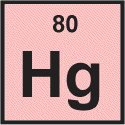
What is the atomic number of this element?
a)
4
b)
80
c)
79
d)
8
96.
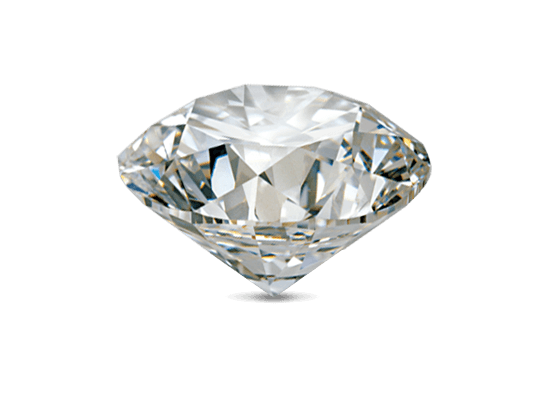
What element primarily makes a diamond?
a)
Hydrogen
b)
Silver
c)
Carbon
d)
Calcium
97.
What is the symbol for Potassium?
a)
P
b)
K
c)
Pb
d)
Pd
98.
What is the symbol for Carbon?
a)
C
b)
Ca
c)
Cl
d)
H
99.
What is the name of this element?
a)
Helium
b)
Rubidium
c)
Hydrogen
d)
Mercury
100.
Which one of these is not a noble gas?
a)
Helium
b)
Radon
c)
Iodine
d)
Krypton
101.
What is the atomic number of Rubidium?
a)
37
b)
44
c)
45
d)
86
102.
What is the atomic number of Oxygen?
a)
6
b)
7
c)
8
d)
9
103.
Which one of these is the symbol for lead?
a)
Rb
b)
Pb
c)
Li
d)
Au
104.
Which one of these elements is found in electrical cord?
a)
Cu
b)
H
c)
Kr
d)
Br
105.
What family is Sodium a part of?
a)
Transition Metals
b)
Halogens
c)
Alkali Metals
d)
Alkaline Earth Metals
106.
What two elements come together to make this substance in the picture?
a)
Oxygen and Carbon
b)
Sodium and Calcium
c)
Sodium and Chlorine
d)
Helium and Nitrogen
107.
If you were working out you would be "pumping _______."
a)
I
b)
Fe
c)
Mg
d)
Y
108.
What family is silver a part of?
a)
Transition Metals
b)
Noble Gases
c)
Alkali Metals
d)
Alkaline Earth Metals
109.
What family is Cadmium a part of?
a)
Noble Gases
b)
Metalloids
c)
Transition Metals
d)
Actinoids
110.
Silicon is a 
a)
Metal
b)
Nonmetal
c)
Metalloid
d)
Halogen
111.
What element is this?
a)
Silver
b)
Silicon
c)
Sulfur
d)
Selenium
112.
What chart should you reference to lookup information about elements?
a)
Elemental map
b)
Periodic Table of Elements
c)
Table of atoms
d)
None of the above
113.
Protons and neutrons clump together to form the __________ of an atom.
a)
nucleus
b)
centrosome
c)
outer shell
d)
orbital
114.
This subatomic particle of an atom has a POSITIVE charge.
a)
Electron
b)
Neutron
c)
Proton
d)
Betatron
115.
This subatomic particle of an atom has NO charge.
a)
Electron
b)
Proton
c)
Atom
d)
Neutron
116.
This subatomic particle of an atom has a NEGATIVE charge.
a)
Electron
b)
Proton
c)
Atom
d)
Neutron
117.
Which of these is the simplest atom?
a)
Uranium
b)
Chlorine
c)
Oxygen
d)
Hydrogen
118.
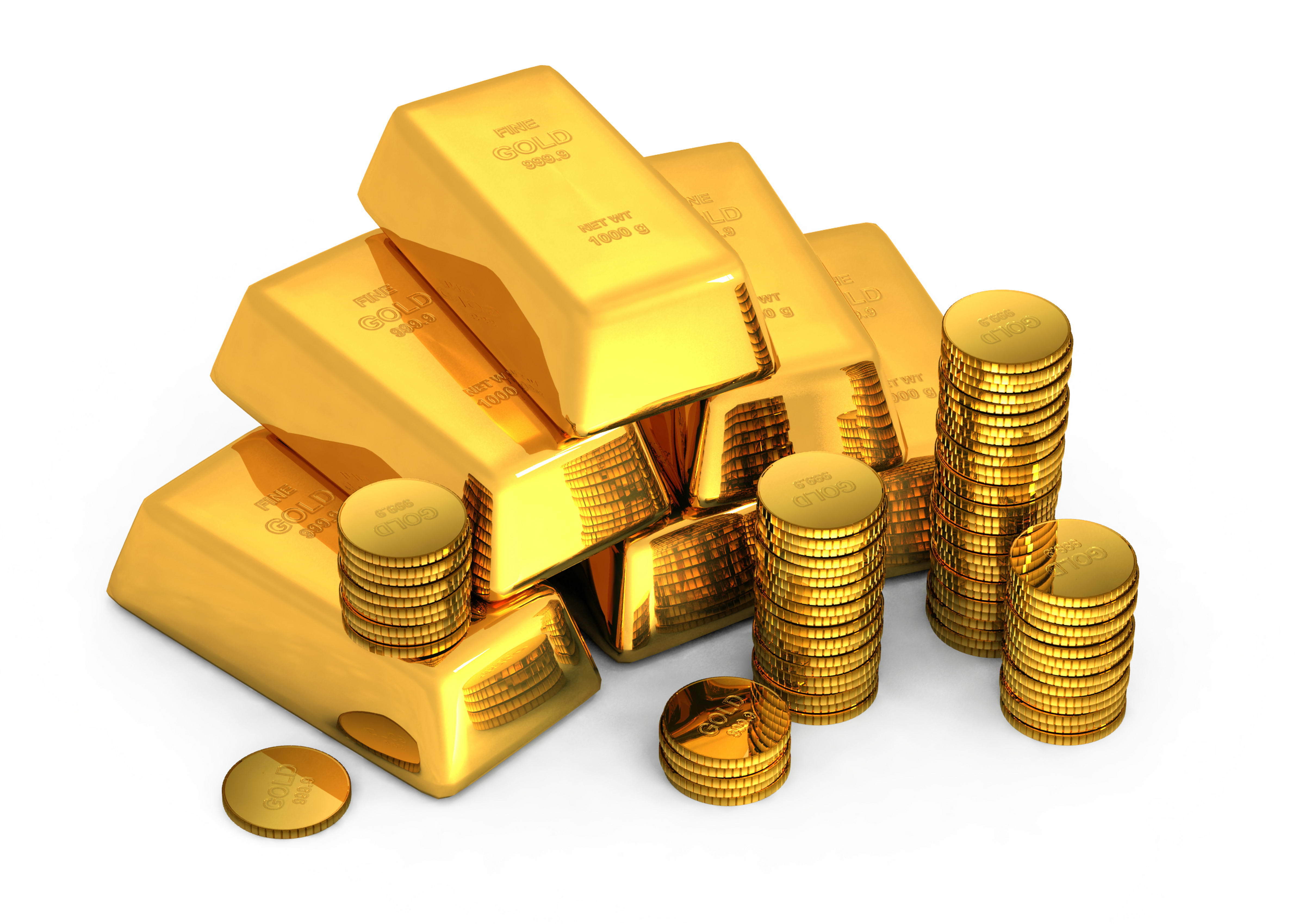
______ is an ELEMENT since it is only made up of one type of atom.
a)
Water
b)
Air
c)
Gold
d)
Salt
119.
A molecule is made up of ____ or more atoms.
a)
1
b)
2
c)
3
d)
4
120.
The number of atoms it would take to make a molecule of water.
a)
1
b)
2
c)
3
d)
4
121.

The smallest particle of a substance is......

a)

atom

b)

element

c)

molecule

d)

compound

122.

The short-hand notation of an element is called....

a)

formula

b)

symbol

c)

mark

d)

representation

123.

The bonding capacity of an element is called......

a)

Atomic number

b)

Atomic Mass Unit

c)

Molecular mass

d)

Valency

124.

"Total mass of the products formed in chemical reaction is exactly equal to the total mass of the reactants present in it." is a .....

a)

Law of constant proportion

b)

Law of multiple proportion

c)

Law of conservation of mass

d)

All the above

125.

Who Proposed the law of multiple proportion?

a)

Antoine Lavoisier

b)

Joseph L Proust

c)

John Dalton

d)

Neil's Bohr

126.

'S' is the symbol of ....

a)

Silicon

b)

Sulfur

c)

Sodium

d)

Above all

127.

The symbol of Gold is......

a)

G

b)

Ag

c)

Au

d)

Go

128.

The Latin name of Potassium is......

a)

Natrium

b)

Kalium

c)

Plum bum

d)

None of the above

129.

Hydragyrum is the Latin name of ......

a)

Iron

b)

Mercury

c)

Tin

d)

Tungsten

130.

The chemical symbol for sodium is

a)

so

b)

SO

c)

Na

d)

NA

131.

Atomic number of oxygen is

a)

4

b)

6

c)

8

d)

12

132.
A subatomic particle that has the same mass as a proton but no electric charge
a)
Neutron
b)
Nucleus
c)
Nuclear
d)
Jimmy Neutron
133.
The number of protons in an atom
a)
Atomic Number
b)
Atomic Proton
c)
Atomic Neutron
d)
Atomic Mass
134.
A substance made up of only one kind of atom
a)
Element
b)
Elementary 
c)
Ellie
d)
Elephant
135.
A substance that conducts heat and electricity well and is malleable
a)
Metal
b)
Non-Metal
c)
Element
d)
Malleable
136.
A substance that does not conduct electricity and is not malleable
a)
Non-Metal
b)
Gold
c)
Metal
d)
Aluminum
137.
A table that shows the elements arranged by their atomic numbers
a)
Periodic Table
b)
Dining Room Table
c)
Wooden Table
d)
Occasional Table
138.
A substance made up of atoms of two or more elements that are chemically combined.
a)
Compound
b)
Element
c)
Atom
d)
Nucleus
139.
Particles found within the atom, mainly protons, neutrons, and electrons.
a)
Subatomic Particles
b)
Submarine Particles
c)
Element
d)
Nucleus
140.
Atoms that have the same number of protons but different numbers of neutrons.
a)
Isotopes
b)
Neutron
c)
Proton
d)
Atomic Mass
141.
Easy to shape or bend
a)
Malleable
b)
Non-Metal
c)
Play Doh
d)
Lego
142.
Russian chemist who developed a periodic table of the chemical elements and predicted the discovery of several new elements (1834-1907)
a)
Dmitri Mendeleev
b)
Bill Nye
c)
Putin
d)
Boris 
143.
What is this?
a)
Compound
b)
Element
c)
Mixture of elements
d)
Mixture of compounds
144.
What is this?
a)
Compound
b)
Mixture of compounds and elements
c)
Mixture of compounds
d)
Mixture of elements
145.
What is this?
a)
Mixture of compounds and elements
b)
Compound
c)
Element
d)
Mixture of compounds
146.
What is this?
a)
Mixture of compounds
b)
Mixture of elements
c)
Compound
d)
element
147.
What is this?
a)
Compound
b)
Element
c)
Mixture of elements
d)
Mixture of compounds
148.
What is this?
a)
Compound
b)
Element
c)
Mixture of compounds
d)
Mixture of compounds and elements
149.
What is this?
a)
Element
b)
Compound
c)
Mixture
d)
Molecule
150.
What is this?
a)
Atom
b)
Element
c)
Mixture
d)
Compound
151.
What are these?
a)
Molecules
b)
Compounds
152.
What are these?
a)
Compounds
b)
Elements
153.
Which part of an atom is POSITIVELY charged?
a)
protons
b)
neutrons
c)
electrons
d)
atoms
154.
What is the term for combining 2 or more atoms together?
a)
atoms
b)
elements
c)
molecules
d)
compounds
155.

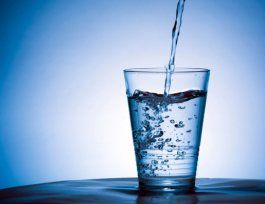
What is the picture displayed?

a)

Carbon Dioxide

b)

Water

c)

Gasoline

d)

Liquid Nitrogen

156.
Particles in an atom that are neutral and have no charge are 
a)
negatrons 
b)
electrons 
c)
neutrons 
d)
protons 
157.

The central region of an atom where its neutrons and protons are is called it's __________ .

a)

nucleus

b)

electron cloud

c)

core

d)

center

158.
Elements are made of 
a)
many types of atoms 
b)
the periodic table
c)
one type of atom 
d)
molecules 
159.
What are the 3 particles that make-up the atom?
a)
protons, neutrons, and isotopes
b)
neutrons, isotopes, and electrons
c)
positives, negatives, and electrons
d)
protons, neutrons, and electrons
160.
What is the total number of atoms in an ammonia (NH3) molecule?
a)
1
b)
2
c)
3
d)
4
161.

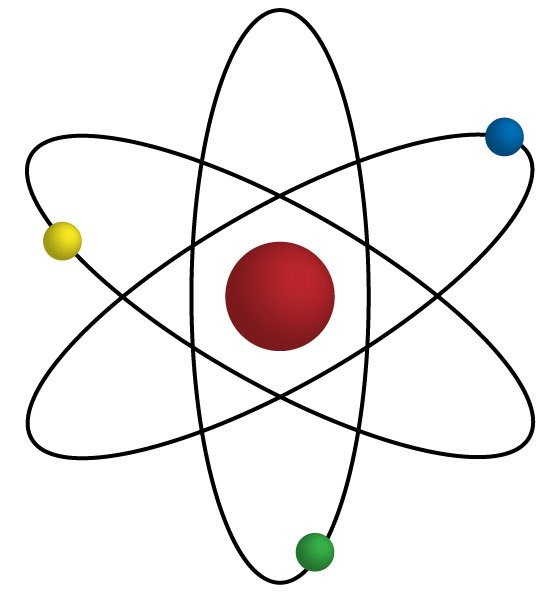
This is a picture of a(n)

a)

molecule

b)

atom

c)

electron

d)

nucleus

162.

This is a picture of __________________

a)

molecules

b)

atoms

c)

electrons

d)

protons

163.
Contains two or more atoms combined
a)
Elements
b)
Compounds
c)
Mixtures
164.
Contains only one kind of atom.
a)
Element
b)
Compund
c)
Mixture
165.
The air is a _________. 
a)
element 
b)
mixture 
c)
compound 
d)
energy 
166.
Elements can be broken down into simpler substances. 
a)
false 
b)
true 
c)
sometimes 
167.
Examples are milk and gasoline.
a)
elements
b)
mixtures
c)
compounds
168.

Examples are diamonds (C) and Uranium (U)

a)

elements

b)

mixtures

c)

compounds

169.
Is sugar (C12H22O11) an element or a compound?
a)
Element
b)
Compound
170.
An element is made up of only one kind of _____.
a)
isotope
b)
plastic
c)
atom
d)
metal
171.
What is salad?
a)
element
b)
compound
c)
mixture
172.
Classify the picture with the correct label.
a)
Element
b)
Compound
c)
Mixture of Elements
d)
Mixture of Compounds
173.
Which of the following is an element?
a)
Sugar
b)
Salt
c)
Water
d)
Oxygen
174.
A pure substance that cannot be broken down into other substances by chemical or physical means. 
a)
compound          
b)
atom
c)
mixture 
d)
element
175.
The building block of matter is
a)
Mixture
b)
Atom
c)
Element
d)
Substance
176.
Water is an element
a)
true
b)
false
177.
A pure substance...
a)
is an element or a compound
b)
is an element or a mixture
c)
is a compound or a mixture
d)
is a mixture
178.

Beatriz wants to make a mixture out of her bowl of blueberries. Which of the following would turn her bowl of blueberries into a mixture?

a)

adding more blueberries to the bowl

b)

adding raspberries to the bowl

c)

cutting up the blueberries

d)

mashing the blueberries

179.

Humans absorb oxygen from the air they breathe in and exhale carbon dioxide gas, CO2. Carbon dioxide gas is

a)

an element made of carbon and oxygen atoms.

b)

a solution made of carbon and oxygen atoms.

c)

a compound of carbon and oxygen atoms.

d)

a mixture of carbon and oxygen atoms.

180.
This picture represents which of the following?
a)
element
b)
compound
c)
mixture
181.

Which example is a compound?

a)

N2

b)

O2

c)

Cu

d)

H2O2

182.
compounds are chemically bounded together 
a)
False
b)
true
c)
I don't know?
183.
Are there any compounds on the periodic table 
a)
yes there are many 
b)
no because only elements are on the periodic table
c)
I think they are?
184.
Is salt (NaCI) a compound or a element
a)
Compound
b)
element
185.
Which of the following is not a compound?
a)
HCl
b)
Cl
c)
NaCl
d)
CO2
186.
A combination of substances that are not chemically combined is called a(n)____________. 
a)
mixture
b)
compound
c)
physical
187.
Mixtures are separated through ___________changes.
a)
mixture
b)
compound
c)
physical
188.
Which of the following represents an element?
a)
H2O
b)
H2
c)
NaCl
d)
CaCO3
189.
A mixture that appears to be evenly mixed throughout:
a)
an atom
b)
a compound
c)
a homogeneous mixture
d)
a heterogeneous mixture
190.
NaHCO3 is an example of —
a)
an abbreviation
b)
a compound
c)
a mixture
d)
an element
191.
What is an example of a mixture?
a)
Table salt
b)
Salt water
c)
Oxygen
d)
Air
192.
Which of the following is a way in which elements and compounds are similar?
a)
Elements and compounds are pure substances.
b)
Elements and compounds are both made up of different kinds of atoms.
c)
Elements and compounds can both be broken down by physical means.
d)
Elements and compounds are listed on the periodic table.
193.
Two or more substances in the same place but NOT chemically combined or in a specific ratio is called —
a)
a compound 
b)
a pure substance
c)
an element
d)
a mixture
194.

Which is the best example of a pure substance?

a)

pizza

b)

gold

c)

saltwater

d)

air

195.

Which is the best example of a mixture?

a)

a brick of pure gold

b)

the distilled water in a bottle

c)

the salt water in the ocean

d)

the helium in a balloon

196.

Structural differences between different chemicals can be represented in models of the particles. Which drawing BEST represents a compound?

a)

Picture A

b)

Picture B

c)

Picture C

d)

Picture D

197.
The building block of matter is
a)
Mixture
b)
Atom
c)
Element
d)
Substance
198.

Which substance is comprised of more than one element?

a)

helium

b)

aluminum

c)

silver

d)

steel

199.
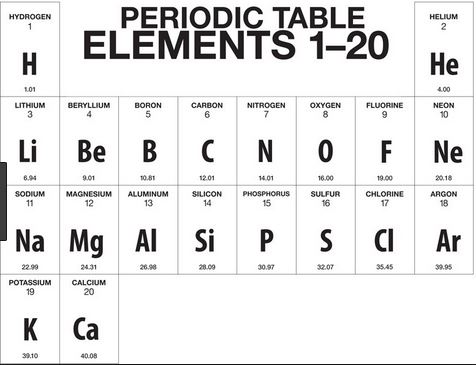
How many electrons does Si contain? (click to see image)
a)
14
b)
28
c)
2
d)
None of these
200.
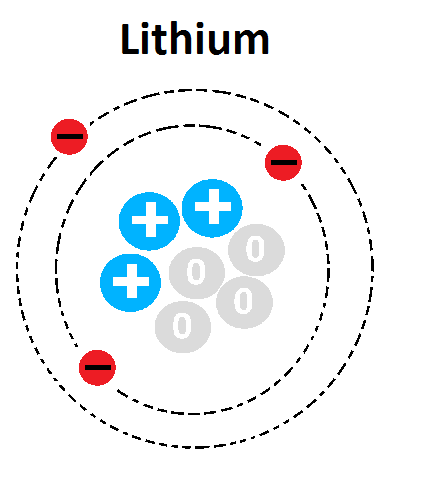
What element is represented in this Bohr Model? 
a)
Carbon
b)
Hydrogen
c)
Aluminum
d)
Lithium
201.
What is the mass number of this atom?
a)
1
b)
3
c)
4
d)
7
202.
What group does this element belong to?
a)
Group 1: Alkali metals
b)
Group 18: Noble Gases
c)
Group 2: Alkaline-Earth Metals
d)
Group 17: Halogens
203.
Carbon-12 has 6 protons and 6 neutrons. How many electrons will orbit the nucleus?
a)
12
b)
6
c)
3
d)
18
204.
What's a valence electron?
a)
electrons in the second energy level
b)
electrons in the outermost energy level
c)
the atomic number
d)
electrons in the first level
205.
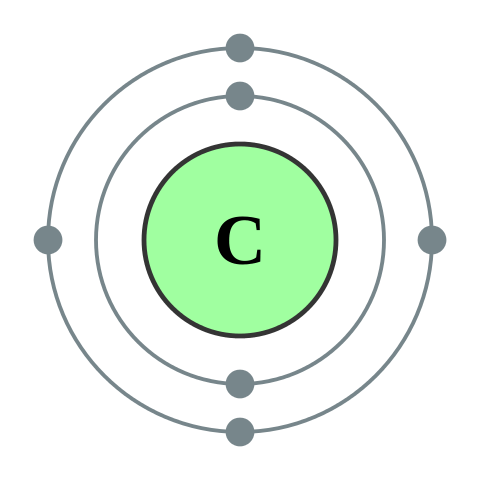
Identify the element in the picture
a)
Boron
b)
Carbon
c)
Nitrogen
d)
Lithium
206.

What are valence electrons?

a)

The total number of electrons in an atom

b)

The number of electrons in the outermost shell

c)

The number of electrons in the second shell

d)

The number of protons in the outermost shell

207.
a)
2
b)
8
c)
3
d)
13
208.
a)
7
b)
8
c)
9
d)
10
209.

How many valence electrons does carbon have?

a)

4

b)

5

c)

6

d)

7

210.

Which elements have the most similar chemical properties?

a)

boron and carbon

b)

oxygen and sulfur

c)

aluminum and bromine

d)

argon and silicon

211.
In a stable atom the amount of electrons is electron is equal to
a)
neutrons
b)
protons
c)
atomic mass
d)
neutrons + protons
212.

How many valence electrons does Neon Have?

a)

4 Valence electron

b)

5 Valence electron

c)

6 Valence electron

d)

7 Valence electron

e)

8 Valence electron

213.

How many valence electrons does Aluminum Have?

a)

1 Valence electron

b)

2 Valence electron

c)

3 Valence electron

d)

4 Valence electron

e)

5 Valence electron

214.

Hydrogen needs _____ electrons in its valence shell to be stable.

a)

4

b)

6

c)

8

d)

2