
 Worksheets
Unit 2 (Part 2)_Ohm's Law & Series vs. Parallel Circuits
Total questions: 29
Worksheet time: 40mins
Voltage is measured in ___.
Ω (Ohms)
V (Volts)
A (Amps)
W (Watts)
Resistance is measured in ___.
Ω (Ohms)
V (Volts)
A (Amps)
W (Watts)
Current is measured in ___.
Ω (Ohms)
V (Volts)
A (Amps)
W (Watts)
How many Volts would be required to push 1 Amp through a resistor that has a resistance of 1 Ohm?
Equations:
Voltage = Current x Resistance
Resistance = Voltage ÷ Current
Current = Voltage ÷ Resistance
10 volts
1 volt
48 volts
5 volts
What size resistor would produce 3 Amps of current if a 12 Volt battery is used?
Equations:
Voltage = Current x Resistance
Resistance = Voltage ÷ Current
Current = Voltage ÷ Resistance
1 Ohm
3 Ohms
4 Ohms
12 Ohms
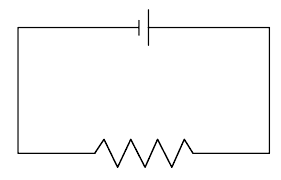
This circuit has a 24 volt battery and the resistor is 8 Ohms. How many Amps are running through the circuit?
Equations:
Voltage = Current x Resistance
Resistance = Voltage ÷ Current
Current = Voltage ÷ Resistance
3 Amps
192 Amps
2 Amps
4 Amps
What is the voltage of a circuit that has a resistance of 5 Ω and a current of 2 Amps?
Equations:
Voltage = Current x Resistance
Resistance = Voltage ÷ Current
Current = Voltage ÷ Resistance
25 V
10 V
2.5 V
0.4 V

Use what you learned from the Ohm's Law Lab in order to answer this question: A resistor was used as part of a circuit. Pictures of the ammeter and voltmeter that were used to collect data are provided. Determine the reading for the black line on each meter and then calculate the resistance of the resistor.
Equations:
Voltage = Current x Resistance
Resistance = Voltage ÷ Current
Current = Voltage ÷ Resistance
Hint: ___mA ÷ 1000 = ___A
0.052 Ohms
0.092 Ohms
2.24 Ohms
52.4 Ohms
The flow of electricity requires a __________.
complete path
incomplete path
insulated current
complex circuit
To complete a circuit, the switch must be ___.
unattached
open
closed
It depends

This is the symbol for a ____.
resistor
switch
battery
light bulb
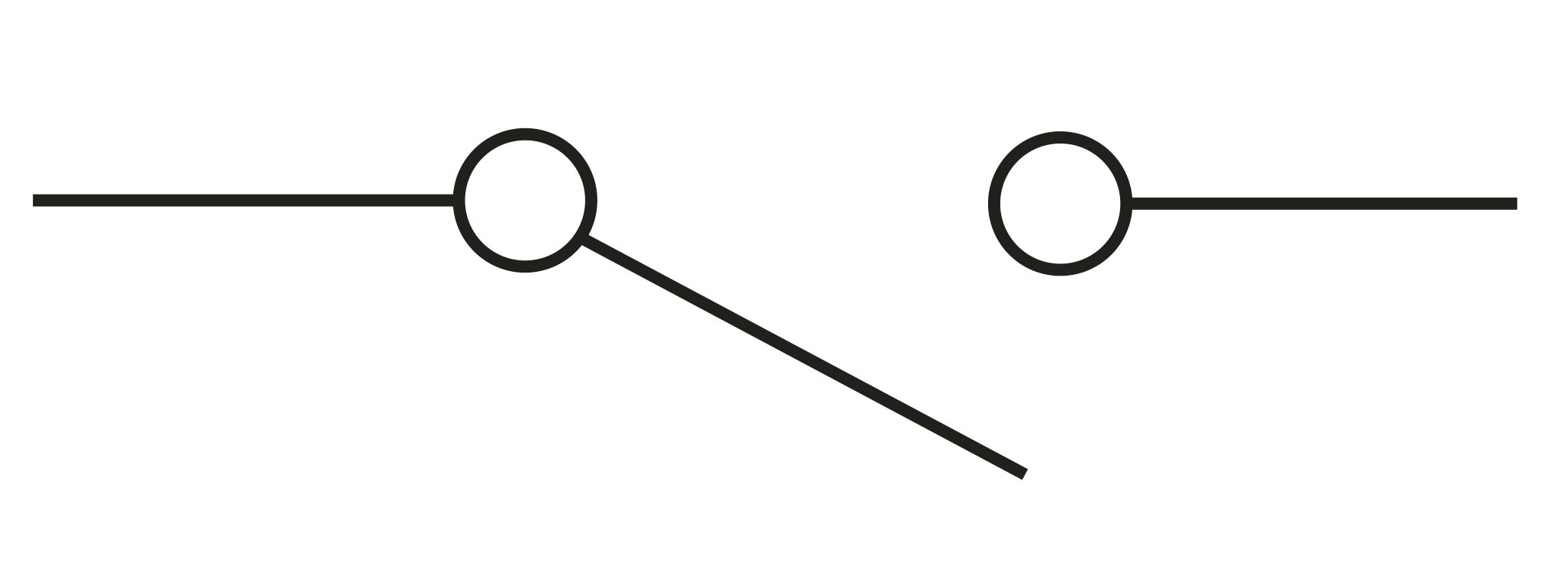
This is the symbol for a _____.
resistor
switch
battery
light bulb

This is the symbol for a ___.
resistor
light bulb
switch
battery

This is the symbol for a ___.
resistor
switch
light bulb
battery
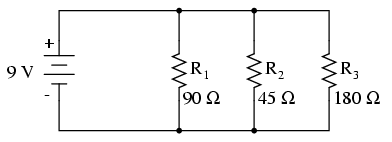
Which type of circuit is this?
Series
Parallel

Which type of circuit is this?
series
parallel
A ________ circuit has one pathway.
parallel
series
If one light bulb is broken in a(n) _________, the other light bulbs still work.
ammeter
circuit
parallel circuit
series circuit
A parallel circuit has ______ pathways for the electrons to flow.
two or more
one
zero
Are the lamps in a house connected in series or parallel?
Series
Parallel
None of the above
normal

Does the statement below best describe a parallel or a series circuit?
When more light bulbs are added, they all remain bright.
Parallel circuit
Series circuit
What is one problem with using a series circuit?
A series circuit requires too many wires in order to connect two or more light bulbs.
A series circuit will completely stop working if one light bulb is broken.
A series circuit will not work if you have two or more light bulbs.
A series circuit does not have any problems.
In a ____________ circuit, each light bulb receives the total voltage.
parallel
series
A _______ circuit has multiple pathways.
parallel
series
_____ is best for a circuit with one device connected.
Parallel
Series
In a ______ circuit, each light bulb receives a fraction of the total voltage.
parallel
series
_____ is best for a circuit with two or more devices connected.
Parallel
Series
When additional light bulbs are added to a ________ circuit, the light bulbs become dimmer.
parallel
series

