
NEW
Font size
S
M
L
XL
 Worksheets
LIthosphere Test
Total questions: 55
Worksheet time: 31mins
Name
Class
Date
1.
Is the Outer core solid or liquid?
a)
solid
b)
liquid
2.
Which is the most thinnest layer of the earth?
a)
Mantle
b)
crust
c)
Bread crust
d)
Pizza crust
3.
What is the name of the layer that contains the uppermost mantle and crust
a)
Asthenosphere
b)
Mesosphere
c)
Lithosphere
d)
Transosphere
4.

Name the boundary
a)
Divergent
b)
Convergent
c)
Transform
5.
Wegener believed that all the continents were connected at one time. What did he call this one large land mass?
a)
Pancakes
b)
Pangaea
c)
Pancreas
d)
Patches
6.

The point on Earth’s surface located directly above the _______ is the epicenter.
a)
seismic wave
b)
earthquake focus
c)
Mantle
d)
fault
7.

Name the boundary
a)
convergent boundary
b)
divergent boundary
c)
transform boundary
d)
sergent boundary
8.
Why does cooler material sink while warmer material rises?
a)
Cooler material is more dense.
b)
Hot material is more dense.
9.

What is happening at Z?
a)
mid-ocean ridge
b)
subduction zone
c)
transform boundary
d)
sea floor spreading
10.
In the early 1900's Alfred Wegener found evidence of identical rock types, identical fossils, and matching mountain ranges on different continents that are on opposite sides of an ocean. What could be the explanation for these observations?
a)
All animals can swim extremely long distances
b)
These observations have no significant meaning.
c)
In the past, continents were not located where they are today but were joined together
d)
mountains are made through the same processes therefore they are very similar in their structure throughout the entire world.
11.
Deep cracks in the Earth's crust.
a)
faults
b)
tear
c)
twist
d)
shear
12.
The scientific theory that the Earth's crust is made of moving plates.
a)
quakes
b)
seismic
c)
plate tectonics
d)
rotation
13.

Each rock type can follow only one pathway of the rock cycle.
a)
True
b)
False
14.

This rock was molten magma that slowly cooled under the ground. What type of rock is this?
a)
Sedimentary
b)
Igneous
c)
Metamorphic
15.
True or False: Once a rock is sedimentary, it cannot become an igneous rock.
a)
True
b)
False
16.
The movement of weathered material (sediment) is called?
a)
weathering
b)
erosion
c)
deposition
17.

When sediments are pressed together tightly, this is called ____________.
a)
Compaction
b)
Cementation
c)
Weathering
d)
Erosion
18.
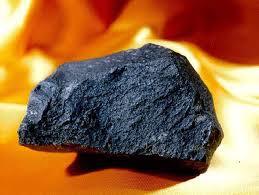
This rock was found near the mouth of a volcano. What type of rock is this?
a)
Sedimentary
b)
Igneous
c)
Metamorphic
19.

This rock was formed by smaller pieces of rock that settled at the bottom of a lake millions of years ago. What type of rock is this?
a)
Sedimentary
b)
Igneous
c)
Metamorphic
20.
When you watch a volcano erupt molten rock, you are seeing _____
a)
Lava
b)
Magma
c)
Mineral Crystals
d)
Igneous Rocks
21.

This rock formed when bits of other rocks became pressed into a solid. What type of rock is it?
a)
Sedimentary Rock
b)
Metamorphic Rock
c)
Igneous Rock
22.
What effect did over plowing and cutting down trees in the Great Plains during the 1930’s?
a)
It had little effect
b)
It increased soil fertility
c)
It was a primary cause of the Dust Bowl
d)
Farmers had a great harvest
23.
What is soil?
a)
A mixture of minerals
b)
A mixture of water, minerals, gases and organic matter
c)
A type of rock
d)
A type of bacteria
24.

the fertile, upper part of the soil
a)
clay
b)
sand
c)
silt
d)
topsoil
25.
Decayed organic material in soil is called______.
a)
Litter
b)
Silt
c)
Humus
d)
Clay
26.
Breaking down or wearing away of rocks is called....
a)
weathering
b)
humus
c)
erosion
27.
Movement of soil and rocks from one place to another is called...
a)
weathering
b)
humus
c)
erosion
28.
Soil formation begins with the weathering of_______.
a)
Humas
b)
Subsoil
c)
Litter
d)
Rock
29.
The very top layer of soil is mostly made of
a)
Solid rock
b)
Clay and mineral deposits
c)
A mixture of minerals and organic material
d)
Mostly organic material (humus)
30.

Which layer of soil is on the bottom?
a)
topsoil
b)
subsoil
c)
bedrock
d)
bottomsoil
31.
The movement of rocks and weathered materials is called_________.
a)
Chemistry
b)
Physical
c)
Weathering
d)
Erosion
32.
What do we call the layers of soil?
a)
Deposits
b)
Horizons
c)
Minerals
d)
Rocks
33.

What soil conservation is this?
a)
Cover Crops
b)
Soil Conservation
c)
Crop Rotation
34.
This rock was formed when molten rock cooled into a solid. What type of rock is it?
a)
Igneous Rock
b)
Metamorphic Rock
c)
Sedimentary Rock
35.
What are the 3 major types of rocks?
a)
Igneous, Metamorphic, Sedimentary
b)
Metamorphic, Igneous, Cementation
c)
Brown, Red, Gray
d)
Streak, Hardness, Breakage
36.
Which of the words below describe mud, sand, and tiny bits of rocks that cement together to form a type of rock?
a)
stalactites
b)
magmas
c)
metamorphs
d)
sediments
37.
What is sedimentary?
a)
Formed by heat and pressure
b)
Formed by heat and cooling
c)
Layered rock formed by compaction
d)
All of the above
38.

The process when rocks break into smaller pieces due to exposure to natural elements is called
a)
erosion
b)
weathering
c)
sediments
39.
Extreme Heat and Pressure creates a _________ rock.
a)
Igneous
b)
Metamorphic
c)
Sedimentary
d)
Mineral
40.

This rock started as lava that cooled and then was heated and put under pressure over time. What type of rock is this?
a)
Sedimentar
b)
Igneous
c)
Metamorphic
41.
What two processes make sediment?
a)
Weathering
b)
Erosion
c)
Weathering & Erosion
d)
heat & pressure
42.
The outer layer of the Earth is called the __________.
a)
core
b)
crust
c)
mantle
d)
plates
43.
This layer of the core is made of liquid metals.
a)
outer core
b)
inner core
c)
middle core
d)
apple core
44.

As you travel from the inner core to the crust, how would temperature, pressure and density of the material change?
a)
The would all increase
b)
The would all decrease.
c)
Nothing, the layers are made of the same material throughout
d)
Temperature would decrease, but pressure and density would increase
45.
In the early 1900's Alfred Wegener found evidence of identical rock types, identical fossils, and matching mountain ranges on different continents that are on opposite sides of an ocean. What could be the explanation for these observations?
a)
All animals can swim extremely long distances
b)
These observations have no significant meaning.
c)
In the past, continents were not located where they are today but were joined together
d)
mountains are made through the same processes therefore they are very similar in their structure throughout the entire world.
46.
What is Pangaea?
a)
The name of a German Scientist
b)
the name of the supercontinent that existed millions of years ago
c)
another name for continental drift
d)
the name of an ancient fossil
47.

Which type of plate boundary occurs at Y?
a)
divergent
b)
convergent
c)
transform
d)
sea floor spreading
48.

Name the boundary
a)
convergent boundary
b)
divergent boundary
c)
transform boundary
d)
sergent boundary
49.

Name the boundary
a)
convergent boundary
b)
divergent boundary
c)
transform boundary
d)
sergent boundary
50.

Which two processes form sedimentary rocks?
a)
weathering and erosion
b)
heat and pressure
c)
burial and cementing
d)
melting and solidification
51.
Earthquakes typically occur _________________.
a)
In the middle of tectonic plates
b)
only in California
c)
only in the middle of the ocean
d)
along plate boundaries
52.
This layer of Earth is solid Iron and Nickel
a)
Outer Core
b)
Mantle
c)
Inner Core
d)
Crust
53.
This layer of Earth is the thickest part
a)
crust
b)
outer core
c)
mantle
d)
inner core
54.
How many layers are there in the Earth?
a)
40
b)
5
c)
89
d)
4
55.
What is the driving force to plate tectonics occurring when warm magma rises and cooler magma sinks?
a)
An oceanic current
b)
A conventional current
c)
A convection current
d)
A magnetic current
Reset

