
 Worksheets
Circuits Review
Total questions: 29
Worksheet time: 21mins

How much energy would a coulomb of charge have as it leaves the battery?
12 J
6 J
2 J
0.5 J
none of these

If another resistor (or lightbulb), R4, were added in parallel, the total current from the battery would...
Increase
Decrease
Remain the same
(it depends on the resistors)

How does the voltage across each resistor (or lightbulb) compare? (subscripts correlate to resistor subscripts)
V1 > V2 > V3
V3 = V2 = V1
V1 < V2 < V3
none of these
What are the correct units to measure charge?
Amps, A
Volts, V
Ohms, Ω
Coulombs, C
Watts, W
What are the correct units to measure current?
Amps, A
Volts, V
Ohms, Ω
Coulombs, C
Watts, W

For the circuit shown, what is the voltage drop across R1 if R1=R2?
1 V
2 V
3 V
4 V
6 V

This is a ____________________
Series Circuit
Parallel Circuit

This is a ________________
Series Circuit
Parallel Circuit


What happens to the total current from the battery in a parallel circuit as you add resistors (or lightbulb)?
Increases
Decreases
Nothing
A black hole

How would power be affected if current was doubled and voltage remained constant?
It would be 1/2x
It would be 2x
It would be 4x
Nothing
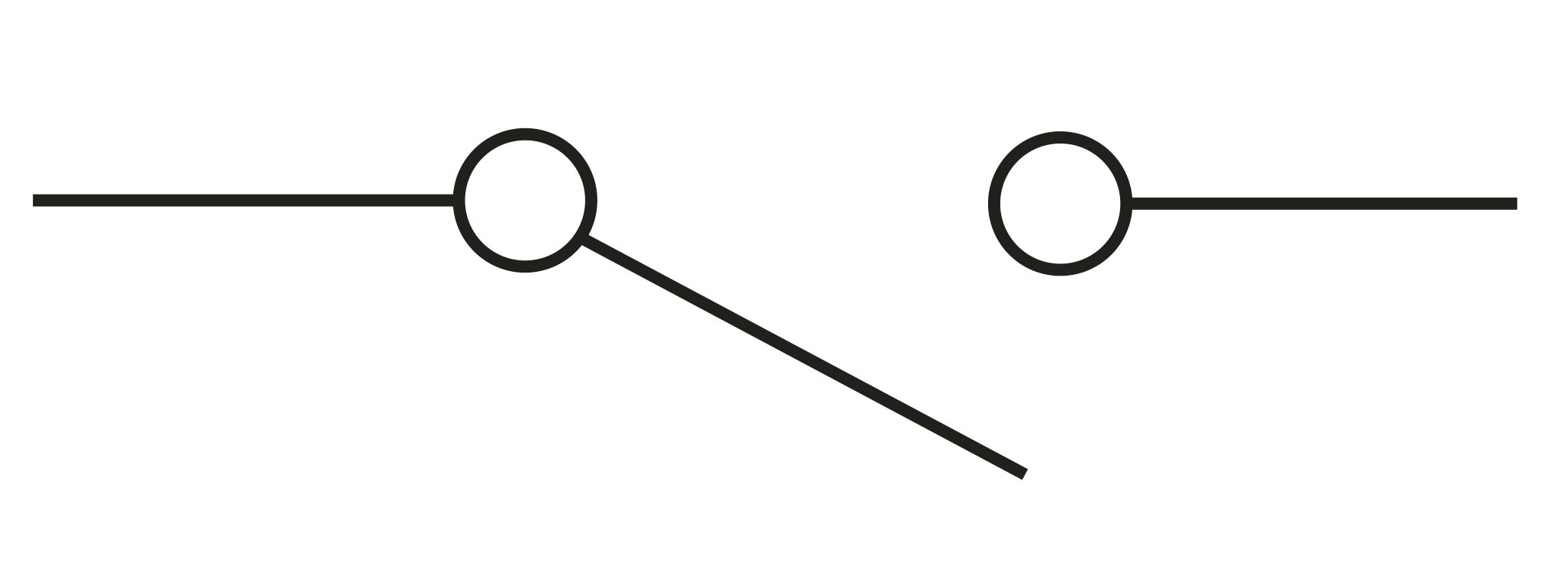
What is an open circuit
Electric current is intercepted a break in the circuit and cannot completed its path
Flow of electricity
Electric current flows freely through the circuit from negative to positive.
Closed circuit
What is a closed circuit?
Electric current flows freely through the circuit from negative to positive.
Electric current is intercepted a break in the circuit and cannot completed its path
Parallel circuit
Series circuit


When more light bulbs are added they all remain bright.
How can we define voltage?
electrons per coulomb
energy transferred per second
coulomb per second
joule per coulomb
How can we define current?
coulombs per second
joules per second
seconds per joule
energy per coulomb
How can we define power?
electrons per joule
joules per second
coulombs per second
energy per electron
There's a series circuit and a parallel both with 2 bulb and a 4V and 4A battery, what will the power be through each light bulb?
Series and parallel lights will all have 4W
Series lights will have 8W and parallel will have 4W
Series lights will have 4W and a parallel will have 8W
Series and parallel lights will all have 8W

