wayground logo

Free Printable Worksheets

NEW

Font size

S
M
L
XL
Worksheets

Objects in the Universe-3rd

Total questions: 28

Worksheet time: 1hrs 13mins

Name
Class
Date
1.

The different shapes that the moon seems to have.

a)

revolutions

b)

phases

c)

rotations

2.

What is the moon mostly made of?

a)

Green Cheese

b)

Hot gases

c)

Lava

d)

Rock

3.

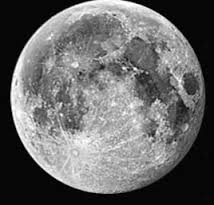
Name the moon phase

a)

First Quarter

b)

Full Moon

c)

New Moon

4.

Which phase of the moon is shown in the picture?

a)

New

b)

Cresent

c)

Quarter

5.
A ______ is when the side of the Moon facing Earth appears to be not lit. 
a)
New Moon
b)
Crescent Moon
c)
Full Moon
d)
Moon Phases
6.
How would you describe the Moon? 
a)
Smooth surface with an atmosphere but no water
b)
Surface filled with carters and water but no atmosphere
c)
Filled with carters and dust, no water or atmosphere 
d)
The same as Earth 
7.
The Earth spinning on its axis is called what?
a)
revolution
b)
rotation
c)
retrograde rotation
d)
orbit
8.
When the moon appears to be getting smaller, it is said to be...
a)
waxing
b)
decreasing
c)
eclipsing
d)
waning
9.
What occurs when the Earth passes directly between the Moon and the Sun?
a)
a new moon
b)
a lunar eclipse
c)
a full moon
d)
a solar eclipse
10.
What is the name for the imaginary line around which Earth spins?
a)
axis
b)
orbit
c)
season
d)
revolve
11.
About how long does it take the moon to make one trip around the Earth?
a)
a day
b)
a month
c)
a year
d)
an hour
12.
Which of these words describes the moon when it is getting larger?
a)
waxing
b)
waning
c)
crecent
d)
cheese
13.
What is true about the Sun?
a)
It can be seen during the day and night.
b)
 It is the closest star to the Earth.
c)
It is the largest of all the stars.
d)
It is much smaller than the moon.
14.
When the moon appears to be "getting smaller", we call this _______________.
a)
Waxing
b)
Waning
c)
Shrinking
d)
Disappearing
15.
What is responsible for the moon's illumination?
a)
infrared rays
b)
sunlight reflecting on the surace of the moon
c)
sunlight bouncing off the earth's atmosphere
d)
gamma rays
16.
Define Gibbous
a)
Less than half of moon visible
b)
More than half of moon visible
c)
All of moon visible
d)
None of moon visible
17.

The moon ________ the earth

a)

rotates

b)

orbits

c)

sun

18.

The moon has __________ weather.

a)

crazy

b)

no

c)

frequent

19.
What is at the center of the Solar System?
a)
Earth
b)
Moon
c)
Sun
d)
Jupiter
20.
It takes the Earth _______ days to travel all the way around the Sun.
a)
28
b)
100
c)
24
d)
365
21.
It takes the Earth ___ hours to complete a rotation.
a)
12
b)
24
c)
50
d)
365
22.
What is the scientific study of outer space?
a)
astronomy
b)
biology
c)
space travel
d)
science
23.

What do we call a meteor that strikes the Earth's surface?

a)

comet

b)

meteorite

c)

moon

d)

asteroid

24.

What do we call a meteor that strikes the Earth's surface?

a)

comet

b)

meteorite

c)

moon

d)

asteroid

25.

What are naturally occurring satellite that orbit planets?

a)

moons

b)

asteroids

c)

comets

d)

stars

26.

The universe includes:

a)

all the matter known to exist

b)

all the space that exists

c)

nearly 200 billion galaxies

d)

all of the above

27.

___________ is the smallest inner planet.

a)

Mercury

b)

Venus

c)

Earth

d)

Mars

28.

___________ is the farthest planet from the sun.

a)

Uranus

b)

Neptune

c)

Earth

d)

Mars