Wayground logo

Free Printable Worksheets

Font size

S
M
L
XL
Worksheets

SJC G8 EP Science Term 2 Final Review - Soil

Total questions: 38

Worksheet time: 35mins

Name
Class
Date
1.
This type of weathering occurs when rock is physically broken down into smaller pieces of rock.
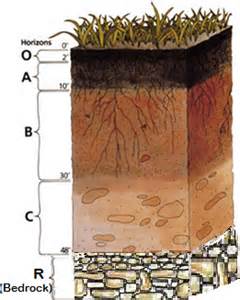
a)
mechanical weathering
b)
chemical weathering
c)
erosion weathering
d)
deposition
2.
This type of weathering occurs when rocks weaken then break down due to chemical changes in the composition of the rock.
a)
mechanical weathering
b)
chemical weathering
c)
erosion weathering
d)
deposition
3.
These rocks were broken apart from the continuous freeze/thaw of water in the cracks of the rocks. This is an example of:
a)
ice wedging
b)
acid rain
c)
permeability
d)
abrasion
4.
How might a weathered mountain appear different than an unweathered mountain?
a)
Weathered mountain would be taller.
b)
Weathered mountain would be rounder and less jagged.
c)
Weathered mountain would be more jagged and less rounded.
d)
Weathered mountain would have no trees.
5.
How is mechanical weathering different from chemical weathering?
a)
Chemical weathering happens over much shorter time frame than mechanical weathering.
b)
Chemical weathering changes the chemical composition of rocks; mechanical weathering does not.
c)
Chemical weathering occurs only in tropical climates; mechanical weathering occurs only in cool climates.
d)
Chemical weathering occurs only in the mountains; mechanical weathering occurs only on flat land.
6.
Weeds growing into the cracks in a sidewalk and the sidewalk begins to crumble is an example of:
a)
mechanical weathering
b)
chemical weathering
7.
A metal statue slowly turning green after years of being outside is an example of:
a)
mechanical weathering
b)
chemical weathering
8.
The natural chemical or physical processes that breaks down rock on Earth's surface.
a)
weathering
b)
erosion
c)
deposition
d)
jackhammering
9.
What is likely to cause cracks on the sidewalk?
a)
Repeated freezing and thawing of water
b)
Tree roots or plant roots growing bigger
c)
Both and A and B
d)
Neither A or B 
10.
Which of the following is the most important agent of chemical weathering to form this cave?
a)
Water - It can carry acid and dissolve rock
b)
Erosion - Moves the rocks from one place to another
c)
Wind - It displaces rocks
d)
Exfoliation - New cracks give chemical reactions the chance to operate
11.
What are the two factors that affect the rate at which weathering occurs?
a)
climate and mass of rock
b)
climate and size of rock
c)
type of rock and size of rock
d)
type of rock and climate
12.
When wind blows over the land, it picks up the smallest particles of sediment.
a)
True
b)
False
13.
The diagrams shows a rock with water trapped in the cracks during the day and at night. 

Which statement best explains why this process results in weathering?
a)
frozen water acts as a solute
b)
water expands when it freezes
c)
the mass of water increases when it freezes
d)
frozen water dissolves most types of rock
14.
In which type of climate would weathering happen the fastest to a rock?
a)
wet and warm
b)
dry and cold
c)
wet and cold
d)
dry and warm
15.
Water gets into the cracks of rock and freezes, causing the rock to break.  What is this an example of?
a)
erosion
b)
weathering
16.
Layers of soil are also known as:
a)
Soil Profiles
b)
Soil Horizons
c)
Soil sheets
d)
Soil cores
17.
Which combination creates sand?
a)
Rocks and ocean waves
b)
Wind and ocean waves
c)
Long waves and wind
d)
surf and ocean waves
18.
Which horizon is made up of partially weathered rocks?
a)
Horizon A
b)
Horizon B
c)
Horizon C
d)
Horizon D or R
19.
Which describes the soil layers in order from the surface?
a)
top soil, bedrock, horizon C, subsoil
b)
top soil, subsoil, horizon C, bedrock
c)
top soil, horizon C, subsoil, bedrock
20.

Which type of soil drys quickly after a rain storm?

a)

sand

b)

silt

c)

clay

d)

loam

21.

Soil is made up of...

a)

minerals, rock fragments, air , water, and organic material

b)

sand, silt, and clay

c)

dead plants and animals and minerals

d)

air, water, and decomposers

22.

Which horizon contains mostly clay, silt, and minerals, but not organic matter?

a)

Horizon A

b)

Horizon B

c)

Horizon C

d)

Horizon D or R

23.
Many plants cannot grow in sandy soil. Why is this true?
a)
Sandy soil does not hold enough water.
b)
Air cannot pass through sandy soil.
c)
Roots cannot easily push through sandy soil.
d)
Sandy soil has too many nutrients.
24.
The layer of soil which the topsoil is found.
a)
Horizon A
b)
Horizon B
c)
Horizon C
d)
Horizon D or R
25.
Soil formation begins with the weathering of_______.
a)
Humas
b)
Subsoil
c)
Litter
d)
Rock
26.
Andrea is trying to convince her mom that an unknown soil sample she has will not work well for her plants.  The unknown soil has very small grains and has a high capacity to retain water.  What unknown soil is Andrea talking about?
a)
sand
b)
clay 
c)
loam 
d)
gravel 
27.
Many plants cannot grow in sandy soil. Why is this true?
a)
Sandy soil does not hold enough water.
b)
Air cannot pass through sandy soil.
c)
Roots cannot easily push through sandy soil.
d)
Sandy soil has too many nutrients.
28.
Which of the following best describes soil erosion?
a)
A.  the breakdown of soil 
b)
A.  the improvement of soil
c)
A.  the addition of soil
d)
A.  the movement of soil by wind or water
29.
Ellen grabs a topsoil sample in her hand. She rolls it into a ball. The soil feels gritty and the ball falls apart. What part of the topsoil most likely made the topsoil feel gritty?
a)
clay
b)
sand
c)
silt
d)
humus
30.
Texture of Soil:
Sand feels...
a)
rough
b)
smooth
c)
sticky
31.
Texture of Soil:
Silt feels...
a)
rough
b)
 smooth
c)
sticky
32.
Texture of Soil:
Clay feels...
a)
rough
b)
smooth
c)
sticky
33.
What is the source of the organic matter needed for most fertile soils?
a)
moving water
b)
eroded sand
c)
decaying plants
d)
weathered bedrock
34.
What is a good indication that soil contains nutrients?
a)
texture
b)
color
c)
amount of sand
d)
amount of clay
35.
Soil porosity is formed by everything except:
a)
movement of plant roots
b)
movement of worms and insects
c)
the size of the grain
d)
the color of the soil
36.

Which soil horizon is known for having a higher content of clay and iron minerals?

a)

The O Horizon

b)

The A Horizon

c)

The B Horizon

d)

The C Horizon

37.
In which direction does leaching due to water infiltration occur in soil?
a)
Z into Y
b)
W into X
c)
X into W
d)
Y into Z
38.

What is infiltration?

a)

The process by which water sinks into the ground

b)

The zone where there are still air spaces left between the particles.

c)

The process by which water vapor turns into liquid water and forms fog or clouds.

d)

The process by which water does not sink into the ground, but rather travels along the surface.