
NEW
Font size
 Worksheets
bonding
Total questions: 20
Worksheet time: 7mins
Sodium reacts with chlorine to form sodium chloride.
Which statements describe what happens to the sodium atoms in this reaction?
1 Sodium atoms form positive ions.
2 Sodium atoms form negative ions.
3 Sodium atoms gain electrons.
4 Sodium atoms lose electrons.
1 and 3
1 and 4
2 and 3
2 and 4
What type of bond forms when 2 or more electrons are SHARED?
Covalent bond
Incomplete bond
Ionic bond
Metallic bond
Which of the following is an example of an IONIC COMPOUND?
NaCl
H2O
CO2
NO
Which of the following is an example of a COVALENT COMPOUND?
H2S
KI
CaCl2
MgO
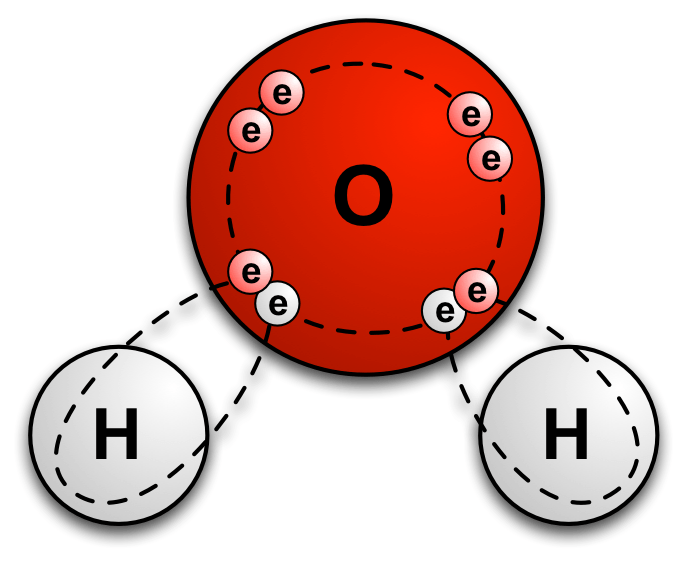
What would you name this molecule?
SNa3
H3O
NaCl
H2O

What molecule is this?
CO
CO2
C2O
C2O2
Which is the correct name for CaBr2?
Calcium Bromine
Bromine Calcium
Calcium Bromide
Nitrogen will ____ valence electrons when forming an ionic bond.
gain 1
lose 1
gain 3
lose 3
Nitrogen will form which of the following ions?
N
N-3
N-5
N+5
What determines how ionic bonds will form?
Number of protons
Mass of the atom
Number of total electrons
Number of valence electrons
Which of the following compounds has a tetrahedral molecular shape?
Br2
CO2
NF3
CH4

What molecular shape is this?
Tetrahedral
Trigonal Planar
Linear
Bent
Magnesium bromide is an ionic compound with the chemical formula MgBr₂. What does the "2" tell you?
There are 2 bromide ions for every magnesium ion
Bromide has a 2- charge
Bromide has a 2+ charge
There are 2 magnesium ions to every bromide ion

How many more electrons are needed to fill an outermost energy level of a Carbon atom?
its already full, 0 needed
2
4
carbon is a nonmetal, it has no electrons
Whats the formula
Sr+2 + (CO3)-2
Sr(CO3)
Sr2 (CO3)2
Sr1(CO)5
Sr(CO5)
To form a charge of +2 an atom must _ electrons. To form -3 it must _ electrons.
Gain 2; Lose 3
Gain 3; Lose 2
Lose 2; Gain 3
Lose 3; Gain 2
Which has every carbon atom covalently bonded to four other atoms?
graphite
diamond
fullerene
none of these
Which is used as a cutting tool and in jewelry?
graphite
diamond
fullerene
none of these
Giant lattice structure held together by attraction between positive and negatively charged ions
simple covalent molecules
metallic
ionic
giant covalent

The following properties are all characteristics of ionic compounds EXCEPT
high melting and boiling points
soft
crystal lattice structure
conduct electricity when dissolved in water

