wayground logo

Free Printable Worksheets

NEW

Font size

S
M
L
XL
Worksheets

EA6: Homework week ending 3.1.20

Total questions: 65

Worksheet time: 45mins
Name
Class
Date
1.
Biodiversity refers to
a)
extinct species
b)
the variety of species on Earth
c)
nonrenewable resources
d)
the rate of species decline
2.
When taken to a new habitat, non-native plants often threaten native plants of the new habitat.  Why do they do this?
a)
Non-native plants are able to mutate rapidly
b)
Non-native  plants cause native animals to relocate
c)
Non-native plants are able to be used for medicine
d)
Non-native plants compete with native plants for resources
3.
What effect will an invasive species have on the carrying capacity of an ecosystem?
a)
The carrying capacity will increase
b)
The carrying capacity for everyone will decrease
c)
The carrying capacity will only decrease for those in competition for same resource
d)
The carrying capacity for all animals will stay the same
4.
Kudzu has overgrown many parts of southern Missouri and native ground plants have disappeared from the area. This is an example of:
a)
Parasitism between kudzu and the native plants
b)
A predator prey relationship between ground plants and kudzu
c)
Competition occurring between the native and invasive species
d)
Commesalism occurring between the kudzo and native plants
5.
1. What makes a species invasive?
a)
Moving to a new ecosystem and taking resources from natives 
b)
Not having papers
c)
Species that can't adapt
d)
Plants that take up too much space
6.
What kind of organisms can become invasive? 
a)
Lions, Tigers, Bears
b)
Plants, Animals, or Pathogens 
c)
Animals
d)
Plants
7.
If a blue catfish is introduced and eats the large fish who eat the smaller fish, what will happen to the population of the smaller fish?
a)
Increase
b)
Decrease
c)
Stay the same
d)
No affect on smaller fish
8.
Which of the following is a key characteristic of most invasive species?
a)
Ability to breathe in the air & in the water
b)
Large, sharp teeth
c)
Produce many offspring
d)
Is a top predator
9.

What is a native species?

a)

A specie that is local and has lived in the same place

b)

A specie who has come from another state or country

c)

A specie that has no "home" and travels for its whole life

d)

None of the above

10.

Invasive species can have a major impact on the ecosystem.

a)

TRUE

b)

FALSE

11.

Invasive species can crowd out native species, making the environment more likely to reach its carrying capacity.

a)

TRUE

b)

FALSE

12.

Invasive species alter the ecosystem by _____ in number quickly. This leads to _____ food for the native species.

a)

increasing, less

b)

increasing, more

c)

decreasing, less

d)

decreasing, more

13.

TRUE or FALSE? Invasive species grow quickly due to the lack of predators. This leads to a decline or extinction of the native population.

a)

True

b)

False

14.

A species that is not native to an area is called a ---

a)

Native Species.

b)

Natural Species.

c)

Invasive Species.

d)

Symbiotic Species.

15.

Which of these words does NOT describe an invasive species?

a)

alien

b)

intruder

c)

non-native

d)

natural

16.

The primary cause of the introduction of invasive species introduction is ---

a)

too much food.

b)

human action.

c)

weather events.

d)

asteroids.

17.

The place where an organism lives in order to obtain its food, water, shelter and other things needed for survival is called a ---

a)

Niche.

b)

Habitat.

c)

Home.

d)

Ecosystem.

18.

The particular role (job) of an organism in its environment, including types of food it eats, how it obtains its food and how it interacts with other organisms is called a ---

a)

Niche.

b)

Habitat.

c)

Home.

d)

Ecosystem.

19.

Which biome is characterized by moderate rainfall, cold winters, and the presence of fox and deer?

a)

grassland

b)

deciduous forest

c)

taiga

d)

tundra

20.

Which biome is characterized by coniferous trees, such as spruce, fir and pine as the dominant species of plant growth?

a)

taiga

b)

tropical rain forest

c)

tundra

d)

desert

21.

Which biome has the greatest diversity of living things?

a)

tundra

b)

taiga

c)

tropical forest

d)

deciduous forest

22.

Most of the world’s rain forests are found close to the ________.

a)

Arctic circle

b)

equator

c)

Antarctic

d)

desert

23.

Which of the following terrestrial biomes receives the largest amount of rainfall per year?

a)

desert

b)

prarie

c)

savanna

d)

deciduous forest

24.

Which of the following terrestrial biomes has hibernating mammals?

a)

savanna

b)

deciduous forest

c)

tropical forest

d)

desert

25.

Grasslands are characterized by low amounts of rainfall, few trees, and lots of grass. Which of the following would be the primary inhabitants of the grasslands?

a)

Tree-dwelling primates

b)

Thick-furred mammals

c)

Large herbivores

d)

Water-conserving plants

26.

This biome has long cold winters and short summers. Biota includes evergreen trees with needle-like leaves.

a)

Tundra

b)

Taiga/coniferous forest

c)

Deciduous Forest

d)

Grassland

27.

This biome is warm and wet all year long. Tall trees, monkeys, insects, and frogs found here.

a)

Tundra

b)

Grassland

c)

Tropical rainforest

d)

Deciduous forest

28.
This biome is extremely sandy & dry. Daytime temps are so warm most animals are active at night.
a)
Desert
b)
Grassland
c)
Tropical rainforest
d)
Tundra
29.

Biome that has some precipitation. Biota includes zebra and deer.

a)

Desert

b)

Grassland

c)

Tropical rainforest

d)

Deciduous forest

30.

This is the coldest biome. Few trees and animals have adaptations to protect them from the cold.

a)

Taiga

b)

Grassland

c)

Tundra

d)

Desert

31.

Deciduous trees __________.

a)

do not lose leaves during the dry seasons.

b)

continue photosynthesis (or they’d die).

c)

lose their leaves during cooler seasons, ruining the soil in these areas.

d)

lose their leaves during cooler seasons, making soils richer and better.

32.

Permafrost is __________.

a)

ground frozen through the winter months in tundra.

b)

ground frozen through the winter months in Polar Ice.

c)

permanently frozen ground in tundra.

d)

permanently frozen ground in Polar Ice.

33.

Biomes with deciduous trees __________.

a)

have poor soil, causing the leaves to drop.

b)

have poor soil because of decomposing leaves.

c)

have fertile soil because leaves decompose and leave minerals.

d)

have fertile soil because of rainfall.

34.

The tundra biome ___________.

a)

has only evergreen trees because of short growing season

b)

has no trees because of short growing season

c)

has very little animal life

d)

is not easily damaged by environmental changes

35.
When an organism copies a characteristic of something else in order to better its chances for survival and reproduction
a)
hibernation
b)
camouflage
c)
mimicry
d)
migration
36.
The goal of every species on earth is...
a)
to survive and reproduce 
b)
divide and conquer 
c)
survive and conquer 
d)
reproduce and die 
37.
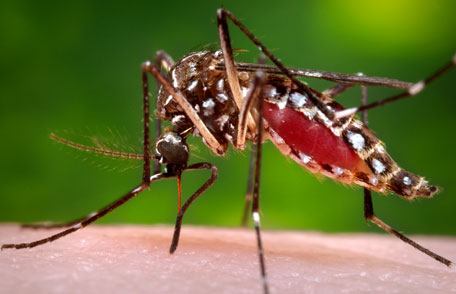
When a mosquito bites you, you are the __________ and the mosquito is the  ____________.
a)
host, hostess
b)
parasite, host
c)
host, parasite
d)
prey, predator
38.

A relationship in which two species live closely together.

a)

resource

b)

mutualism

c)

succession

d)

symbiosis

39.
How many types of symbiosis are there?
a)
5
b)
7
c)
3
d)
If you pick this you're silly
1000
40.
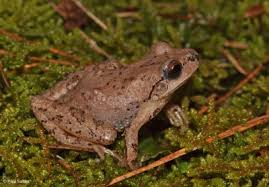
A frog eats a fly. The frog and fly are demonstrating ________.
a)
mutualism
b)
competition
c)
predator/prey
d)
parasitism
41.
Higher temperature means faster moving molecules
a)
True
b)
False
42.
Which best describes heat transfer by radiation?
a)
a slice of bacon frying in a pan
b)
a pot on a stove boiling water
c)
a camp fire warming hands
d)
a hot air balloon
43.

The total energy of all the particles in a substance is called

a)

temperature

b)

thermal energy

c)

degrees

d)

mass

44.
The efficiency of energy transfer from a lower trophic level to the next highest level is roughly
a)
1%
b)
10%
c)
100%
d)
1000%
45.
Trophic levels are represented by 
a)
squares
b)
circles
c)
pyramids
d)
lines
46.
Which animal is the apex predator?
a)
hawk
b)
lizard
c)
snake
d)
grass
47.
Which animal is not the apex predator but, a predator to a mouse?
a)
hawk
b)
rabbit
c)
snake
d)
grass
48.
In the energy pyramid here, how much of the energy in each level gets lost as heat or used by the organism for survival?
a)
80%
b)
90%
c)
10%
d)
20%
49.
The arrows in a food chain or web represents what?
a)
They point to the organism that is being eaten.
b)
It shows how sunlight flows within an ecosystem.
c)
They show what direction the energy is flowing between organisms. 
d)
They represent how water is transferred within a habitat.
50.
Organisms that create their own energy from sunlight or chemicals
a)
Herbivore
b)
Omnivore
c)
Autotroph
d)
Heterotroph 
51.
Eat primary consumers (can be carnivores and omnivores)
a)
Tertiary Consumers
b)
Secondary Consumers
c)
Quaternary Consumers 
d)
Top Predators 
52.
An organism that uses an outside source of energy like the sun to create energy-rich food molecules.
a)
Consumer
b)
Producer
c)
Decomposer
d)
Parasite 
53.
Biomass refers to
a)
Chemical Energy
b)
Light Energy
c)
Rank in the feeding heirarchy
d)
Amount of living tissue at the tropic level
54.
The process of plants using energy from the sun to create the first trophic level is called?
a)
Photosynthesis
b)
Chemosynthesis
c)
Cellular Respiratation
d)
Primary Producers
55.

A group of the same species of organisms would best be known as a _______________________.

a)

population

b)

community

c)

ecosystem

d)

biome

56.

A community interacting with non-living things is best described as __________________________.

a)

a community

b)

a biome

c)

a biosphere

d)

an ecosystem

57.

Which of the following best describes a community?

a)

A group of the same species in the same location at a given time.

b)

Different species groups in the same location at a given time

c)

All of the biomes of the planet interconnected.

d)

A single individual organism.

58.
Which of the following illustrates the correct ordering of trophic levels?
a)
decomposers-carnivores-autotrophs-herbivores
b)
herbivores-autotrophs-carnivores-decomposers
c)
autotrophs-herbivores-carnivores-decomposers
d)
carnivores-producers-omnivores
59.
What does every food chain start with?
a)
producers
b)
sun
c)
consumer
d)
decomposers
60.
When an organism dies, the nutrients in its body
a)
can never be reused by other living things. 
b)
are immediately released into the atmosphere.
c)
 are released by the action of decomposers. 
d)
None of these
61.
Which type of consumer is always a first consumer?
a)
Herbivore
b)
Omnivore
c)
Carnivore
d)
Producer
62.
Which type of consumer could be a first or second consumer?
a)
Herbivore
b)
Omnivore
c)
Carnivore
d)
Producer
63.
Which is the correct food chain order?
a)
Plant-->1st Consumer--> 2nd Consumer 
b)
Plant <-- 1st Consumer <-- 2nd Consumer
c)
2nd consumer     --> 1st consumer  --> Plant
d)
1st Consumer      --> 2nd consumer --> Plant
64.
The frog is a predator to what prey in this food chain?
a)
frog
b)
grass
c)
grasshopper
d)
hawk
65.
Why is a deer classified as a herbivore?
a)
A deer makes its own food.
b)
A deer eats only plants.
c)
A deer eats only animals.
d)
A deer eats plants and animals.