
 Worksheets
VSEPR and Hybridization
Total questions: 25
Worksheet time: 19mins
Name
Class
Date
1.
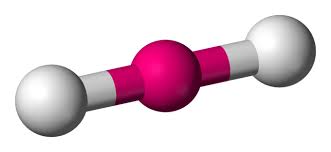
What is the hybridization of a linear molecule?
a)
sp
b)
sp2
c)
sp3
d)
sp3d
2.
Which of the following images represents a Trigonal Planar molecular geometry?
a)
b)
c)
d)
3.
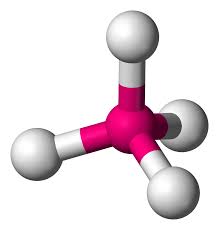
What is the hybridization of this molecule shown above
a)
sp
b)
sp2
c)
sp3
d)
sp4
4.

What is the bond angle for the CH4 molecule?
a)
120°
b)
107°
c)
109.5°
d)
90°
5.

What is the hybridization of the central atom of a bent molecule? (AB2E2)
a)
sp
b)
sp2
c)
sp3
d)
sp3d
6.

Choose the correct shape for this molecule:
a)
Trigonal planar
b)
Trigonal pyramidal
c)
Tetrahedral
d)
Linear
7.

Choose the correct shape for this molecule:
a)
Trigonal planar
b)
Trigonal pyramidal
c)
Bent
d)
Linear
8.

Choose the correct shape for this molecule:
a)
Bent
b)
Trigonal pyramidal
c)
Trigonal planar
d)
Linear
9.

Choose the correct shape for this molecule:
a)
Trigonal planar
b)
Trigonal pyramidal
c)
Bent
d)
Tetrahedral
10.

Choose the correct shape for this molecule:
a)
Bent
b)
Linear
c)
Tetrahedral
d)
Trigonal pyramidal
11.

Which of the following is octahedral?
a)
SCl6
b)
XeI4
c)
NBr5
d)
CH4
12.
What are all the bond angles in the linear arrangement as predicted by VSEPR theory?
a)
90°
b)
180°
c)
120°
d)
109.5°
13.
The ability of an atom to attract electrons to itself is called
a)
geometry
b)
conductivity
c)
electronegativity
d)
ionization energy
14.
What are the hybridization and the approximate bond angles in CS2?
a)
sp2, 1070
b)
sp3, 1200
c)
sp2, 1200
d)
sp, 1800
15.
Which of the following is a covalent compound?
a)
SrI2
b)
P4O10
c)
LiOH
d)
ZnS
16.
A lone pair is defined as
a)
A pair of bonding electrons
b)
One non-bonding electron
c)
A pair of non-bonding electrons
d)
A pair of electrons on the central atom
17.
What is the VSEPR theory used to predict?
a)
Bond Strength
b)
Polarity
c)
Molecular Shape
d)
Electronegativity
18.
Which of the following shapes has an unshared pairs of electrons on the central atom?
a)
Bipyramidal
b)
Bent
c)
Trigonal Planar
d)
Tetrahedral
19.
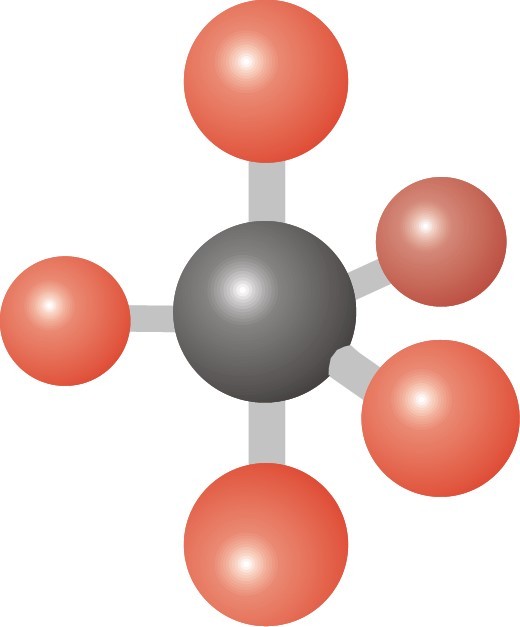
What molecule could this be?
a)
H2O
b)
CCl4
c)
PCl5
d)
NaCl
20.
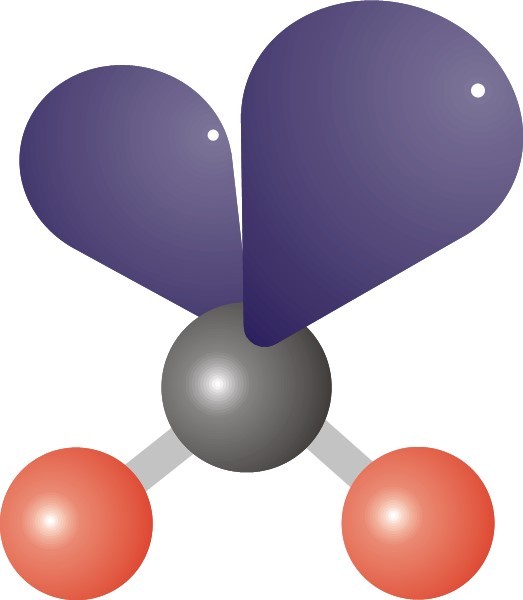
Who could this be?
a)
CO2
b)
NH3
c)
H2S
d)
CH4
21.
How many electrons are shared in a triple bond?
a)
6
b)
3
c)
6 pairs
d)
5
22.
VSEPR stands for ________ theory.
a)
Valence Structure of Electron Pyramids and Regression
b)
Varied Structures of Electrons Paired and Replaced
c)
Varied Shell Energy of Protons and Radiation
d)
Valence Shell Electron Pair Repulsion
23.
What is hybridization?
a)
The mixing of atomic orbitals in order for atoms to bond better
b)
When atoms are between different steric numbers
c)
When reactions run more efficiently
d)
The mixing of bonds together and drawing the bond moving around
24.
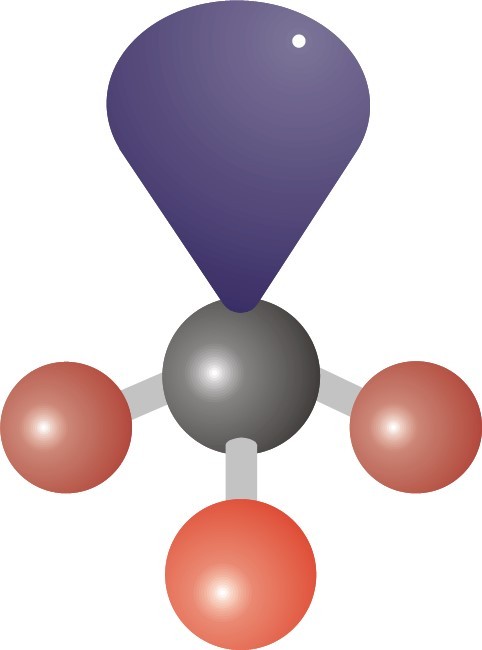
Who could this be?
a)
H2O
b)
NH3
c)
CO2
d)
CH4
25.

What molecular shape is the structure shown here? (NH4+)
a)
linear
b)
trigonal planar
c)
tetrahedral
d)
trigonal pyramidal
100 %

