
NEW
Font size
 Worksheets
Bacteria vs Viruses
Total questions: 12
Worksheet time: 6mins
Prokaryotes do not have a nucleus. Which of the following is an example of a prokaryote?
Virus
Plant
Bacteria
Fungi
T/F All bacteria are bad
True
False

Besides DNA or RNA, what else is a virus made of?
a cell wall
a cell membrane
a protein coat
a carbohydrate coat
Which of the following is true for both bacteria and viruses?
both contain genetic material
can be killed using antibiotics
have a cell membrane
have a protein coat
Which statement is true about viruses?
Viruses can eat and metabolize food.
Viruses can reproduce only using a host cell.
Viruses can reproduce on their own at any time.
Viruses contain DNA, so they are alive.
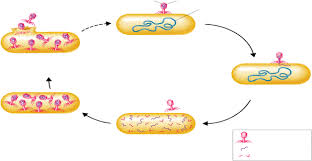
Which viral life cycle kills its host cell by lysing (bursting)?
Lysogenic Cycle
Lytic Cycle
Binary Fission
Conjugation
A viral infection that weakens a person's immune system for the rest of their life is..
strep throat
HIV/AIDS
tuberculosis
the plague
Viruses in the lysogenic cycle can be DORMANT. This means they....
are resting and waiting to attack
speed up reactions
are infecting quickly
catalyzing proteins
T/F The influenza virus (flu) is an example of a virus that goes through the lytic cycle.
True
False

