
 Worksheets
Hardware, Software and Logic
Total questions: 27
Worksheet time: 15mins
Name
Class
Date
1.
When a user enters data into a computer, what is this called?
a)
Input
b)
Process
c)
Output
d)
Program
2.
If I input the numbers 5 and 4 and the computer outputs 3 and 2, what is the process?
a)
double it
b)
divide it by 2
c)
add 1
d)
subtract 2
3.

What is the purpose of the CPU?
a)
To process all the data and instructions.
b)
To turn the computer on.
c)
To create PowerPoint presentations.
d)
To provide power to the computer.
4.

RAM & ROM are known as what kind of memory?
a)
Secondary storage
b)
Main memory
c)
Registers
d)
Flash memory
5.

What does the acronym RAM stand for?
a)
Random Alignment Memory
b)
Read Access Memory
c)
Random Access Memory
d)
Read All Memory
6.

What does the acronym ROM stand for?
a)
Read Only Memory
b)
Random Option Memory
c)
Read Once Memory
d)
Random Operating Memory
7.

Which is the Optical Storage
a)
DVD
b)
HDD
c)
SSD
d)
USB
8.
Which type of storage has moving parts?
a)
Hard Disk Drive
b)
Flash Drive
c)
DVD
d)
Solid State Drive
9.

Which storage does NOT use light?
a)
DVD
b)
CD
c)
HDD
d)
Blue Ray
10.

A disadvantage of hard drives is
a)
They have moving parts
b)
They are volatile
c)
They don't last long
d)
They are hard to use
11.

Optical storage uses what for 0s and 1s
a)
Pits and pots
b)
Pits and lands
c)
Highs and Lows
d)
Light and dark
12.

Solid State Drives use
a)
Non Volatile Flash Memory
b)
Volatile Flash Memory
c)
Volatile Storage Memory
d)
Non Volatile Magnetic Memory
13.

Which of these is an example of Cloud storage?
a)
Office 365
b)
Windows
c)
Android
d)
Zip Drive
14.
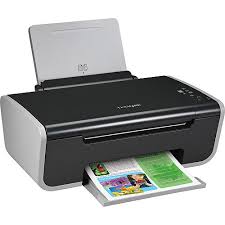
Is this device Input or Output?
Printer
a)
Input
b)
Output
15.

Is this device Input or Output?
Monitor
Monitor
a)
Input
b)
Output
16.
Cache memory acts as a buffer between the processor and
a)
the RAM
b)
the harddrive
c)
the motherboard
d)
the user
17.
Cache is used to make the computer faster
a)
TRUE
b)
FALSE
18.
What does ROM stand for?
a)
Random Only Memory
b)
Random Only Memory
c)
Rapid Only Machine
d)
Read Only Memory
19.
Which of these is not stored in the RAM?
a)
Applications
b)
Operating System
c)
PC start up data
d)
User Interface
20.
Which of these is the largest file size?
a)
GB
b)
Nibble
c)
MB
d)
KB
21.
RAM is non-volatile memory
a)
True
b)
False
22.
ROM is non-volatile memory
a)
True
b)
False
23.
Which of these are in the correct order? (smallest to largest)
a)
B, KB, MB, TB, GB
b)
GB, KB, MB, TB, B
c)
B, KB, MB, GB, TB
d)
KB, MB, TB, GB, B
24.
What is the main purpose of the CPU?
a)
To Fetch, Decode and Execute Instructions (in MEMORY).
b)
To perform calculations.
c)
To render graphics on a screen.
d)
To manage the computer system.
25.
What is the main feature of the von Neumann Computer architecture?
a)
There is a single PRIMARY MEMORY for both data and instructions.
b)
The model as a single CPU
c)
The instructions are stored in PRIMARY MEMORY
d)
Data is stored in SECONDARY STORAGE
26.

Clock speed measures what?
a)
Speed at which instructions are fetched from main memory
b)
Time taken to perform a single Fetch-Decode-Execute cycle
c)
Number of Fetch-Decode-Execute cycles that can be completed in 1 sec
d)
Speed at which instructions are decoded
27.

The small high speed storage areas within the memory and processor are known as..?
a)
Registers
b)
Addresses
c)
Cache
d)
Buses
100 %

