Wayground logo

Free Printable Worksheets

Font size

S
M
L
XL
Worksheets

Motion 2

Total questions: 40

Worksheet time: 58mins

Name
Class
Date
1.

Calculate the velocity of a cyclist traveling 100km south over a period of 5 hours

a)

20km/h south

b)

10km/h south

c)

10mi/h

d)

20km/h

2.

How fast is a train moving if it travels 32km in 4 hours

a)

8km/h

b)

8m/s

c)

128m/s

d)

128km/h

3.
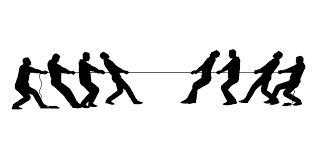
What force is opening a drawer? 
a)
push
push
b)
pull
4.
What force is this? 
a)
push
b)
pull
5.
You walk 10 meters to math class in 20 seconds. Your average speed is
a)
2 m/s
b)
0.5 m/s
c)
200 m/s
d)
5 m/s
6.

If the man throws the ball travels 90 m in 3 seconds, what is it's average speed?

a)

30 m/s

b)

99 m/s

c)

180 m/s

d)

10 meters

7.

Who won the race?

a)

Ashok

b)

Angela

c)

Juanita

d)

Cameron

8.

Who won the race?

a)

Blue Line

b)

Red Line

c)

The race was a tie

9.

The rate at which velocity (speed/direction) changes is called

a)

Speed

b)

Acceleration

c)

Motion

d)

Slowing down

10.
What is the best definition for mass?
a)
how much space an object takes up
b)
how much matter an object contains
11.
What is the definition of "weight"?
a)
measure of the force of gravity on your body
b)
the time it takes to get on a ride 
c)
the amount of matter in an object
d)
the size of an object
12.
The mass of an object ___________ as it moves away from the center of Earth
a)
stays the same
b)
decreases
c)
increases
d)
doubles
13.
Which of the following never changes no matter where in the universe?
a)
weight
b)
force
c)
mass
d)
pounds
14.
What is the SI unit used to measure force? 
a)
pounds 
b)
grams 
c)
newtons 
d)
friction
15.
A person would weigh less on on the Moon than on the Earth because . . .
a)
Moon has more mass, and therefore more gravity
b)
Moon has less mass, and therefore more gravity
c)
Moon has more mass, and therefore less gravity
d)
Moon has less mass and therefore less gravity
16.

Would a person weight less on Mars or on Earth?

a)

They would weigh the same on both locations

b)

They would weigh less on Mars cause it has less gravity

c)

They would weigh less on Earth cause it has more gravity

d)

They would weigh more on Mars cause it has more gravity

17.
A 20 kg bike accelerates at 10 m/s2.  what was the force
a)
25 Newtons
b)
20 Newtons
c)
200 Newtons
d)
10 Newtons
18.
Newton's third law states that any action will have a(n) _______ and ______ reaction
a)
Equal and similar
b)
Equal and opposite
c)
Equal and different
d)
Greater and opposite
19.
What is Newton's First Law known as? The Law of
a)
Friction
b)
Mass
c)
Inertia
d)
Gravity
20.
What is the name for a push or pull?
a)
A movement
b)
A force
c)
Speed
d)
Density
21.

Because of inertia, a moving object will keep ________ unless acted on by an unbalanced force.

a)

at rest

b)

moving

c)

in one spot

d)

inertia

22.
Which of Newton's laws are illustrated with a rocket launch?
a)
1st Law, the Law of Inertia. 
b)
2nd Law, the Law of Acceleration.
c)
3rd Law, the Law of Action Reaction
d)
The Law of Conservation of Mass
23.

Which of the following is the best example of Newton's First Law of Motion?

a)

Jessica's body flies forward after she hits the brakes

b)

Jessica drives a car

c)

Jessica is at a road crossing

d)

Jessica is sleeping

24.

The basketball continues upwards until the ball is forced back to earth due to gravity. This demonstrates Newton's

a)

1st Law

b)

2nd Law

c)

3rd Law

d)

4th Law

25.

What is force?

a)

A push exerted on an object

b)

A push or pull exerted on an object

c)

A pull exerted on an object

d)

Nothing

26.

What is Newton's 2nd Law?

a)

F=ma

b)

Every action has an equal and opposite reaction

c)

An object at rest stays at rest, an object in motion stays in motion.

d)

Friction

27.

If the man pushes with an equal amount of force, the lawnmower will accelerate quicker. This is due to Newton's

a)

1st Law

b)

2nd Law

c)

3rd Law

d)

4th Law

28.
F=MA
An object of mass 10 kg is accelerated upward at 2 m/s2.  What force is required? 
a)
20 N
b)
2 N
c)
5 N
d)
0 N
29.
How much force is needed to accelerate a 2 kg physics book to an acceleration of 6 m/s/s?
a)
36 N
b)
12 N
c)
3 N
d)
0.33 N
30.
If a 10 kilogram object accelerates suddenly at 15 m/s^2, how much force was applied to the object?
a)
150 Newtons
b)
15 Newtons
c)
150 kilograms
d)
100 kilograms
31.
An object with a mass of 6.0 kg accelerates 4.0 m/s2 when an unknown force is applied to it. What is the amount of the force?
a)
240 N
b)
24 N
c)
2.4 N
d)
0.24 N
32.

Newton's 1st Law is also called the Law of ...

a)

Friction

b)

Inertia

c)

Unbalanced forces

d)

Newtons

33.

According to __________, the force applied to an object is equal to the object's acceleration multiplied by the object's mass.

a)

Newton's Second Law

b)

Newton's Third Law

c)

Newton's First Law

34.
Newton's Third Law States...
a)
Objects in motion stay in motion and objects at rest stay at rest
b)
Force is equal to mass times acceleration
c)
For each action there is an equal and opposite reaction
35.

Which of Newton's Law is pictured..

a)

1st Law

b)

2nd Law

c)

3rd Law

d)

4th Law

36.

Which of Newton's Law is pictured..

a)

1st Law

b)

2nd Law

c)

3rd Law

d)

4th Law

37.

When you fire a gun, the gun jumps backwards (recoils). This is due to Newton's

a)

1st Law

b)

2nd Law

c)

3rd Law

d)

4th Law

38.

A baseball bat hits a baseball with a force of 100 Newtons. What is the force and its direction exerted by the ball on the bat?

a)

100 Newtons, same direction

b)

100 Newtons, opposite direction

c)

200 Newtons, opposite direction

d)

200 Newtons, same direction

39.
According to Newton's _____ Law of Motion, when a hammer strikes and exerts force on a nail, the nail exerts an equal force back on the hammer.
a)
First
b)
Second
c)
Third
d)
Fourth
40.
"An object in motion (or at rest) will to stay in motion (or at rest) until an outside force acts upon it."
a)
Newton's 1st Law
b)
Newton's 2nd Law
c)
Newton's 3rd Law
d)
Newton's 4th Law