
 Worksheets
Review Unit 5 - B
Total questions: 15
Worksheet time: 15mins
Name
Class
Date
1.
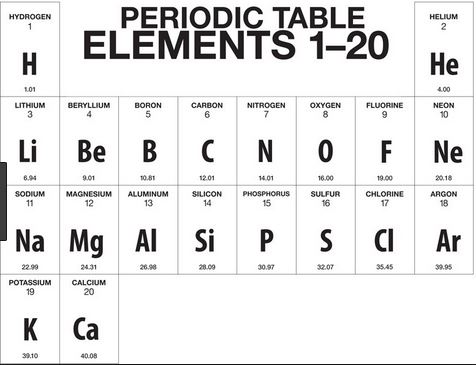
How many valence electrons does Aluminum Have?
a)
1 Valence electron
b)
2 Valence electron
c)
3 Valence electron
d)
4 Valence electron
e)
5 Valence electron
2.
How many valence electrons does Sodium Have?
a)
1 Valence electron
b)
2 Valence electron
c)
3 Valence electron
d)
4 Valence electron
e)
5 Valence electron
3.

This is a correct dot diagram for oxygen, group 16.
a)
true
b)
false
4.

This is a correct dot diagram for fluorine, group 17.
a)
true
b)
false
5.
What is the oxidation number of O in CO2?
a)
+2
b)
-1
c)
+4
d)
-2
6.
Which atom has the largest atomic radius?
a)
potassium
b)
rubidium
c)
francium
d)
cesium
7.
Ionization energy is...
a)
the energy required to add an electron to a specific atom
b)
how much energy it takes to remove an electron from an atom
c)
the energy required to shield the outer electrons from the nucleus
d)
a measure of the ability of an atom to attract electrons
8.
The element with the largest electronegativity in the halogens is -
a)
At
b)
F
c)
Cl
d)
Br
9.

Which of the following will have a higher ionization energy than arsenic (As)?
a)
Gallium (Ga)
b)
Neon (Ne)
c)
Antimony (Sb)
d)
Germanium (Ge)
10.
What term is used to describe "an atom's tendency to attract electrons to itself when is is chemically combined with another element"
a)
electronation
b)
electron affinity
c)
electronegativity
d)
electrolysis
11.
What term is used to describe "A measure of the size of an atom"
a)
chemical reactivity
b)
atomic radius
c)
energy levels
d)
orbit
12.
Which one of the following metals reacts most vigorously with cold water?
a)
Sodium
b)
Magnesium
c)
Copper
d)
Zinc
13.
All atoms are most stable with (or would "prefer") how many electrons in their valence shell?
a)
1
b)
2
c)
8
d)
18
14.
What groups are the most reactive non metals?
a)
1 and 2
b)
16 and 17
c)
2 and 17
d)
1 and 16
15.
What groups are the most reactive metals?
a)
2 and 3
b)
1 and 18
c)
1 and 2
d)
16 and 17
100 %

