wayground logo

Free Printable Worksheets

Font size

S
M
L
XL
Worksheets

Science Flow of energy

Total questions: 181

Worksheet time: 3hrs 31mins

Name
Class
Date
1.

Green pigment found in plants

a)

Chloroplast

b)

Chlorophyll

2.

Catalyst needed for photosynthesis

a)

Sunlight

b)

Hydrogen Sulfide

3.

Each step in a food chain or food web has a ___ level

a)

Photosynthesis

b)

Arrow

c)

Trophic

4.

Energy making process using chemicals

a)

Photosynthesis

b)

Chemosynthesis

5.

Energy making process using sunlight

a)

Photosynthesis

b)

Chemosynthesis

6.

Mixture of floating algae

a)

Plants

b)

Zooplankton

c)

Phytoplankton

7.

Series of steps in which organism transfer energy by eating or being eaten

a)

Trophic level

b)

Food web

c)

Food chain

d)

Arrows

8.

Total amount of living tissue within each trophic level

a)

Biology

b)

Energy

c)

Biomass

d)

Plants

9.

Producer in photosynthesis

a)

Bacteria

b)

Plant

c)

Animal

10.

Organelle found in plants

a)

Chlorophyll

b)

Chloroplast

11.

Network of feeding interactions showing all the feeding relationships in an ecosystem

a)

Trophic level

b)

Food web

c)

Food chain

d)

Energy pyramid

12.

Small swimming organisms that feed on marine algae

a)

Zooplankton

b)

Phytoplankton

c)

Hydroplankton

13.

Shows relative amount of energy or matter contained within each trophic level

a)

Ecological pyramid

b)

Food chain

c)

Food web

d)

Trophic Level

14.

What am I?

a)

Unicellular

b)

Multicellular

15.

The trophic level that identifies the first consumer is called

a)

Quaternary consumer

b)

Secondary consumer

c)

Primary consumer

d)

Tertiary consumer

16.

Approximately _______ of energy is passed on in a food chain.

a)

100 %

b)

10%

c)

1%

d)

.1%

17.

The amount of energy in an energy pyramid _____ as you move from primary producers to quaternary consumers.

a)

Increases

b)

Stays the same

c)

Decreases

18.

The arrows in a food chain point to the organism being eaten.

a)

True

b)

False

19.

Pick the correct level organization from smallest to largest.

a)

cell - organ - tissue - organism

b)

cell - tissue - organ system

c)

tissue - organ - organ system

20.
Which organism is likely to be at the beginning of a food chain for a pond?
a)
Sunfish
b)
Freshwater shrimp
c)
Paramecium
d)
Green Algae
21.
Which of these best explains why predators need plants, such as grass, in their ecosystem?
a)
Plants are a large part of their diets
b)
Plants provide safety for predators
c)
Plants break down the organisms that the predators eat
d)
Plants provide food for their animals that the predators eat
22.
What is indicated by the diagram?
a)
Food web
b)
Food chain
c)
Food map
d)
Food menu
23.

An organism that eats both plants and animals is known as a(n)

a)

Carnivore

b)

Omnivore

c)

Herbivore

d)

Decomposer

24.

Autotrophs are organisms that produce their own food. Which do scientists classify as autotrophs?

a)

Chordates

b)

Fungi

c)

Plants

d)

Molds

25.

What is the first source of energy for almost all food webs?

a)

Plants

b)

Sunlight

c)

Mineral in the soil

d)

Decomposers

26.
What organisms are at the bottom of an energy pyramid?
a)
Producer
b)
Consumer
c)
Decomposer
d)
Scavenger
27.
How much energy is passed on to each trophic level in an energy pyramid?
a)
10%
b)
90%
c)
50%
d)
80%
28.

Which organisms have the most available energy in an energy pyramid?

a)

Producers

b)

Consumers

c)

Decomposers

d)

Detritivores

29.
Where do crickets get their energy?
a)
Cattails
b)
Marsh Grass
c)
Grasshoppers
d)
Shrews
30.

Which organisms in the diagram have the most energy to give to other organisms?

a)

Cattails and Marsh Grass

b)

Hawks and Snakes

c)

Crickets and Grasshoppers

d)

Shrews and Frogs

31.
If additional snakes are introduced into this ecosystem, there will most likely be an immediate decrease in the _________.  
a)
hawk population
b)
rabbit population
c)
wildflower population
d)
grass population
32.
Which would be the appropriate term for an organism that eats a producer?
a)
scavenger
b)
decomposer
c)
secondary consumer
d)
primary consumer
33.
All of the following are consumers except
a)
Autotrophs
b)
Herbivores
c)
Heterotrophs
d)
Ominvores
34.

In this food chain, the snake would be a

a)

tertiary consumer

b)

secondary consumer

c)

primary consumer

d)

producer

35.
What type of organisms are the first step in a food chain?
a)
Consumers
b)
Predators
c)
Producers
36.
What's a food web?
a)
A representation of all the feeding relationships within a community.
b)
A way of showing how matter and energy pass from one organism to another.
c)
A food chain provides a more complete model of feeding relationships within a community.
37.
A food web is made up of 
a)
one food chain.
b)
only producers.
c)
many different food chains.
38.
What does an energy pyramid represent?
a)
Food pyramids show the different food chains in a community.
b)
Energy pyramids show the same total matter at all levels.
c)
Shows the amount of energy available at each feeding level in an ecosystem.
39.
What is a consumer?
a)
An organism that makes it's own food
b)
An organisms that eats other organisms for energy
c)
An organism that breaks down dead organisms
40.
What is a food chain?
a)
A chain that shows the flow of energy
b)
A triangle that shows trophic levels
c)
A chain used in fishing
41.
What is pictured in the diagram?
a)
A food web
b)
A food chain
c)
An energy pyramid
42.
What organisms are at the bottom of an energy pyramid?
a)
Producer
b)
Consumer
c)
Decomposer
d)
Scavenger
43.
How much energy is passed on to each trophic level in an energy pyramid?
a)
10%
b)
90%
c)
50%
d)
80%
44.
What is biodiversity?
a)
When there is a variety of organisms in an area
b)
When there are NOT a variety of different organisms in an area
45.
Which organisms have the most available energy in an energy pyramid?
a)
Producer
b)
Consumer
c)
Decomposer
d)
Scavenger
46.
Where do crickets get their energy?
a)
Cattails
b)
Marsh Grass
c)
Grasshoppers
d)
Shrews
47.
Who is the top predator on this food web?
a)
Hawk
b)
Snake
c)
Frog
d)
Cattail
48.
What is an example of a decomposer?
a)
Plum
b)
Mushroom
c)
Deer
d)
Bird
49.
Which organisms in the diagram have the largest total energy to give to other organisms?
a)
Cattails and Marsh Grass
b)
Hawks and Snakes
c)
Crickets and Grasshoppers
d)
Shrews and Frogs
50.
Which organism is likely to be at the beginning of a food chain for a pond?
a)
Sunfish
b)
Freshwater shrimp
c)
Paramecium
d)
Green Algae
51.
What do the arrows indicate in a food web?
a)
What eats what
b)
Where the energy is being transferred
c)
How the animals are related
52.
An organism that eats both plants and animals are know as a 
a)
Carnivore
b)
Omnivore
c)
Herbivore
d)
Decomposer
53.
Autotrophs are organisms that produce their own food. Which do scientist classify as autotrophs?
a)
Chordates
b)
Fungi
c)
Plants
d)
Molds
54.
In this food web, which two organisms could be harmed if the mouse population were to decrease?
a)
Deer and caterpillar
b)
Wolf and snake
c)
Oak and grass
d)
Hawk and songbird
55.
Food chains include all of the following except
a)
Consumers
b)
Decomposers
c)
Ecosystems
d)
Producers
56.
In an ecosystem, beetles eat grain, and lizards eat the beetles. Which statement is true?
a)
Beetles are carnivores.
b)
Beetles are producers.
c)
Lizards are decomposers.
d)
Lizards are consumers.
57.
a)
Producer
b)
Primary Consumer
c)
Autotroph
d)
Decomposer
58.
a)
Producer
b)
Primary Consumer
c)
Secondary Consumer
d)
Decomposer
59.
a)
Producer
b)
Primary Consumer
c)
Secondary Consumer
d)
Decomposer
60.
Which of the following is NOT a heterotroph?
a)
grass
b)
fungus
c)
shark
d)
sea urchin
61.
What percentage of energy is passed on to each trophic level?
a)
10%
b)
50%
c)
90%
d)
100%
62.
The arrows in a food chain or web represent ...
a)
They point to the organism that is being eaten.
b)
It shows how sunlight flows within an ecosystem.
c)
They show the direction the energy is flowing between organisms. 
d)
They represent how water is transferred within a habitat.
63.
The owl and weasel compete for which organism?
a)
Hawk
b)
Spider
c)
Grasshopper
d)
Shrew
64.
An animal that is hunted and eaten for food is the  __________.
a)
predator
b)
prey
c)
population
65.
An organism that gets energy from eating other organisms is a ______________.
a)
producer
b)
consumer
c)
decomposer
d)
prey
66.
Which of the following would be the most likely effect, if there were a sudden increase in the cricket population?
a)
There would be a decrease in the small bird population.
b)
There would be a decrease in the grass/flowers population.
c)
There would be a decrease in the mice population.
d)
There would be an increase in the grass/flowers population.
67.
Which of the following best describes the small bird in the food web above?
a)
primary and secondary consumer
b)
secondary and tertiary consumer
c)
primary consumer only
d)
secondary consumer only
68.

Why is some energy not passed on to the next trophic level?

a)

The organisms at each level use about 90% of the available energy to live.

b)

The statement is NOT true. All energy IS passed from one trophic level to the next.

c)

The organisms at each level use about 10% of the available energy to live.

d)

Most energy is absorbed by the soil instead.

69.
Does this food web have arrows pointing the right way?
a)
Yes
b)
No
70.
The diagram represents a pyramid of energy in an ecosystem.  Which level would most likely contain organisms that can photosynthesize?
a)
A
b)
B
c)
C
d)
D
71.
If there are 100 kcal of energy available in the producers, how much energy would be available to the herbivores?
a)
10 Kcal
b)
1 Kcal
c)
100 Kcal
d)
1000 Kcal
72.
Which organism(s) in the food web above can be described as quaternary consumers?
a)
owl and mosquito
b)
mouse only
c)
small bird and owl
d)
owl only 
73.
Which organisms have the most energy? 
a)
ladybugs
b)
plants
c)
owl
d)
mosquitoes
74.
If these organisms were arranged in an ecological biomass pyramid, which organism would have the least amount of biomass?
a)
coyote
b)
insect
c)
lizard
d)
shrub
75.
If the small bird on trophic level 3 in the pyramid has 50 kcal of energy available, how many kcal of energy were present in the trees?
a)
5
b)
500
c)
5000
d)
0.5
76.
Which organisms would likely have the largest biomass?
a)
mountain lions and eagles
b)
snakes and frogs
c)
squirrels and deer
d)
flowers, trees and fruit
77.
All living things are made of _______, and all living things need _______. 
a)
matter, plants
b)
energy, matter
c)
matter, energy
78.
Matter can by _____________ over and over again, and energy is needed for recycling matter. ___________ is not recycled, but it is converted from one form to another.
a)
destroyed,  matter
b)
recycled, energy
c)
destroyed, energy
79.
During ____________, _____________ convert light energy into the chemical energy in sugar molecules. 
a)
chemosynthesis, consumers
b)
chemosynthesis, producers
c)
photosynthesis, producers
80.
Some sugar molecules are broken down as _________ for the plant. Other sugar molecules as used as part of other molecules that become part of the plant's ________.
a)
matter, leaves
b)
energy, leaves
c)
energy, body
81.
Some producers don't rely on light for energy. Bacteria near hydrothermal vents use sulfur molecules to produce their own ________. Producing energy-rich nutrient molecules from chemicals is called ________.
a)
consumers, photosynthesis
b)
photosynthesis, chemosynthesis
c)
food, chemosynthesis
82.
How can energy be transferred from one organism to another?
a)
The energy stored in the molecules of one organism is transferred to another organism.
b)
The matter stored in the molecules of one organism is transferred to another organism.
c)
The photosynthesis stored in the molecules of one organism is transferred to another organism.
83.
Organisms use energy to heal and repair themselves and grow or to stay warm. Organisms take food to release its energy and use it for ____________ and ___________ or transform it into _________.
a)
maintenance, growth, heat
b)
photosynthesis, chemosynthesis, producers
c)
chemosynthesis, photosynthesis, heat
84.
What is a food chain?
a)
A chain that shows how heat passes from organism to organism.
b)
A way of showing how matter and energy pass from one organism to another.
c)
A representation of all the predator-prey relationships in a community.
85.
What type of organisms are the first step in a food chain?
a)
Consumers
b)
Predators
c)
Producers
86.
Examples of producers:
a)
flies, fungus, and termites
b)
plants and organisms capable of chemo or photosynthesis
c)
lions, deer, and shrubs
87.
What's a food web?
a)
A representation of all the feeding relationships within a community.
b)
A way of showing how matter and energy pass from one organism to another.
c)
A food chain provides a more complete model of feeding relationships within a community.
88.
Look at figure 16, page 52. Which is a food chain you can find within that food web?
a)
berries and flowers, grouse, deer, chipmunk
b)
grasses, marmot, seeds
c)
grasses, butterfly, grouse, red-tailed hawk.
89.
A food web is made up of 
a)
one food chain.
b)
only producers.
c)
many different food chains.
90.
Why are food chains commonly limited to no more than five links?
a)
Because as you move up the food chain, consumers need larger quantities of energy and matter.
b)
Because herbivores need to eat large quantities of plants to produce small amounts of body tissues, and the secondary consumers require to eat large amounts of body tissues to grow and do on.
c)
Because the original available energy is stored in plants and only that is passed along the food chain to consumers. 
d)
All of the above.
91.
How does an animal use the energy from the food consumes?
a)
To fuel its life processes such as respiration, digestion, and growth. And some energy is given off as heat.
b)
Only to move.
c)
To grow in weight. 
92.
What does an energy pyramid represent?
a)
Food pyramids show the different food chains in a community.
b)
Energy pyramids show the same total matter at all levels.
c)
Shows the amount of energy available at each feeding level in an ecosystem.
93.
Why can't the top level contain a large number of organisms?
a)
Because as energy moves from the bottom to the top level, less and less energy is available to higher levels.
b)
Because the original energy from producers is the total energy available to all the organisms in the energy pyramid.
c)
because only about ten percent of the energy available at one level is transferred to the next level.
d)
all of the above
94.
The efficiency of energy transfer from a lower trophic level to the next highest level is roughly
a)
1%
b)
10%
c)
100%
d)
1000%
95.
Trophic levels are represented by 
a)
squares
b)
circles
c)
pyramids
d)
lines
96.
Which animal is the apex predator?
a)
hawk
b)
lizard
c)
snake
d)
grass
97.
Which animal is not the apex predator but, a predator to a mouse?
a)
hawk
b)
rabbit
c)
snake
d)
grass
98.
Why is a shark a carnivore.
a)
because it eats seaweed
b)
because it eats dead animals
c)
because it eats sand 
d)
because it eats other animals
99.
In the energy pyramid here, how much of the energy in each level gets lost as heat or used by the organism for survival?
a)
80%
b)
90%
c)
10%
d)
20%
100.
The arrows in a food chain or web represents what?
a)
They point to the organism that is being eaten.
b)
It shows how sunlight flows within an ecosystem.
c)
They show what direction the energy is flowing between organisms. 
d)
They represent how water is transferred within a habitat.
101.
Organisms that create their own energy from sunlight or chemicals
a)
Herbivore
b)
Omnivore
c)
Autotroph
d)
Heterotroph 
102.
Biomass refers to
a)
Chemical Energy
b)
Light Energy
c)
Rank in the feeding heirarchy
d)
Amount of living tissue in an ecosystem
103.
What does a food web represent?
a)
All connections of energy flow throughout all organisms in a habitat.
b)
The specific ways that mutualism is carried out.
c)
A single pathway or energy flow between organisms. 
d)
How carnivores get their food. 
104.
The image provided is an example of a(n):
a)
Producer
b)
Autotroph
c)
Consumer
d)
Insect
105.

Which of the following would be the definition of a scavenger/detritivore?

a)

Animals that eat insects.

b)

Organisms that feed on rocks, recycling the nutrients back into the ground.

c)

Organisms that eat only plants

d)

Things that feed on dead, rotting organisms (roadkill)

106.
Which of the following would provide the most energy in an ecosystem?
a)
Producers
b)
Herbivore
c)
Omnivore
d)
Carnivore
107.
A wolf eats a rabbit, that just ate some berries.  What would you call the rabbit?
a)
Producer
b)
Omnivore
c)
Primary Consumer
d)
2nd order Heterotrph
108.
A wolf eats a rabbit, that just ate some berries.  What would you call the rabbit?
a)
Producer
b)
Omnivore
c)
Primary Consumer
d)
2nd order Heterotrph
109.
An organism that obtains energy by eating other organisms.
a)
Consumer
b)
Producer
c)
Decomposer
d)
Detriov
110.
An organism that needs to eat other organisms to obtain energy is known as a:
a)
autotroph
b)
producer
c)
heterotroph
d)
mutualist
111.
Heterotroph that eats only producers...
a)
omnivore
b)
herbivore
c)
scavenger
d)
carnivore
112.
Every food chain must start with a ...?
a)
producer
b)
sun
c)
consumer
d)
decomposer
113.
A connection of food chains with all the food energy paths in an ecosystem is a ...
a)
ecosystem
b)
food web
c)
food chain
d)
ecological pyramid
114.
What is a carnivore?
a)
an animal that gets energy by eating other animals
b)
an animal that gets energy by eating only plants
c)
an animal that gets energy by eating both plants and animals
d)
an animal that makes its own energy through photosynthesis
115.
An animal that gets energy from eating both plants and animals is a(n) ...
a)
herbivore
b)
carnivore
c)
omnivore
d)
autotroph
116.
The shrew provides energy for the ...?
a)
cricket
b)
grasshopper
c)
frog
d)
snake
117.
Which of the following is an herbivore?
a)
cricket
b)
frog
c)
hawk
d)
shrew
118.
Step in the food chain, food web, or ecological pyramid...
a)
trophic level
b)
abiotic factor
c)
niche
d)
ecosystem
119.
Study of the interactions between organisms and their environment... 
a)
niche
b)
community 
c)
ecology
d)
ecosystem
120.
What percentage of energy is passed on to each tropic level?
a)
10%
b)
50%
c)
90%
d)
100%
121.
Which organisms are likely the most numerous in this ecosystem? 
a)
herring
b)
phytoplankton
c)
small crustaceans 
d)
shark
122.
Which organism contains the greatest amount of energy?
a)
Garter Snake
b)
Field Mouse
c)
Red-tailed Hawk
d)
Alfalfa
123.
According to this energy pyramid, which organisms are carnivores?
a)
Krill, Algae, and Cod
b)
Killer Whale, Cod, and Algae
c)
Killer Whale, Leopard Seal, and Cod
d)
Killer Whale, Krill, and Algae
124.
If there are 1000 Kcal of energy available in the producers, how much energy is available to the herbivores?
a)
10 Kcal
b)
1 Kcal
c)
100 Kcal
d)
1000 Kcal
125.
Which of the following is a decomposer?
a)
bracket fungus
b)
blueberry bush
c)
hyena
d)
cyanobacteria
126.
Which term does NOT belong with the others?
a)
photosynthesis
b)
autotroph
c)
algae
d)
mushroom
127.
The eagle is located on which trophic level(s)?
a)
fourth only
b)
second and third
c)
third only
d)
third and fourth
128.
The second-order heterotrophs in this diagram include...
a)
rabbits, mice and grasshoppers
b)
foxes, owls and birds
c)
carrots, grasses and grains
d)
mice, owls and foxes
129.

What is the process plants use to make sugar?

a)

decomposition

b)

photosynthesis

c)

farming

130.

What is chlorophyll?

a)

a green pigment found in plant cells that allows plants to use sunlight to make food

b)

a living thing that gets its energy from breaking down dead organims

c)

a living thing that cannot make its own food

131.

What is the name of an organism that makes its own food?

a)

Consumer

b)

Decomposer

c)

Producer

132.

What do the arrows of a food chain or food web show?

a)

the flow or transfer of energy from one organism to another

b)

how organisms decompose

c)

how nutrients are made

133.

What is the primary source of all energy?

a)

Air

b)

Sunlight

c)

Water

134.

Which of the following is a first-level consumer?

a)

carnivore

b)

herbivore

c)

decomposer

135.

As you move up the energy pyramid, the size of a population of organisms decreases. True or False?

a)

True

b)

False

136.

What is the final stage of the food chain?

a)

producer

b)

consumer

c)

decomposer

137.

At each level of the energy pyramid, organisms use ____ % of their energy for life processes.

a)

50%

b)

90%

c)

100%

138.

Organisms pass on ____% of energy to the next level of the energy pyramid.

a)

10%

b)

15%

c)

100%

139.

Which of the following is a cause of decomposition?

a)

bacteria

b)

sunlight

c)

water

140.

What does a producer use during the process of photosynthesis?

a)

sunlight, water, carbon dioxide

b)

sugar, carbon dioxide, sunlight

c)

water and air

141.

Which of the following is an example of a producer?

a)

apple tree

b)

owl

c)

pig

142.

A ______ is an organism that cannot make its own food and must eat other organisms to get energy.

a)

producer

b)

consumer

143.

________ shows the transfer of food energy from one organism to the next in an ecological community.

a)

Food Chain

b)

Food Web

144.

__________ shows a group of food chains that overlap.

a)

Energy Pyramids

b)

Food Webs

145.

Classify this organism.

a)

Producer

b)

Consumer, herbivore

c)

Consumer, carnivore

146.

What is being made during the process of photosynthesis?

a)

oxygen and sugar

b)

water and oxygen

c)

carbon dioxide and sugar

147.

What happens when mold grows on bread during the decomposition process?

a)

materials in the bread are broken down into smaller, simpler parts

b)

materials in the bread combine into new, more complex parts

148.

What is radiant energy?

a)

Kinetic energy that results in the movement of molecules

b)

Kinetic energy sent off in the form of electromagnetic waves.

c)

The potential energy stored in the nucleus of an atom.

d)

Energy produced by a radiator.

149.

Which energy does the sun produce? (2 answers)

a)

Mechanical Potential Energy

b)

Electrical Kinetic Energy

c)

Radiant Kinetic Energy

d)

Thermal Kinetic Energy

150.

Energy can be __________ from one object to another. (2 answers)

a)

Transported

b)

Teleported

c)

Transferred

d)

Transposed

e)

Transformed

151.

If the speed of an object increases, what also increases?

a)

potential energy

b)

solar energy

c)

static energy

d)

kinetic energy

152.
Which of the following shows an energy transformation from chemical energy to electrical to light energy?
a)
A bolt of lightning lights the night sky.
b)
A candle glows brightly in the dark.
c)
A fire in a fireplace lights up a room.
d)
A battery causes a flashlight to shine.
153.
People get energy from the food that they eat and transform that energy as they move. Which energy transformations occur as a student rapidly rubs the palms of his hands together?
a)
mechanical to thermal to electrical
b)
chemical to mechanical to thermal
c)
mechanical to chemical to sound
d)
chemical to sound to electrical
154.
The smallest unit of life that makes up all living things are
a)
Tissues
b)
Cells
c)
Organs
d)
Organ Systems
155.
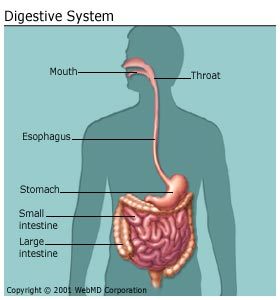
The stomach, small intestine, and large intestine are all organs. When they work together to process food, they form a functional unit known as an/a
a)
Organ
b)
Organ System
c)
Tissue
d)
Cell
156.
A collection of cells with similar functions form an/a
a)
Organ
b)
Tissue
c)
Organism
d)
Organ System
157.

What level organization is a leaf

a)

organ

b)

tissue

c)

cell

d)

organ system

158.

What level of organization is a palm tree

a)

organ

b)

organ system

c)

organism

d)

cell

159.

What level of organization is xylem

a)

tissue

b)

cell

c)

organ

d)

organ system

160.
All of the following are true except:
a)
Skin is an organ
b)
organs are made up of tissues
c)
Each organ is made up of its own kind of tissue
d)
tissues are made up of cells
161.
The tissues of a plant root are specialized to perform which of the following tasks?
a)
Absorb water and minerals
b)
Absorb light energy
c)
Release oxygen
d)
Perform photosynthesis
162.
The tissues of a plant root are specialized to perform which of the following tasks?
a)
Absorb water and minerals
b)
Absorb light energy
c)
Release oxygen
d)
Perform photosynthesis
163.
Which of the following is a reproductive organ in plants?
a)
Roots
b)
Stems
c)
Leaves
d)
Flowers
164.
Which specialized structures would you expect to find only in plants?
a)
Reproductive organs
b)
Organs that specialize in transport
c)
Organs that are sensitive to light
d)
Organs that produce seeds
165.
The smallest unit of life that makes up all living things are
a)
Tissues
b)
Cells
c)
Organs
d)
Organ Systems
166.
The stomach, small intestine, and large intestine are all organs. When they work together to process food, they form a functional unit known as an/a
a)
Organ
b)
Organ System
c)
Tissue
d)
Cell
167.
A collection of cells with similar functions form an/a
a)
Organ
b)
Tissue
c)
Organism
d)
Organ System
168.
Which of the following correctly orders the organization in plants and animals from least to most complex?
a)
Organism, Organ Systems, Organs, Tissues, Cells
b)
 Tissues, Cells, Organs, Organism, Organ Systems
c)
Organs, Tissues, Organism, Cells, Organ Systems
d)
Cells, Tissues, Organs, Organ Systems, Organism
169.
Organs and tissues that perform the same function is called _____________?
a)
cells
b)
tissues 
c)
organ system
d)
organs
170.
A group of tissues that perform a similar function is called_____. (Examples include the heart, lungs or stomach)
a)
cells
b)
tissues
c)
organs
d)
organ system
171.
When many organ systems work together it can form...
a)
organ
b)
cells
c)
organ system
d)
organism 
172.
This is a example of........ 
a)
organ system
b)
cells
c)
organ
d)
tissue
173.
This is a example of........ 
a)
organ system
b)
cells
c)
organ
d)
tissue
174.

What level organization is a leaf

a)

organ

b)

tissue

c)

cell

d)

organ system

175.
Which of the following lists these levels in the correct order of organization from the simplest to the most complex?
a)
cells, tissues, organs, organ systems, organisms
b)
organisms, organ systems, organs, tissues, cells
c)
tissues, cells, organs, organisms, organ systems
d)

organs, organ systems, organisms, cells, tissues

176.

Which of the following is NOT part of the cell theory?

a)

All animals are made up of cells

b)

cells can only arise from existing cells

c)

cells are the smallest form of life

d)

growth in animals is due to the cells getting bigger

177.

The basic unit of life

a)

tissue

b)

organism

c)

cell

d)

organ

178.
When many organ systems work together it can form...
a)
organ
b)
cells
c)
organ system
d)
organism 
179.

The basic unit of life

a)

tissue

b)

organism

c)

cell

d)

organ

180.
When many organ systems work together it can form...
a)
organ
b)
cells
c)
organ system
d)
organism 
181.
When many organ systems work together it can form...
a)
organ
b)
cells
c)
organ system
d)
organism