wayground logo

Free Printable Worksheets

Font size

S
M
L
XL
Worksheets

PS chapter 17

Total questions: 70

Worksheet time: 41mins

Name
Class
Date
1.
The order of elements in the periodic table is based on
a)
the number of protons in the nucleus.
b)
the electric charge of the nucleus.
c)
the number of neutrons in the nucleus.
d)
atomic mass.
2.
Atoms of elements that are in the same group have the same number of
a)
protons
b)
neutrons.
c)
valence electrons.
d)
protons and neutrons.
3.
Which of the following elements is an alkali metal?
a)
calcium
b)
magnesium
c)
mercury
d)
sodium
4.
Carbon and other nonmetals are found in which area of the periodic table?
a)
on the left-most side
b)
on the right side
c)
in the middle column of the periodic table
d)
in the bottom rows
5.
How was Mendeleev’s periodic table arranged?
a)
by increasing atomic mass
b)
by decreasing atomic mass
c)
by increasing atomic number
d)
by decreasing atomic number
6.
Each column of the periodic table is
a)
period
b)
group
c)
row
d)
element
7.
Elements that belong to the same group have the same number of
a)
valence electrons.
b)
neutral electrons.
c)
inner electrons.
d)
total electrons.
8.
Most elements are
a)
metals
b)
nonmetals
c)
metalloids
d)
semiconductors
9.
Most nonmetals are
a)
brittle
b)
good conductors
c)
metalloids
d)
shiny
10.
When can semiconductors conduct heat and electricity?
a)
under all conditions
b)
under almost all conditions
c)
under some conditions
d)
under no conditions
11.
Elements that share properties of both metals and nonmetals are called
a)
ions
b)
semiconductors
c)
period
d)
groups
12.

Which element would have properties similar to Calcium?

a)

Magnesium

b)

Gold

c)

Potassium

d)

Boron

13.

The _______________ are found on the left side of the periodic table.

a)

metalloids

b)

metals

c)

nonmetals

14.

Which two elements are in the same period?

a)

K and Na

b)

Sn and Au

c)

Ne and C

d)

He and Rn

15.

How many electrons are in the outermost energy level of an atom of Phosphorus?

a)

2

b)

15

c)

1

d)

5

16.

Which of the following elements is a nonmetal?

a)

Ba

b)

Mg

c)

Br

d)

Tc

17.

All carbon atoms have ___________________.

a)

6 protons

b)

8 neutrons

c)

8 protons

d)

12 neutrons

18.

Which of the following atoms has four valence electrons?

a)

fluorine

b)

titanium

c)

beryllium

d)

silicon

19.

Which type of element is a poor conductor of electricity?

a)

nonmetal

b)

metal

c)

metalloid

20.

How many protons does cobalt have?

a)

59

b)

6

c)

29

d)

27

21.
The horizontal row on the periodic table is called a
a)
group
b)
family
c)
period
d)
atomic number
22.
Which of the following is the most metallic element in period 3?
a)
Boron (B)
b)
Sodium (Na)
c)
Argon (Ar)
d)
Silicon (Si)
23.
Which of these element is the least metallic?
a)
Potassium (K)
b)
Carbon (C)
c)
Sulfur (S)
d)
Neon (Ne)
24.
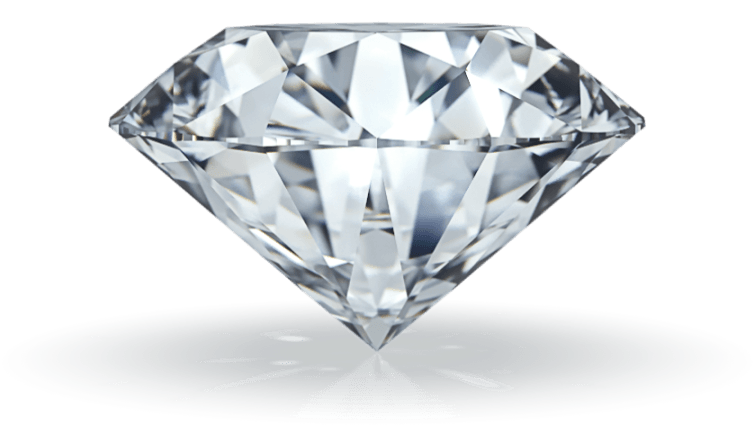
Diamonds are a pure form of what element?
a)
Carbon
b)
Oxygen
c)
Silicon
d)
Silver
25.
This class of elements are sometimes called "semiconductors."
a)
Metals
b)
Nonmetals
c)
Metalloids
d)
Groups
26.

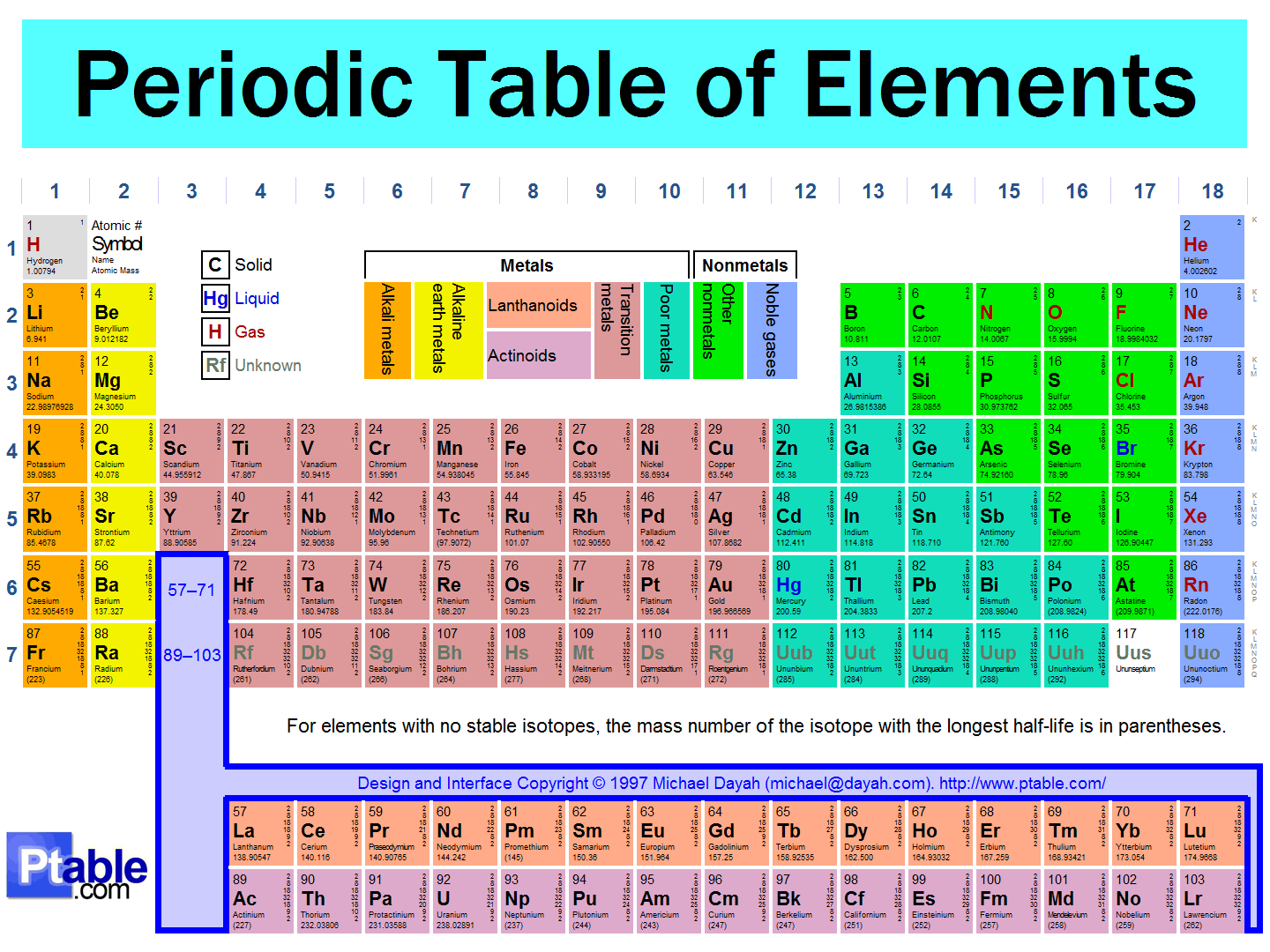
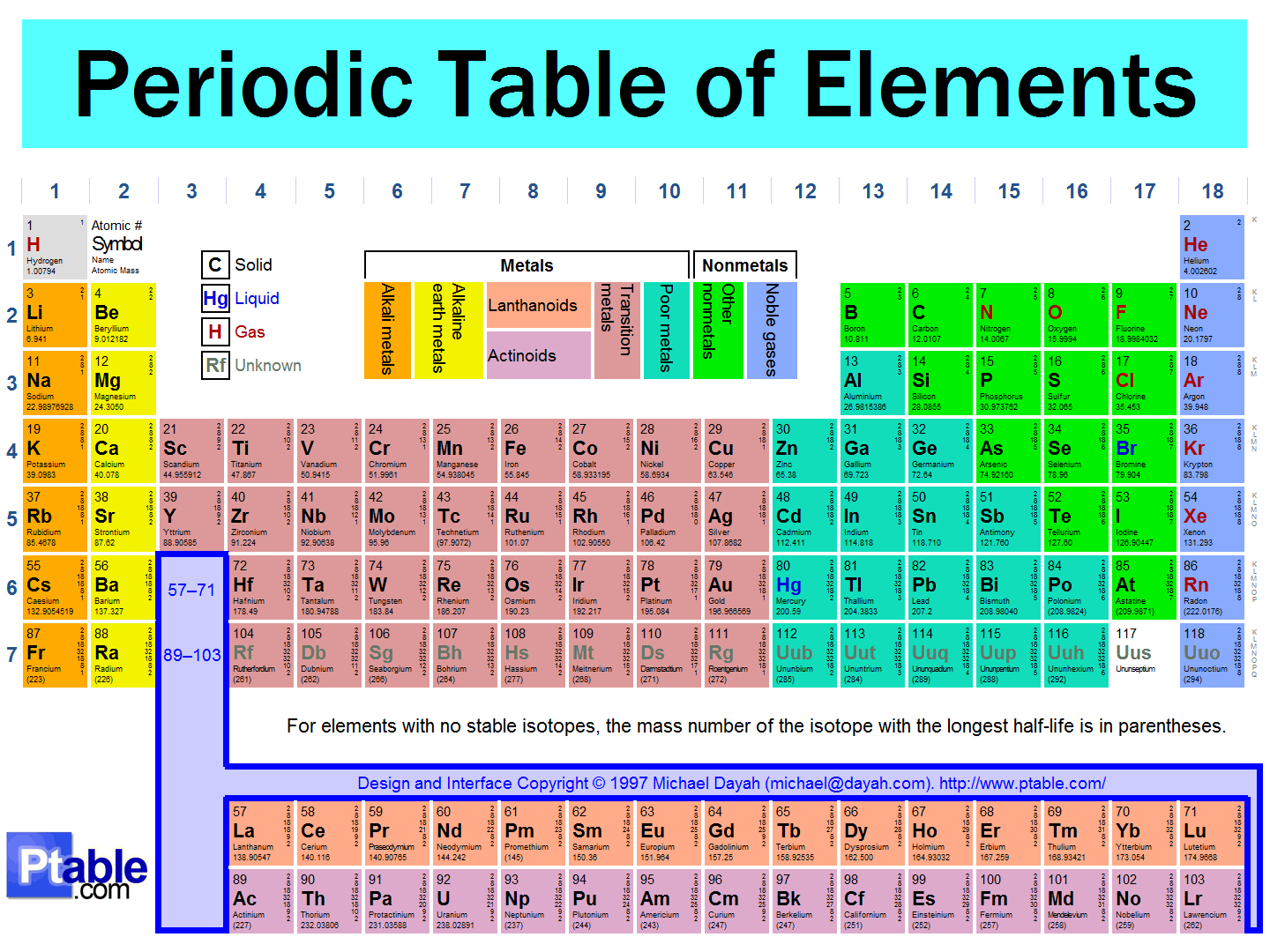
Which color on the image of the periodic table corresponds with the halogens.

a)

red

b)

black

c)

blue

d)

orange

27.

Which color on the image of the periodic table corresponds with the lanthanides.

a)

red

b)

black

c)

blue

d)

orange

28.

Which color on the image of the periodic table corresponds with the noble gases.

a)

red

b)

black

c)

blue

d)

orange

29.

Which color on the image of the periodic table corresponds with the transition metals.

a)

red

b)

black

c)

blue

d)

orange

30.

Which color on the image of the periodic table corresponds with the alkaline earth metals.

a)

yellow

b)

dark yellow

c)

blue/green

d)

teal

31.

Most metals share four common physical characteristics. Which of the options is not one of the four?

a)

Luster

b)

Conductivity

c)

Ductility

d)

Malleability

e)

Reactivity

32.

Which family of elements reacts violently with water and exposure to oxygen?

a)

alkali metals

b)

alkaline earth metals

c)

lanthanides

d)

actanides

e)

transition metals

33.

Which two families of elements are soft and silvery and have low densities? Choose two.

a)

alkali metals

b)

alkaline earth metals

c)

lanthanides

d)

actanides

e)

transition metals

34.

What are the four most common nonmetals in the human body?

a)

Oxygen

b)

Hydrogen

c)

Nitrogen

d)

Phosphorus

e)

Carbon

35.

What is the most reactive nonmetal?

a)

Fluorine

b)

Iodine

c)

Chlorine

d)

Bromine

36.

When a halogen such as Chlorine, combines with an alkali metal to produce a what?

a)

compound

b)

salt

c)

mineral

d)

acid

37.

Which of the following is not true of metalloids?

a)

Silicon and Germanium are common metalloids used in computers.

b)

Metalloids contain properties similar to both metals and nonmetals.

c)

Metalloids are found in a stair step line between metals and nonmetals on the periodic table.

d)

Metalloids are the first choice in building materials.

38.

Which family of elements does not combine with other elements unless under special conditions in a laboratory?

a)

Noble gases

b)

Halogens

c)

Metalloids

d)

Alkaline earth metals

e)

Actinides

39.
Elements in the same ________ are more chemically similar.
a)
group
b)
period
c)
club
d)
table
40.
Beryllium is in group number______.
a)
Group 2
b)
Group 3
c)
Group 4
d)
Group 7
41.
Which of the following is not a property of metals?
a)
brittle
b)
malleable
c)
lustrous
d)
conductive
42.
Name group 1A on the periodic table.
a)
alkali metals
b)
alkaline earth metals
c)
noble gases
noble gases
d)
halogens
43.
Name group 2A on the periodic table.
a)
alkali metals
b)
alkaline earth metals
c)
noble gases
d)
transition metals
44.
Name groups 3B - 12B on the periodic table.
a)
noble gases
b)
halogens
c)
metalloids
d)
transition metals
45.
The atoms along the staircase are called 
a)
metals
b)
nonmetals
c)
metalloids
d)
noble gases
46.
Where are the nonmetals located on the periodic table?
a)
top left corner
b)
bottom left corner
c)
top right corner
d)
bottom left corner
47.
Name group 17 on the periodic table.
a)
transition metals
b)
metalloids
c)
halogens
d)
alkali metals
48.
Which group has the most reactive nonmetals?
a)
alkali metals
b)
noble gases
c)
metalloids
d)
halogens
49.
Name groups 3 - 12 on the periodic table.
a)
noble gases
b)
halogens
c)
metalloids
d)
transition metals
50.
Name group 2 on the periodic table.
a)
alkali metals
b)
alkaline earth metals
c)
noble gases
d)
transition metals
51.
Name group 1 on the periodic table.
a)
alkali metals
b)
alkaline earth metals
c)
noble gases
noble gases
d)
halogens
52.
Name the group that contains inert (nonreactive) elements.
a)
noble gases
b)
halogens
c)
alkali metals
d)
alkaline earth metals
53.
Why are there two groups separated at the bottom of the periodic table?
a)
These groups have very special properties
b)
These groups are not true elements
c)
Simply for printing purposes
d)
Because Mendeleev said so.
54.

What are the three main groups of the periodic table?

a)

groups

b)

metal

c)

nonmetals

d)

metalloids

e)

periods

55.

Halogens (Group 17)

a)

gas at room temperature, low boiling point.

b)

most reactive nonmetals

c)

The electrons in the outermost shell (main energy level) of an atom; these are the electrons involved in forming bonds

d)

Number of protons and neutrons

56.
These are found on the Periodic Table.
a)
Compounds
b)
Elements
c)
Mixtures
57.

How many valence electrons makes most atoms stable (nonreactive)?

a)

2

b)

8

c)

1

d)

4

58.

Poor conductor of heat and electricity is a property of ___________.

a)

metals

b)

nonmetals

c)

metalloids

59.

Francium is the most reactive element on the periodic table.

a)

True

b)

False

60.
Which is an alkaline earth metal?
a)
Calcium
b)
Rubidium
c)
Carbon
d)
Iodine
61.
Which is a halogen?
a)
Fluorine
b)
Carbon
c)
Helium
d)
Lithium
62.
Which is a noble gas?
a)
Fluorine
b)
Hydrogen
c)
Iodine
d)
Krypton (Kr)
63.
Which statement is true about the alkaline earth metal family?
a)
They have 2 valence electrons.
b)
They are found on the right side of the periodic table.
c)
They form -2 charges.
d)
They tend to gain valence electrons.
64.
Which element is found in period 3 group 2?
a)
Sodium (Na)
b)
Magnesium (Mg)
c)
Yttrium (Y)
d)
Boron (B)
65.
Which of the following is a good conductor of heat?
a)
Metal
b)
Nonmetal
c)
Metalloid
66.
According to the Periodic Table of the Elements, which set of elements has similar properties?
a)
H, C, I
b)
He, H, Al
c)
He, Ne, Ar
d)
Na, Ca, Al
67.

Which of the following elements would most likely be a shiny, gray-colored solid at room temperature, conduct electricity, and dent when hit with a hammer?

a)

argon (Ar)

b)

chlorine (Cl)

c)

sulfur (S)

d)

aluminum (Al)

68.

Where are the synthetic elements found?

a)

lanthanides

b)

actinides

c)

transuranium elements

d)

transuranium elements and a couple of others

69.

Which of the following are the coinage metals?

a)

platinum, gold, silver

b)

silver, tin, bronze

c)

gold, copper, silver

d)

gold, bronze, pewter

70.

Which of the following is the iron triad?

a)

cobalt, iron, nickel, steel

b)

cobalt, platinum, iron

c)

nickel, iron, cobalt

d)

cobalt, titanium, iron