Wayground logo

Free Printable Worksheets

Font size

S
M
L
XL
Worksheets

Earth Science Weathering and Erosion

Total questions: 27

Worksheet time: 32mins
Name
Class
Date
1.
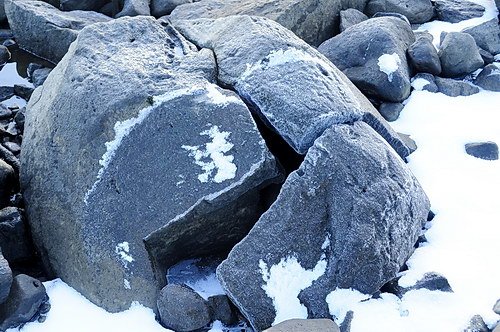
How does freezing water cause the weathering of rocks?  The freezing water—
a)
keeps the rocks in place.
b)
makes the rocks last longer.
c)
expands cracks and breaks rocks.
d)
causes rocks to fall in landslides.
2.
The process that breaks down rocks and other materials on Earth's surface is called
a)
Weathering
b)
Erosion
c)
Deposition
d)
Decomposition
3.
Over long periods of time, deposition may change the Earth’s surface by _____.
a)
forming new land features.
b)
breaking down large rocks into smaller ones.
c)
washing away beaches.
d)
moving topsoil.
4.
A cliff formed near the ocean.  Which statement best describes how this cliff formed?
a)
Warm air melted the rock.
b)
Sun rays evaporated the rock.
c)
Ocean waves washed away rock.
d)
Plant roots pushed away the rock.
5.
What is the process that picks up and moves weathered rocks?
a)
Deposition
b)
Landslide
c)
Weathering
d)
Erosion
6.
Deposition changes the Earth’s surface because bits of broken rock and soil _____.
a)
stop rivers from flowing.
b)
make rich farmlands.
c)
are dropped in new places.
d)
move very slowly.
7.
What causes the greatest erosion effect on our beaches?
a)
Waves
b)
Gravity
c)
Glaciers
d)
Wind
8.
What causes the greatest erosion effect on our beaches?
a)
Waves
b)
Gravity
c)
Glaciers
d)
Wind
9.
The process by which water, ice, wind, or gravity moves weathered rock and soil from one place to another.
a)
Weathering
b)
Erosion
c)
Deposition
d)
Crop Rotation
10.
Which of these is an example of erosion?
a)
Light shining onto a mountain.
b)
Rain breaking down rocks on a mountain into smaller pieces. 
c)
Wind blowing away sediment to a new place on the mountain.
d)
All of the above.
11.
Layers of sediment forming at the bottom of the ocean floor is an example of
a)
Weathering
b)
Erosion
c)
Deposition
d)
Awesome Science
12.
Muddy water being carried away by a fast-moving river is an example of
a)
Weathering
b)
Erosion
c)
Deposition 
d)
A nice place to swim
13.
What is an enormous mass of ice moving over land, causing weathering of rock and soil?
a)
A glacier
b)
An iceberg
c)
An ice wedge
d)
A sand dune
14.
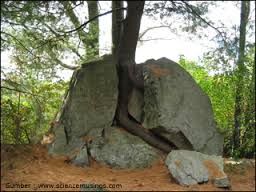
How do plants weather rocks?
a)
During photosynthesis
b)
When roots grow into cracks of rocks and expand the rock breaks.
c)
When the plant moves water from the roots to the leaves, the rock breaks.
d)
Plants don't weather rocks.
15.
What is the wearing away or breaking down of rocks called?
a)
Deposition
b)
Erosion
c)
Glaciers
d)
Weathering
16.
Flood water pounding against a canyon wall and wearing it down is an example of
a)
Weathering
b)
Erosion
c)
Deposition
d)
An avalanche
17.
Which of the following is NOT a slow change to Earth's surface?
a)
Weathering
b)
Erosion
c)
Deposition
d)
Landslides
18.
Which of the following is NOT a fast change in Earth's surface?
a)
Landslides
b)
Erosion
c)
Volcanoes Erupting
d)
Earthquakes
19.

Which would most likely increase the erosion caused by a stream?

a)

Increased Rainfall

b)

Decreased animal life

c)

Decreased temperature

d)

Increased Evaporation

20.

Many processes that shape Earth happen over thousands of years. Some processes happen much more quickly. Which of the following has the potential to change Earth's landforms quickly?

a)

The carving of a valley by a glacier

b)

The formation of a canyon by a river

c)

The erosion of sand on a beach by storms

d)

The weathering of rocks by wind

21.

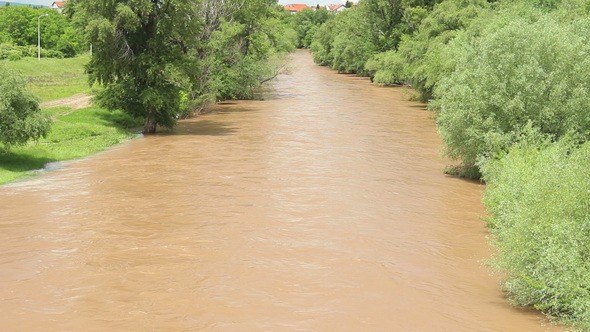
Which type of stream is most likely to cause the greatest amount of erosion?

a)

A slowly moving stream with a small amount of water.

b)

A quickly moving stream with a small amount of water.

c)

A quickly moving stream with a large amount of water.

d)

A slow moving stream with a large amount of water.

22.

On a recent field trip to a local river, the science class collected several rocks from the river bed. The rocks were all smooth and rounded. Why were the rocks in the river bed smooth?

a)

Rushing water in the river wore away any jagged edges.

b)

The minerals from which the rocks are made cannot form jagged edges.

c)

Over centuries, the action of the wind caused the rocks to become smooth.

d)

Plants along the river released substances that mixed with the water to smooth the rocks.

23.

Hailey and her brother made a sand castle at the beach. Hailey slowly poured water on top of the sand castle. Some of the sand ran down the side of the castle with the water. What type of phenomenon did Hailey demonstrate?

a)

Weathering by temperature change.

b)

Erosion by heat.

c)

Weathering by water.

d)

Erosion by water.

24.

Which of the following is not an example of erosion?

a)

The wind blowing sand from one sand dune to another.

b)

Water carrying sediment down a long bending river.

c)

Water getting into a rock and cracking the rock when it freezes.

d)

An avalanche caused by gravitational force.

25.

When areas of uneven elevation get heavy rains, landslides can form. Landslides are most likely to form

a)

in areas that have temperatures close to freezing.

b)

in regions with dense rock under the soil layer.

c)

on the tops of very tall mountains.

d)

on the slopes of very steep hills.

26.

How does erosion compare to physical weathering?

a)

Both break down materials.

b)

Erosion breaks down materials, and weathering carries them from place to place.

c)

Weathering breaks down materials, and erosion carries them from place to place.

d)

Both move materials from place to place.

27.
The natural sandblasting (abrasion) of surface bedrock in a desert region is the result of
a)
Wind erosion
b)
Wave erosion
c)
Mass movement
d)
Chemical precipitation