
Font size
 Worksheets
meteorology and hydrology interim review
Total questions: 228
Worksheet time: 3hrs 47mins


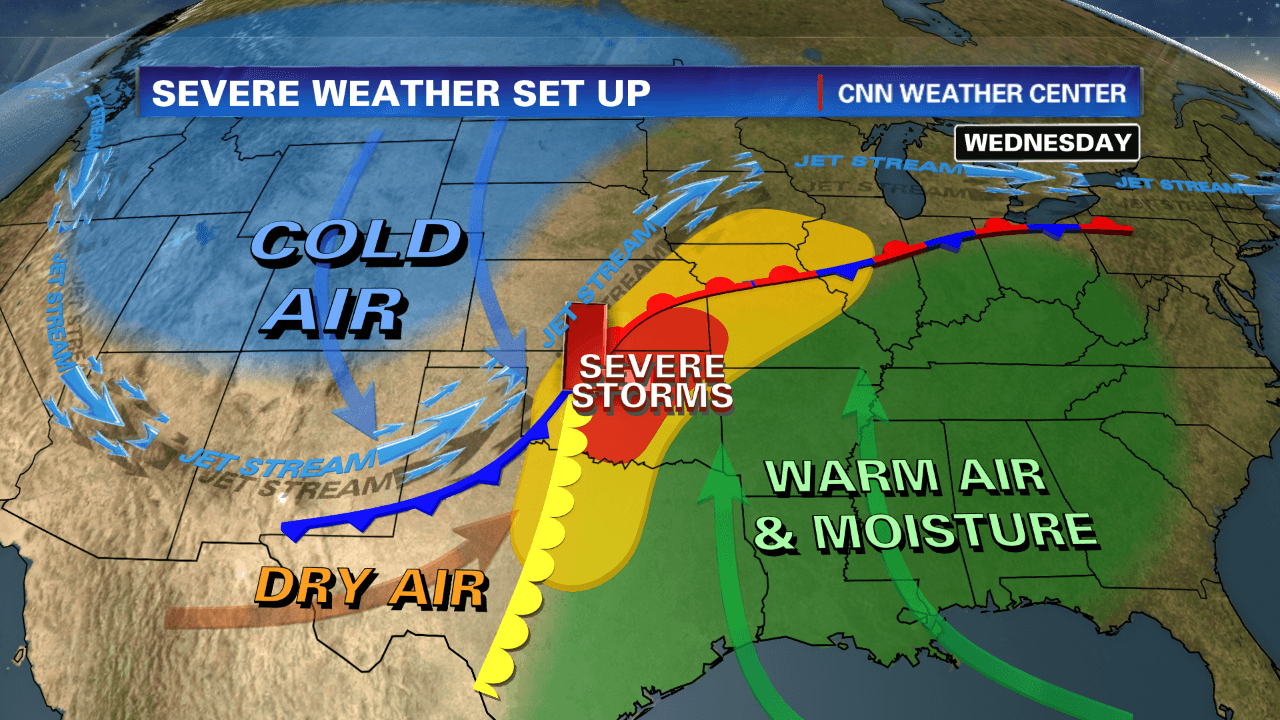


What causes wind?
differences in air pressure
differences in gravity
difference in oxygen
differences in the thermosphere
What causes differences in air pressure?
even heating of the Earth
Even cooling of the earth
uneven heating of the earth
global warming
Local winds blow over:
short distances
long distances
the poles
the equator

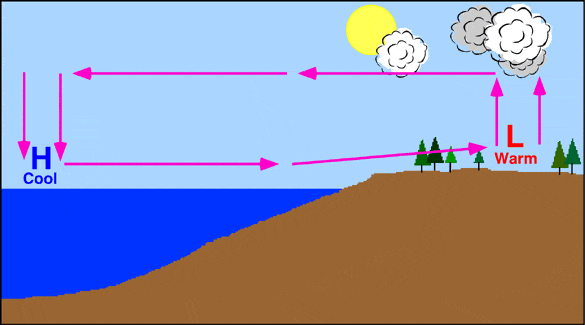
During the land breeze, what starts moving the cooler air out and warmer air in?
conduction
convection
radiation
Air at the poles is colder and denser so it_______________.
rises
circulates
stagnates
sinks
Air is warmer and less dense at the equator because the equator receives more____________________.
wind
solar radiation
air pressure
condensation
In the Northern Hemisphere, winds traveling north appear to curve east because of the:
trade winds
convection currents
Coriolis effect
polar easterlies


A ________________ is an intense storm with strong winds, heavy rain, lightning, and thunder.
tornado
hurricane
thunderstorm

Electricity may flow within the cloud also flow between the cloud and the ground. These electrical currents are _________________.
thunder
particles
lightning
A _________ can from when a rapidly spinning column of low pressure air, called a funnel cloud touches the ground.
thunderstorm
hurricane
tornado
A tornado begins as a ___________ cloud that pokes through the bottom of a cumulonimbus cloud.
cirrus
cumulus
funnel
stratus
A _____________ is a large, rotating low-pressure system that forms over the warm waters of oceans near the equator.
tornado
hurricane
thunderstorm
flooding
Most hurricanes
cannot be seen from space
cross exposed land
become dangerous category 5 storms
lose their power when they move into cooler waters or moves over land
Winds are generated when air flows from a high pressure area into a ____.
region of intense moisture
cold front
low pressure area
storm that is already in progress
Thunderstorms form along a cold front
True
False
These storms produce the Earth's most powerful winds
thunderstorms
hurricanes
tornadoes
The calm area in the center of a hurricane is called the _____.
draft
funnel
eye
squall

The most dangerous aspect of a hurricane that comes ashore is the ________.
storm surge
eye wall
wind speed
rainfall
Hurricanes can produce tornadoes
True
False
Many people think that the winds are the most damaging part of a hurricane-most of the damage from hurricanes is actually caused by flooding from heavy rains and _________ _________, which is the rise in sea level that happens during a storm.
water evaporating
storm surge
wind speed
strong winds

A funnel cloud and a tornado are the same.
True
False
Theses storms are the largest and most powerful storms on the planet.
Thunderstorms
Hurricanes
Tornadoes
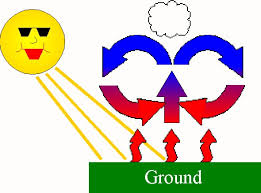


than in hot things.
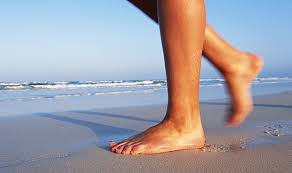
Which of the following models most accurately represents the air circulation patterns likely to develop on a hot summer afternoon in a coastal area?


Global winds are caused by differences in pressure caused by:
warm air rising at the equator and cold air sinking at the poles
warm air sinking at the equator and cold air rising at the pole.
Warm air rising at the equator and cold air rising at the poles
warm air sinking at the equator and cold air sinking at the poles
Jordan researched the hourly temperatures of an ocean and a land mass near each other. Each morning Jordan discovered the land and ocean had a similar temperature. For the rest of the day the sun continues to warm the ocean and the land. During the day, which direction will the wind MOST LIKELY blow?
Toward the land
Toward the ocean
Remain still
not enough data to tell

Which of the following is NOT a contributing factor to the uneven warming of Earth’s surface?
Different surfaces warm at different rates
Different surfaces retain energy differently
The sun is farther from the Earth during the winter
The sun’s rays hit the surface at various angles
Which of the following statements best explains why it is warmer at the equator than the North Pole?
The equator has more daylight hours per year than the North Pole.
The equator has a larger area than the North Pole.
The equator is closer to the Sun than the North pole.
The equator receives more direct sunlight than the North Pole.

During the daytime, the land warms up faster than water causing the air above the land to be less dense and rise into the atmosphere. This causes _____________________.
sea breezes
land breezes
global winds
jet streams
Which statement about Earth's heating patterns is true?
The rate of cooling depends on the season.
Large bodies of water cool more quickly than land.
Land cools more quickly than large bodies of water.
Land and large bodies of water cool at the same rate.

During an experiment, you were instructed to equally heat a sample of soil and a sample of water with heat lamps, and then measure the temperature of each sample once per minute, for eight minutes. Suppose that the experiment yielded the results shown in the table below. which of the following predictions are supported the best by the data?
The temperatures of the soil and the water would rise at the same average rate because the same light is being used to heat it up.
The temperature of the soil would not rise at all over the next time period because the soil temperature has reached its maximum temperature.
The temperature of the water would rise at a faster average rate than the average rate that the temperature of the soil would rise because water heats up faster than soil.
The temperature of the soil would rise at a faster average rate than the average rate that the temperature of the water would rise because soil heats up faster than water.

Students completed a lab investigation consisting of four stations, A, B, C, and D. Equal amounts of sand at the same starting temperature were heated by identical light sources. The light sources were the same distance from each station but at different angles to the surface. Two thermometers were used at each station, one just above the surface and the other just below the surface. The lights were turned on for 30 minutes and then removed for the next 30 minutes. Temperatures were recorded each minute for the 60 minutes. Using the models above, which station was most of the energy from the light sources transferred to the sand?
Station A, because the sand is receiving the most direct heat transfer by radiation.
Station A, because the sand is receiving the most direct heat transfer by conduction.
Station D, because the sand is receiving the most direct heat transfer by radiation.
Station D, because the sand is receiving the most direct heat transfer by conduction.
Sarah has been asked by her teacher to investigate the following scientific question: Why are sea breezes felt during the day and land breezes at night? Which of the following data sources would best help Sarah to answer the question and why?
The tidal charts for the month, because high tides cool off the beach, causing a sea breeze at night and a land breeze during the day.
The tidal charts for the month, because high tides cool off the beach, causing a land breeze at night and a sea breeze during the day.
Day and night temperatures of the beach and ocean, because the land and the air above it heats and cools faster than the water, causing a land breeze at night and a sea breeze during the day.
Day and night temperatures of the beach and ocean, because the sea and the air above it heats and cools faster than the land, causing a sea breeze at night and a land breeze during the day.
What is the result of an increase in greenhouse gases, such as carbon dioxide, in our atmosphere?
The atmosphere is getting larger
The atmosphere is getting cooler
The atmosphere is getting warmer
The atmosphere is getting smaller
What are the two main greenhouse gases in our atmosphere?
Carbon dioxide and Methane
Carbon Dioxide and Nitrogen
Carbon dioxide and Oxygen
Oxygen and Methane
Most of Earth’s weather occurs in the________________________.
Mesosphere
Stratosphere
Thermosphere
Troposphere
Which of the following particles are found in the atmosphere?
Dust
Volcanic Ash
Smoke
All of the above
As you go up into the layers of the atmosphere ________________________.
Air pressure increases
Air pressure decreases
air column increases
air column decreases
Which answer best describes Earth’s atmosphere?
78% oxygen, 21% nitrogen, 1% other
78% nitrogen, 21% oxygen, 1% other
78% carbon dioxide, 21% oxygen, 1% methane
50% Water Vapor and 50% carbon dioxide
Earth's atmosphere makes conditions on Earth suitable for living things.
True
False
Because air has mass, it also has other properties, including which of the following?
Pressure
Density
Volume
All of the above
What happens to the temperature in the troposphere when you increase in altitude?
Increases
Decreases
Stays the same
If the meteorologist reports that there is a low pressure system moving into our area, what kind of weather could we expect?
sunny and clear
cloudy and stormy
Which air mass has greater pressure and density?
Cold
Hot
What layer of the atmosphere does weather occur?
Exosphere
Thermosphere
Mesosphere
Troposphere

A mixture of gases that surrounds the Earth like a blanket.
atmosphere
troposphere
ozone
nitrogen
Gas in the atmosphere that protects the Earth from the Sun's rays
atmosphere
troposphere
ozone
nitrogen
The gas that makes up most of Earth’s atmosphere
lifting
troposphere
wind funnel
nitrogen
"atmo-" means
gas or vapor
water
Earth or rocks
life
The highest layer of the atmosphere is
troposhphere
mesosphere
stratosphere
exosphere
Airplanes fly in the
troposhphere
mesosphere
stratosphere
exosphere
Meteor showers occur in the
troposhphere
mesosphere
stratosphere
exosphere
Earth's atmosphere is mostly made up of which 2 gases? CHOOSE 2!!!!!!
nitrogen
oxygen
ozone
water vapor
Which temperature of air weighs more?
warm
cold
What protects Earth from ultraviolet rays from the sun?
ozone layer
mesosphere
air pressure
troposphere
In which temperature of air do the molecules spread out and take up more space?
cold
warm
Troposphere -
stratosphere -
?????
What gas makes up the majority of the atmosphere?
oxygen
nitrogen
water vapor
carbon dioxide


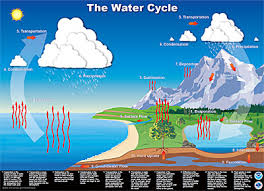
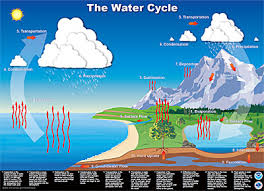
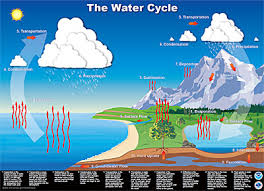
What source of energy below is the most important in driving the water cycle?
Geothermal energy changes water to steam so condensation can occur
Sunlight heats up Earth's surface water creating the process of evaporation
Wind helps change surface water into water vapor during the process of evaporation
Gravity is necessary to pull water downhill when it rains thus allowing water to flow into rivers and streams
A student takes a bottle of cold water from the refrigerator and leaves it on the counter. Ten minutes later, the student noticed there is now water on the outside of the bottle. What scientific phenomenon explains the water on the outside of the bottle?
Condensation because the temperature of the air nearest the bottle increased causing water droplets to form
Condensation because the temperature of the air nearest the bottle decreased causing the water droplets to form
Evaporation because the temperature of the air nearest the bottle increased causing the water droplets to form
Evaporation because the temperature of the air nearest he bottle decreased causing the water droplets to form
Lab partners are designing an experiment that shows the important steps of the water cycle. For their experimental design, which of the following procedures could best be used to demonstrate the difference between condensation and evaporation?
To show condensation- increase the temperature within the cycle; to show evaporation-decrease the temperature
To show condensation- decrease the temperature within the cycle; to show evaporation- increase the temperature
To show condensation- maintain a constant temperature within the cycle; to show evaporation- increase the temperature
To show condensation- maintain a constant temperature within the cycle; to show evaporation-decrease the temperature

Refer to the diagram below of a student's lab setup of the water cycle. In this experiment, the total amount of water inside the container is measured at the beginning and then again after a full cycle has occurred.
Which of the following best predicts the outcome of the experiment and explains why?
The beginning amount of water in the container would be less than the ending amount of water in the container because the water evaporated, decreasing the water level.
The beginning amount of water in the container would be more than ending amount of water in the container because the process of condensation increases the water level.
The beginning and ending amounts of water in the container would be equal because the water that was evaporated increased the water level but then came back as precipitation which decreased the water level again
The beginning and ending amounts of water in the container would be equal because the water that was evaporated decreased the water level but then came back as precipitation which increased the water level again.

Which of the following questions can best be answered by the data presented in the chart.
What are the types of sea water?
How does sea water differ from fresh water?
Which "other" elements make up sea water?
Which two salt elements are the most abundant in seawater?

Use the diagram above to answer the question.
Which of the following questions can BEST be answered by the data presented in the graph above?
Is there a direct relationship between the density and salinity of ocean water?
Is there an indirect relationship between the density and salinity of ocean water?
Does the density of ocean water increase over time?
Does the salinity of ocean water increase over time?

A student was studying the ocean floor topography and began to question how pressure and temperature would differ at each feature.
What conclusions can she draw about ocean floor features F and G?
Feature F is an ocean trench while Feature G is a continental shelf, which has more pressure than the ocean trench because there are more water molecules above it and a lower temperature because the sun cannot penetrate its deep waters to warm it.
Feature F is a continental shelf while Feature G is a deep ocean trench, which has more pressure than the continental shelf because there are more water molecules above it and a lower temperature because the sun cannot penetrate its deep waters to warm it.
Feature F is an abyssal plain, while Feature G is a mid-ocean ridge, which has more pressure than the ocean trench because there are more water molecules above it and a lower temperature because the sun cannot penetrate its deep waters to warm it.
Feature F is a mid-ocean ridge, while Feature G is an abyssal plain, which has more pressure than the continental shelf because there are more water molecules above it and a lower temperature because the sun cannot penetrate its deep waters to warm it.
Which factor Mostly causes waves?
The wind
The moon
Earthquakes
The Coriolis Effect

The diagram illustrates two types of currents are found in ocean waters.
Which of the following is the BEST explanation for why oceans have two types of currents?
Surface currents are caused by wind whereas deep currents are caused by differences in density.
Surface currents are caused by differences in density whereas deep currents are caused by wind.
Surface currents are caused by temperature differences whereas deep currents are caused by changes in salinity.
Surface currents are caused by changes in salinity whereas deep currents are caused by changes in temperature

High and low tides occur twice daily at regular intervals.
Using the diagram, which of the following letters indicates where high tide is occurring and best explains why?
Letters B and D indicate high tides, where the tidal bulges would occur because of the Coriolis Effect.
Letters A and B indicate high tides, where the tidal bulges would occur because of the strong winds blowing across the oceans.
Letters C and D indicate high tides, where the tidal bulges would occur because of the gravitational pull between the Earth and the moon
Letters A and C indicate high tides, where the tidal bulges would occur because of the gravitational pull of the moon.

The graph shows the distribution of water on Earth's surface.
What can be concluded from the image?
Most of the freshwater on Earth is found in oceans
Most of the water available on Earth is not drinkable
Most of the water available on Earth is drinkable
Most of the freshwater on Earth is found as groundwater
Where does most of the water evaporation on Earth come from?
Transpiring plants
Rivers
Oceans
Surface Lakes
Which part of the ocean would have the lowest salinity?
In areas near melting glaciers
In areas where there is little rainfall
In areas near the equator
In areas with the highest temperatures
Where is most of the Earth's freshwater located?
In the ocean
In icecaps and glaciers
In rivers and streams
In aquifers
Why are water conservation and pollution control important for future generations?
Waste and pollution will lead to less rainfall over land.
Waste will lead to less water in the oceans, rivers, and lakes.
Pollution will cause an increase in tourism in beach communities.
Pollution and waste will lead to a shortage of clean water for human use.
Which of the following characteristics alters the density of ocean water?
Temperature and wave speed
Salinity and Temperature
Wave speed and wave size
Wave size and salinity
What is the continuous chain of underwater mountains, formed by a divergent boundary?
continental shelf
continental slope
abyssal plain
mid-ocean ridge
What makes the currents in the Northern Hemisphere CURVE to the right?
longshore drift
density
Coriolis Effect
moon's gravity
How does a straight alignment between Earth, the sun, and the moon impact the tides on Earth?
It produces the greatest changes in tidal range
It produces neap tides
It produces the least change in tidal range
It produces diurnal tides
If the first HIGH tide of the day occurs at 1:00AM, when will the next HIGH tide occur?
7:00am
1:00pm
7:00pm
1:00am the next day




______ causes surface currents.
The Coriolis Effect
gravity
density differences
wind
______ causes deep ocean currents
The Coriolis Effect
gravity
wind
density differences
Decreasing ocean temperature causes the density of the water to ______.
decrease
increase
stay the same
fluctuate
The __________ is a surface current that flows along the eastern US and brings warm water to Europe.
California Current
Gulf Current
North American Gyre
Arctic Current
________ and _______ affect the ocean's density and cause the Global Conveyor Belt to travel
gravity and the Coriolis Effect
temperature and salinity
wind and climate
temperature and the Coriolis Effect