
 Worksheets
Biomolecules and Enzymes
Total questions: 39
Worksheet time: 39mins


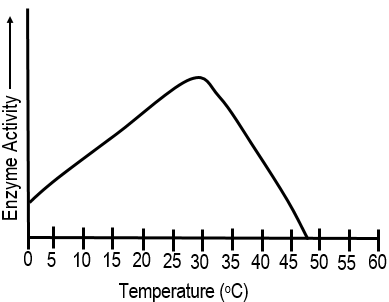
As food travels through the digestive system, it is exposed to a variety of pH levels. The stomach has a pH of 2 due to the presence of hydrochloride acid (HCl), and the small intestine has a pH ranging from 7 to 9. HCl converts pepsinogen into pepsin, an enzyme that digests proteins in the stomach. Which of the following most likely happens to pepsin as it enters the small intestine?
It becomes inactive.
It begins to replicate.
It's shape changes to engulf large proteins.
It's activity increases to digest more proteins.
You are analyzing a compound in the laboratory. You find that it is made up of carbon, hydrogen, and oxygen in a ratio of two hydrogen atoms for each carbon atom. How will you classify the compound?
lipid
protein
carbohydrate
nucleic acid
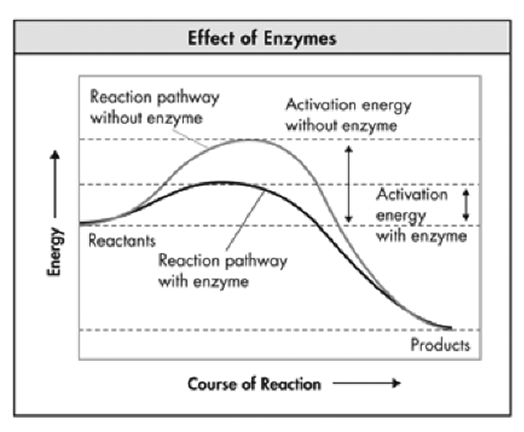
What will most likely happen if an appropriate enzyme is added to a chemical reaction?
The reaction rate will increase.
The equilibrium of the reaction will be maintained.
The reaction rate will decrease.
The reaction will stop.
A sugar, a phosphate group, and a nitrogen base form the building blocks of which organic compound?
carbohydrates
lipids
nucleic acids
proteins
Which part of the nucleotide changes and makes it unique?
Sugar
Phosphate
Nitrogen base
Glycerol
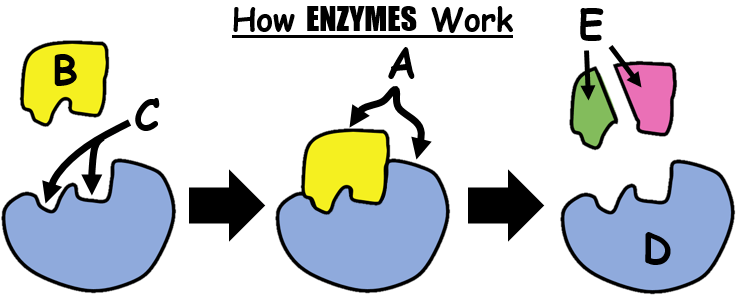
What is being represented by the letter C in the image?
Substrate
Enzyme
Product
Enzyme- Substrate Complex
Which four elements are the most abundant in biomolecules? SELECT ALL that apply.
Carbon and Hydrogen
Oxygen and Nitrogen
Oxygen and Phosphorus
Hydrogen and Oxygen
These two molecules are examples of molecules that have different sugars and one of five nitrogen bases they are... SELECT ALL that apply.
DNA
RNA
Sucrose
Glucose
What are lipids composed of?
fatty acid
nucleotides
monosaccharide
amino acid


