Wayground logo

Free Printable Worksheets

Font size

S
M
L
XL
Worksheets

Spring 2020 Forensics Midterm

Total questions: 60

Worksheet time: 15hrs 0mins

Name
Class
Date
1.

Opened the first crime laboratory in France:

a)

Goddard

b)

Locard

c)

Galton

d)

Gross

2.

Wrote the first handbook on crime scene investigation techniques:

a)

Galton

b)

Locard

c)

Gross

d)

Goddard

3.

Perfected the technique of microscopic comparative analysis:

a)

Gross

b)

Goddard

c)

Galton

d)

Locard

4.

Developed a system for cataloging criminals using body measurements:

a)

Locard

b)

Bertillon

c)

Galton

d)

Henry

5.

Developed a statistical method for categorizing fingerprints:

a)

Galton

b)

Locard

c)

Gross

d)

Bertillon

6.
Human or nonhuman hair?
a)
human 
b)
nonhuman
7.
The medullary index of a hair is 0.29.  Human or non-human?
a)
human
b)
non-human
c)
cannot be determined
8.
Diameter of the medulla is 0.2 and diameter of the hair is 0.4.  What is the medullary index?
a)
2.5
b)
0.5
c)
0.1
d)
cannot be determined
9.

Label the part of the microscope. What is part A?

a)

eyepiece lens

b)

eyepiece tube

c)

turret

d)

objective lens

10.

Label the part of the microscope. What is part E?

a)

stage

b)

stage clips

c)

focus knob

d)

eyepiece tube

11.

Label the part of the microscope. What is part F?

a)

stage

b)

stage clips

c)

body

d)

focus knob

12.

Microscopes allow us to view objects in great _____________.

a)

detail

b)

magnification

c)

objective

d)

body

13.

The microscopes we used in class had three ________________ which allows different amounts of magnification.

a)

detail

b)

magnification

c)

objectives

d)

body

14.
The central core of the hair is called the...?
a)
Medulla
b)
Cuticle
c)
Cortex
d)
Shaft
15.
Which gland secretes oil and causes hair to be oily?
a)
Sebaceous
b)
Adrenal
c)
Pineal
d)
Eccrine
16.
Rodent and bat hair has which type of cuticle?
a)
imbricate
b)
spinous 
c)
coronal
d)
elongate
17.
When being compared to a wooden pencil, which part of hair represents the lead?
a)
medulla
b)
cortex
c)
cuticle
d)
follicular tag
18.
Small sacs of air found within the cortex are called...?
a)
central embolism
b)
cortical fusi 
c)
air granules
d)
oval bodies
19.
The following medulla pattern is called
a)
fragmented 
b)
continuous
c)
interrupted
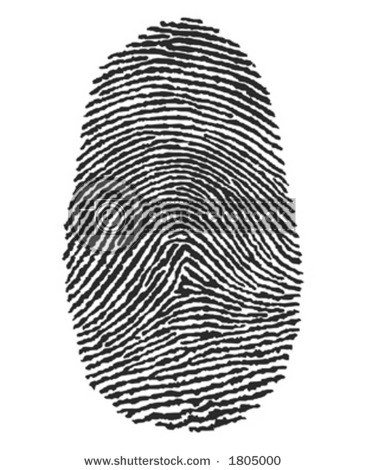
20.
What pattern is this?
a)
Loop
b)
Arch
c)
Whorl
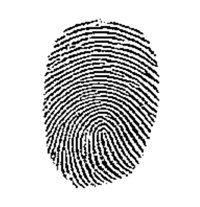
21.
What pattern is this?
a)
Loop
b)
Arch
c)
Whorl
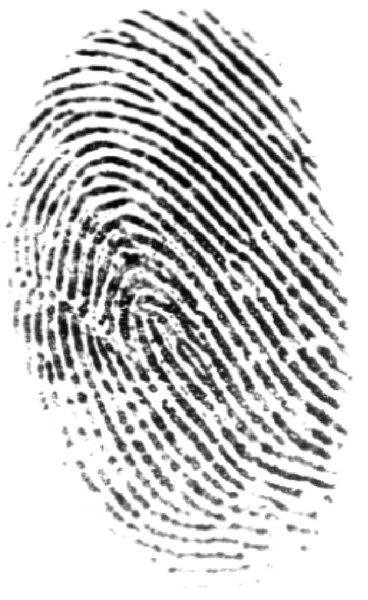
22.
What pattern is this?
a)
Loop
b)
Arch
c)
Whorl
23.
The area indicated by "A" in the diagram is known as a(n)
a)
Core
b)
Delta
c)
Whorl
d)
Arch
24.
When are fingerprints formed?
a)
When you are a teenager
b)
During fetal development
c)
By the time you are two years old
d)
At birth
25.
Used to develop prints using vapors because it sublimes at room temperature.  Not permanent.
a)
Iodine
b)
Superglue
c)
Ninhydrin
26.
Type of fingerprint that is left by a person with soiled or stained fingertips
a)
plastic
b)
visible
c)
latent
27.
Which of the following types of fingerprints are more likely to be found impressed in soft wax? 
a)
visible
b)
latent
c)
hidden 
d)
plastic
28.
A fingerprint is considered individual evidence.
a)
False
b)
True
29.
Which type of fingerprint cannot be seen  the naked eye?
a)
patent fingerprint
b)
latent fingerprint
c)
visible fingerprint
d)
plastic fingerprint
30.

Which chemical treatment produces a white-appearing latent print?

a)

super glue fuming

b)

physical developer

c)

iodine fuming

d)

ninhydrin

31.
What pattern is this?
a)
Loop
b)
Arch
c)
Whorl
32.
What type of fingerprint is this? It is made in a soft medium.
a)
plastic
b)
patent
c)
latent
d)
visible
33.
The area indicated by "B" in the diagram is known as a(n)
a)
Core
b)
Delta
c)
Whorl
d)
Arch
34.
Do two people ever have the same fingerprints?
a)
yes
b)
no
35.
An invisible print that must be developed using powder or chemicals is called
a)
plastic
b)
latent
c)
patent
d)
underdeveloped
36.
Refers to small evidence like hairs of fibers
a)
physical evidence
b)
trace evidence
c)
suspect
d)
witness
37.

Which entity maintains the largest crime laboratory in the world?

a)

LAPD

b)

Scotland Yard

c)

US Postal Service

d)

FBI

38.
Indicate whether the item is likely to possess class or individual:
skin and hair scrapings
a)
Class
b)
Individual
39.
Indicate whether the item is likely to possess class or individual:
a spent bullet cartridge
a)
Class
b)
Individual
40.
Indicate whether the item is likely to possess class or individual:
an impression from a new automobile tire
a)
Class
b)
Individual
41.

What is direct evidence?

a)

Objects found at the crime scene

b)

Evidence provided by an eyewitness

c)

Things provided by a victim with agreements from the jury.

d)

A direct match to a criminal.

42.
Individual evidence
a)
a kind of evidence that identifies a particular person or thing
b)
the documented and unbroken transfer of evidence
c)
a location where crime was took place
d)
evidence that (if true) proves an alleged fact, such as an eyewitness account of crime
43.
Paper bindle
a)
a folded paper used to hold trace evidence
b)
the documented and unbroken transfer of evidence
c)
a location where crime was took place
d)
evidence that (if true) proves an alleged fact, such as an eyewitness account of crime
44.

What pattern is this?

a)

Tented Arch

b)

plain arch

c)

Loop

d)

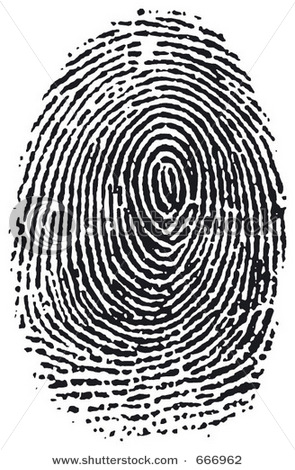
Whorl

45.
What type of whorl is shown?
a)
Plain
b)
Central Pocket
c)
Double Loop
d)
Accidental
46.
Name this minutiae type
a)
Enclosure
b)
Island (pick me! pick me! you know you want to)
c)
Bifurcation (fork) 
d)
Ridge ending 
47.
a)
Central pocket whorl
b)
Double loop whorl
c)
Plain whorl
d)
Plain arch
48.

Name this minutiae type

a)

Enclosure

b)

Island

c)

Bifurcation (fork)

d)

Ridge ending

49.

Name this minutiae type

a)

Enclosure

b)

Island

c)

Bifurcation (fork)

d)

Ridge ending

50.

What component of a fingerprint is highly specific to an individual?

a)

Class

b)

Minutiae

c)

Subclass

d)

Class and subclass

51.
Name this minutiae type
a)
Sludge
b)
Island (dot) 
c)
Bifurcation (fork) 
d)
Pore
52.
Name this minutiae type
a)
Bridge 
b)
Island (dot) 
c)
Bifurcation (fork) 
d)
Pore
53.
Name this minutiae type
a)
Delta
b)
Core
c)
Enclosure (eye) 
d)
Hook (spur)
54.

Identify circle 2

a)

short ridge

b)

bridge

c)

lake

d)

ridge ending

55.

Identify circle 3

a)

bifurcation

b)

ridge ending

c)

spur

d)

lake

56.

Identify circle 4

a)

spur

b)

short ridge

c)

bridge

d)

ridge ending

57.

Identify circle 6

a)

lake

b)

bridge

c)

bifurcation

d)

spur

58.

Wrote a famous paper on natural toxins:

a)

Locard

b)

Orfila

c)

Lattes

d)

Gross

59.

Coined the phrase, "Every touch leaves a trace"

a)

Bertillon

b)

Lattes

c)

Locard

d)

Gross

60.

Developed an antibody test for determining blood types

a)

Lattes

b)

Doyle

c)

Henry

d)

Osborn