
NEW
Font size
S
M
L
XL
 Worksheets
DNA Structure and Replication
Total questions: 21
Worksheet time: 7mins
Name
Class
Date
1.
DNA is an example of which type of macromolecule?
a)
Protein
b)
Nucleic Acid
c)
Lipid
d)
Carbohydrate
2.
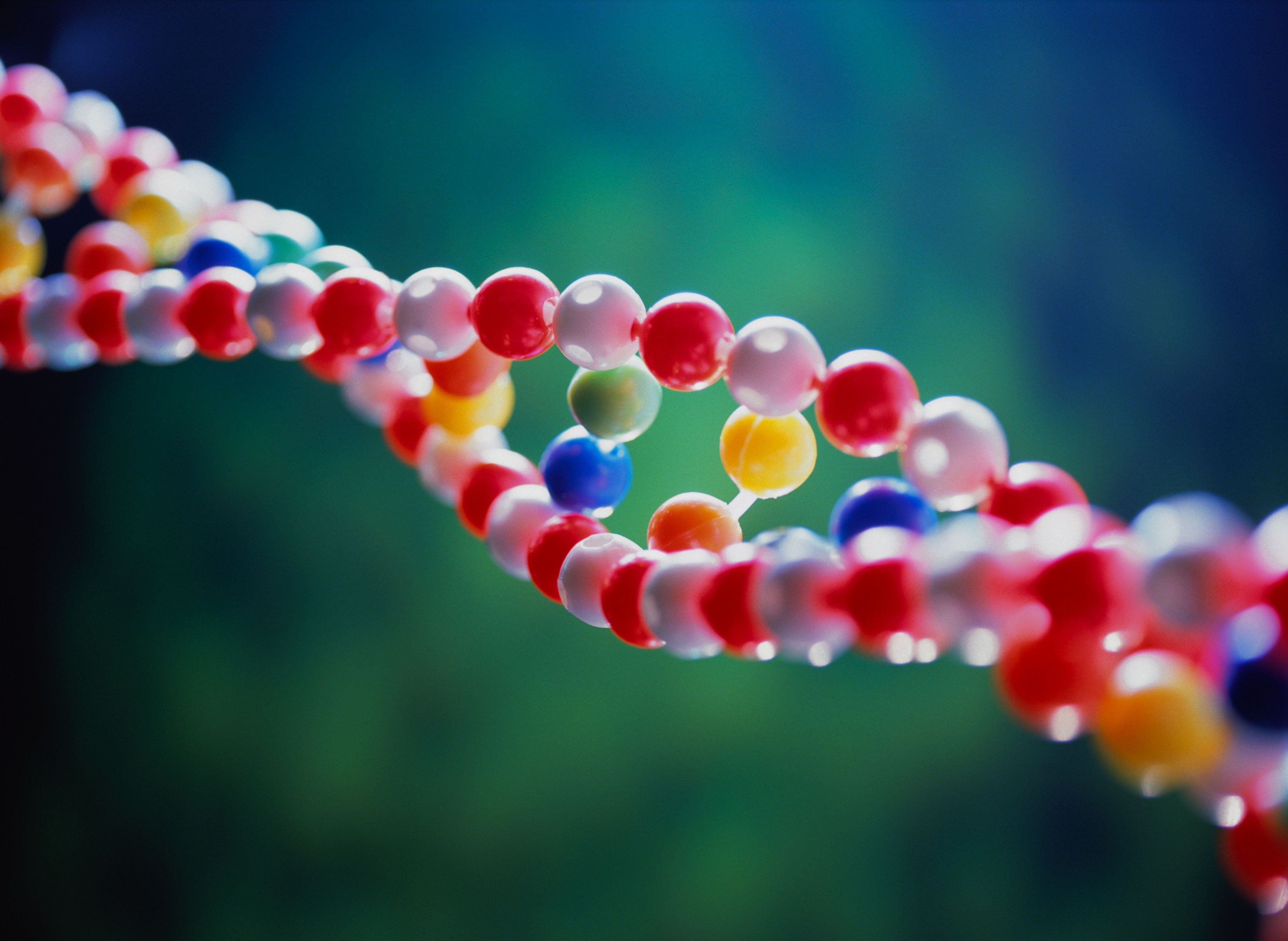
Why is DNA important?
a)
it is very small and very complicated
b)
it's in everything
c)
it serves as the blueprint for traits of all living things
d)
because we eat it every day for energy
3.
What does DNA stand for?
a)
Deoxyribonucleic acid
b)
Denitrogenous acid
c)
Deribonucleic acid
d)
Diribonucleic acid
4.
What is the shape of DNA?
a)
Double helix
b)
Triple helix
c)
Flat, bilayer
d)
Three-pronged rigid ladder
5.
Which organelle is DNA usually found in?
a)
cell membrane
b)
vacuole
c)
ribosome
d)
nucleus
6.
A monomer of DNA is called a(n)
a)
Monosaccharide
b)
Amino Acid
c)
Triglyceride
d)
Nucleotide
7.
What are the nucleotides made of?
a)
Sugar, Phosphate, nitrogen base
b)
Phosphate, Adenine, nitrogen base
c)
Thymine, Adenine, Cytomine
d)
Phosphate, Nitrogen, Adenine
8.

What is the sugar in the DNA molecule?
a)
deoxyribose
b)
ribose
c)
glucose
d)
fructose
9.
Which 2 molecules form the sides (backbone) of the DNA ladder?
a)
deoxyribose sugar and adenine
b)
deoxyribose sugar and a hydrogen bond
c)
deoxyribose sugar and the nucleus
d)
deoxyribose sugar and phosphate
10.
Adenine bonds with ______________.
a)
Guanine
b)
Thymine
c)
Cytosine
d)
Adenine
11.
Guanine bonds with ______________.
a)
Adenine
b)
Guanine
c)
Cytosine
d)
Thymine
12.
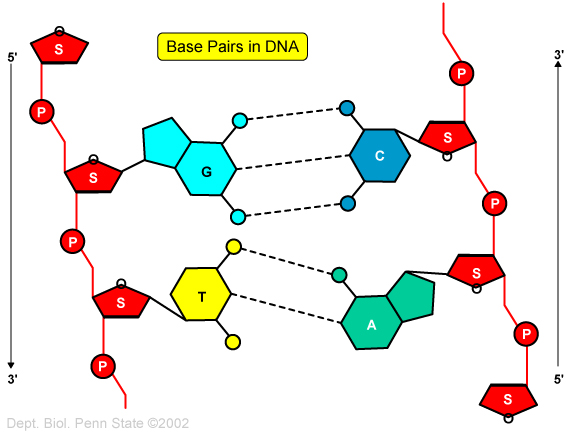
Nitrogenous bases are joined by which type of bond?
a)
polar bonds
b)
ionic bonds
c)
covalent bonds
d)
hydrogen bonds
13.
A process in which DNA has the unique ability to make an exact copy of itself.
a)
Replication
b)
Translation
c)
Transcription
14.
Which sequence of DNA bases would pair with this partial strand
ATG TGA CAG
ATG TGA CAG
a)
ATG TGA CAG
b)
TAC ACT GTC
c)
GTA AGT GAC
d)
CAT TCA CTG
15.
Cell division requires that genetic material be able to...
a)
store information
b)
undergo replication
c)
undergo rare genetic mutations
16.
Which of the following units are repeatedly joined together to form a strand of DNA?
a)
amino acids
b)
nucleotides
c)
fatty acids
d)
polysaccharides
17.

Replicate the following strand of DNA:
AATCATGGA
AATCATGGA
a)
AATCATGGA
b)
TTAGTACCT
c)
UUAGUACCU
d)
GGATAUCUA
18.

order of replication
a)
3, 2, 1, 4
b)
2, 1, 4, 3
c)
2, 3, 1, 4
d)
3, 4, 1, 2
19.

Name this structure
a)
double helix
b)
nucelotide
c)
twisted ladder
d)
hydrogen bond
20.
Which term best fits the following definition: The chemicals that make up the rungs of the DNA ladder, A-T and C-G match.
a)
protein
b)
Nitrogen Base
c)
Codon
d)
Nucleotide
21.

What determines the code, or information, of a DNA molecule?
a)
the shape (structure) of the nitrogen bases
b)
the order (sequence) of the nitrogen bases
c)
the color of the nitrogen bases
d)
the frequency (number) of nitrogen bases
Reset

