wayground logo

Free Printable Worksheets

NEW

Font size

S
M
L
XL
Worksheets

Unit 6 AP WORLD CONSEQUENCES OF INDUSTRIALIZATION

Total questions: 43

Worksheet time: 23mins
Name
Class
Date
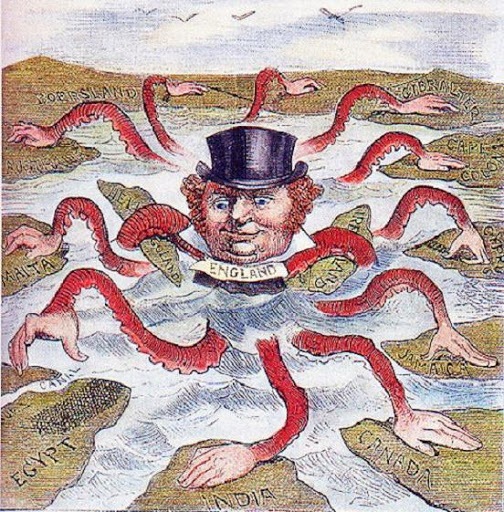
1.

This represents

a)

the strength of Chinese trade policy

b)

the strength of British imperialism over all other nations

c)

the Opium Wars

d)

World War I

2.

This image would best be represented by the following

a)

"Take Up the White Man's Burden"

b)

"The sun never sets on the British Empire"

c)

"The Anglo Leviathan Rises"

d)

"Germany over All!"

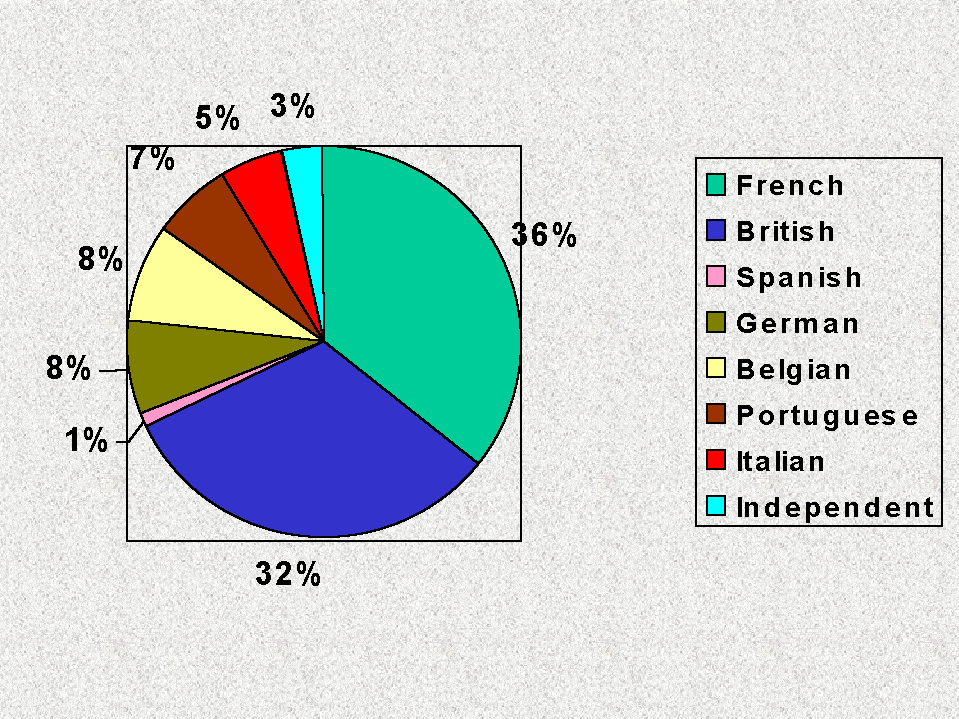
3.

This likely represents

a)

imperialism in Africa

b)

imperialism in Asia

c)

imperialism in the Americas

d)

global imperialism

4.

The Xhosa cow killing movement is a resisitance movement

a)

in Egypt

b)

in Botswana

c)

in China

d)

in South Africa

5.

Which of the following solved the Congo Question?

a)

The Congress of Vienna

b)

The Berlin Conference

c)

The Belgian Compact

d)

The Anglo-Franco Pact

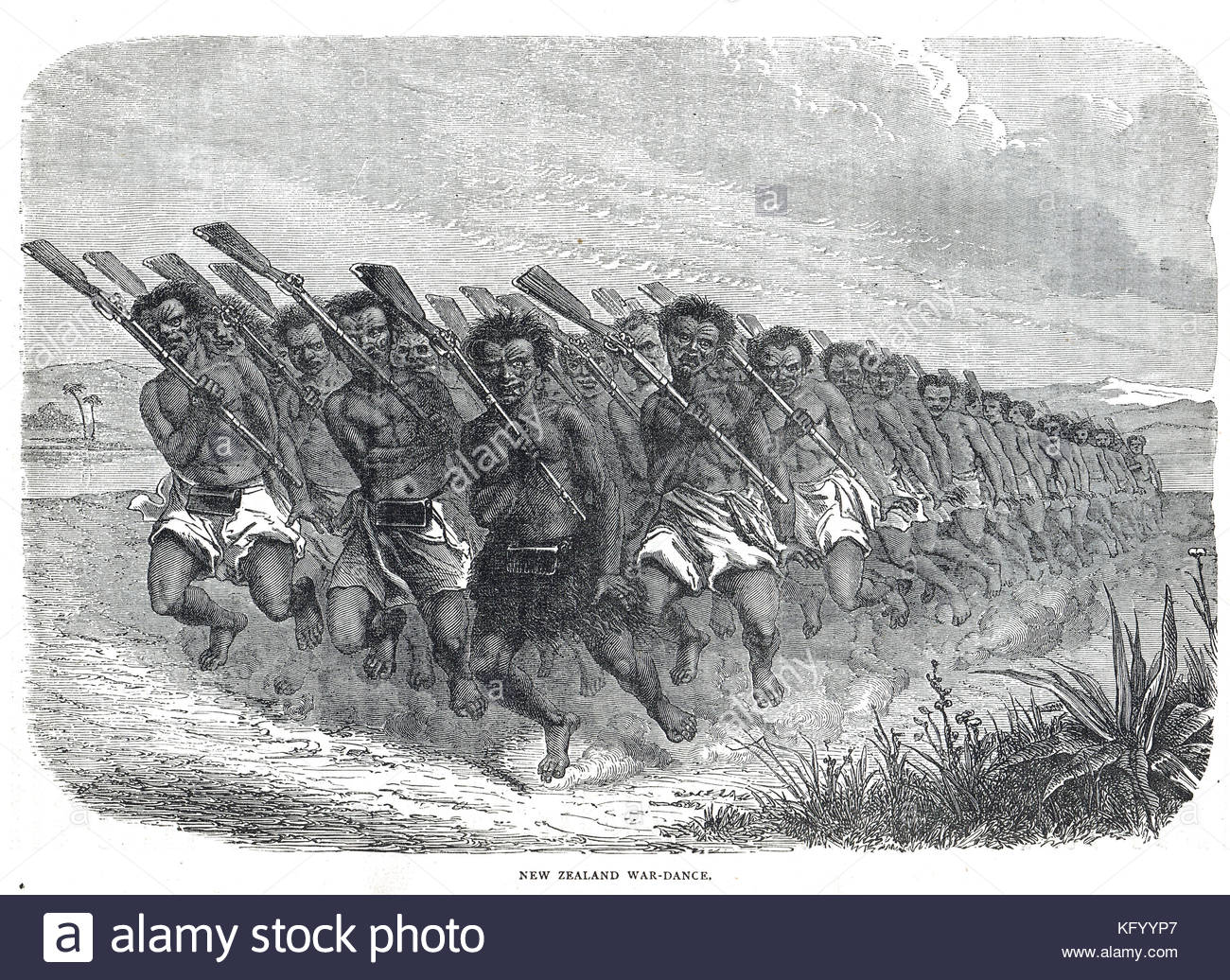
6.

These Maori are going to war in

a)

Australia

b)

Indonesia

c)

Kenya

d)

New Zealand

7.

One of the major theoretical contributors to the justification of imperialism was

a)

the Cathoic Church

b)

Darwin's "Survival of the Fittest" theory

c)

Karl Marx's theories

d)

Adam Smith's ideas

8.

The Sepoy Rebelion was caused by

a)

gun cartriages

b)

insensitivity to religion

c)

cultural misunderstanding

d)

all of the above

9.

David Livingston

a)

settled the first colony in Australia

b)

settled Wellington in New Zealand

c)

was a missionary in Africa

d)

was a resident General in Egypt

10.

France was most active in empire buiding in

a)

North Africa

b)

South Africa

c)

China

d)

The East Indies

11.

Constant drought conditions in Southeast might act as a

a)

pull condition for migration

b)

push condition for migration

c)

reason to pass exclusion acts

d)

a increased desire to colonize the region

12.

European migrants

a)

largely went to America

b)

largely went to Africa

c)

largely returned to Europe

d)

none of these

13.

The Monroe Doctrine

a)

supported US Imperial ambitions

b)

supported the British control of India

c)

solved the "Scramble for Africa" issue

d)

made the Opium Wars worse

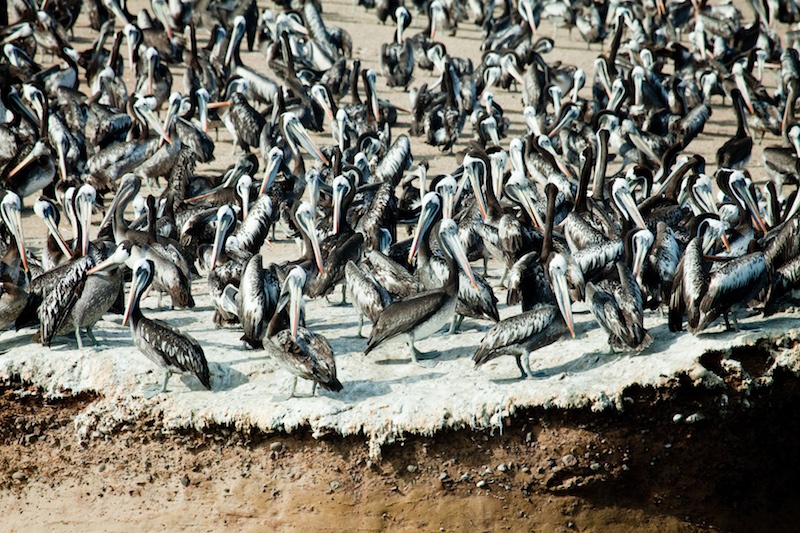
14.

This image represents one of the most important industriesand exports in Peru in the industrial economy

a)

Whale

b)

Guano

c)

Cotton

d)

Rubber

15.

The following was responsible for expanding British holdings in Africa "from the Cape to Cairo".

a)

David Livingston

b)

Henry Stanley

c)

Lord Kirchner

d)

Cecil Rhodes

16.
Which of the following describes the effect of skin color, ethnicity, and former slave status in Latin America in the late 19th century?
a)
There was little effect for most people
b)
Marriage alliances among all classes and castes eliminated the effect on all three
c)
Large numbers of people of color migrated to the newly "Reconstructed" southern United States
d)
There continued to be discrimination on the basis of all three factors.
17.
The American desire for a trade relationship with Japan in 1853 led to
a)
The overthrow of the shogun and the modernization of the country
b)
Increased tensions between China and Korea
c)
Greater Russian influence in Manchuria
d)
The colonization of Taiwan
18.
Which of the following statements best describes the significance of Social Darwinism?
a)
It was a significant breakthrough in revolutionary theory
b)
It led to an increase in urbanization throughout much of Europe
c)
It influenced the development of the factory model of production
d)
It was used as a justification for the inferior treatment of colonial people
19.
The Meiji reforms in Japan resulted in
a)
The strengthening of hte power of regional lords at the expense of the emperor
b)
A shift of power away from regional lords and to the emperor
c)
The Tokugawa shogunate's adoption of a unified civil code
d)
The overthrow of the imperial system for a democratic republic
20.
Imperialism in the late 19th and early 20th centuries was a result of all of the following except
a)
Nationalism
b)
Social Darwinism
c)
Industrialization
d)
Socialism
21.
Which of the following was NOT a reason India had become Britain's most important colony by about 1800?
a)
India offered crucial port facilities for the British navy.
b)
India was a major outlet for British manufactured goods.
c)
India was an important supplier of British raw materials.
d)
India was an important location for British textile factories.
22.
Which of the following African regions was able to defeat European powers in the 19th century?
a)
Liberia
b)
Ethiopia
c)
Egypt
d)
Morocco
23.
Which of the following is most likely to have influenced 18th century population trends in both Europe and China?
a)
A sharp decline in average global temperatures
b)
Introduction of Western Hemisphere crops
c)
Innovation in birth control measures
d)
Improvement in surgical procedures
24.
The rapid industrialization of Japan was called the  
a)
Tanzimat Reforms
b)
Self Strengthening Movement
c)
Meiji Restoration
d)
Kanazawa Movement 
25.
The Ottoman process of industrialization was called 
a)
Meiji Restoration 
b)
Self Strengthening 
c)
Tanzimat Reforms
d)
Jizya enforcement 
26.
Japan revealed their modernization by 
a)
perfecting the compact car
b)
defeating China and Russia
c)
at the 1900 Worlds Fair 
d)
helping China modernize
27.
Nationalism could be used for 
a)
improving technology
b)
promoting ethnic superiority 
c)
promoting pure democracy
d)
bringing political reform 
28.
 Imperialism was brought on as a result of 
a)
Democratic Revolutions 
b)
World War I 
c)
Industrialization 
d)
The Renaissance 
29.
 What happened as a result of the Berlin Conference of 1884-1885? 
a)
France and Britain agreed to combine African colonies
b)
less fighting between African leaders and European powers
c)
African leaders voiced their suggestions
d)
Europeans divided Africa into colonies 
30.

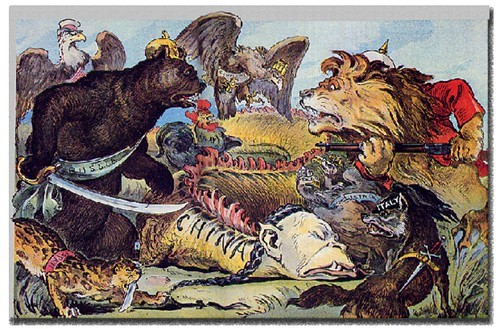
The political cartoon below depicts what event that happened to China

a)

Taiping Rebellion

b)

Breaking down the great wall

c)

Spheres of Influence

d)

Open Door Policy

31.
The beginning of the Industrial Revolution in Great Britain was most influenced by which of the following factors?
a)
The amount and location of British petroleum reserves
b)
The location and large number of British coal deposits
c)
The aggressive promotion of industrialization by George III
d)
The spread of cotton cultivation in southern England
32.
Which of the following arguments made the cause of abolition widely acceptable in the nineteenth century?
a)
Slavery was immoral
b)
 Slavery was not condoned in the Bible.
c)
Slavery benefited Portuguese slave traders too much.
d)
 Slavery was no longer necessary for a strong economy.
33.
Which of the following was NOT a way in which feminists achieved progress for women in the Atlantic world? 
a)
Professionalizing traditional female occupations such as nursing and social work
b)
Mostly peaceful protest
c)
Violent revolution
d)
Forming trans-Atlantic feminist organizations
34.

What type of free response questions does AP World History have?

a)

DBQ & LEQ

b)

SAQ & DBQ

c)

LEQ & SAQ

d)

SAQ, DBQ, & LEQ

35.

Revolt against foreign residents of China

a)

Boer War

b)

Boxer Rebellion

c)

Seven Years War

d)

Chinese War of Independence

36.

War between the British and the Dutch over Dutch independence in South Africa; resulted in British victory

a)

Seven Years War

b)

War of Independence

c)

Spanish American War

d)

Boer War

37.

A member of a Polynesian group that settled in New Zealand about 800 CE

a)

Meji

b)

Boers

c)

Maori

d)

Zaibatsu

38.

War between Great Britain and China began with the Qing dynasty's refusal to allow continued opium importation into China; British victory resulted in the Treaty of Nanking

a)

Seven Years War

b)

Qing Rule

c)

Reign of Terror

d)

Opium War

39.

he last imperial dynasty of China which was overthrown by revolutionaries; was ruled by the Manchu people: began to isolate themselves from Western culture

a)

Young turks

b)

Taiping

c)

Russo-Japanese

d)

Qing dynasty

40.

Canal constructed by Egypt across the Isthmus of Suez in 1869

a)

Panama Canal

b)

Eerie Canal

c)

Suez Canal

d)

Taiping Canal

41.

Revolt in southern China against the Qing Empire

a)

Nanking Treaty

b)

Boxer Rebellion

c)

Wahhabi Rebellion

d)

Taiping Rebellion

42.

A global corporation or world wide enterprise is an organization that owns or controls production of goods or services in one or more countries other than their home country.

a)

stock market

b)

transnational company

c)

spheres of influence

d)

social contract

43.
Which of the following describes an accurate similarity between the Qing and Russian empires in the 18th and 19th centuries?
a)
Both relied heavily on maritime trade as a source of material goods.
b)
Both successfully resisted pressure from industrialized powers.
c)
Both were heavily influenced by the intellectual work of Jesuit missionaries.
d)
Both had vast territories with peoples of various ethnicities and languages.