
 Worksheets
Atoms and Nuclei
Total questions: 15
Worksheet time: 58mins
Name
Class
Date
1.
The positive particles of an atom are
a)
electrons
b)
positrons
c)
neutrons
d)
protons
2.
an atom with proton number 6 would have how many protons
a)
6
b)
12
c)
3
d)
cannot be determined
3.
An atom's nucleon number equals the number of...
a)
protons plus the number of electrons
b)
protons plus the number of neutrons
c)
protons
d)
neutrons
4.
Electrons are___________
a)
Extremely small even in comparison to protons.
b)
part of the nuclues.
c)
Super Positive, like Form 4 students!
d)
very large
5.
True or False? Isotopes are atoms of the same element that differ in mass number and number of neutrons
a)
True
b)
False
6.
A neutral atom of the element sodium has 11 protons and ____ electrons.
a)
22
b)
23
c)
8
d)
11
7.
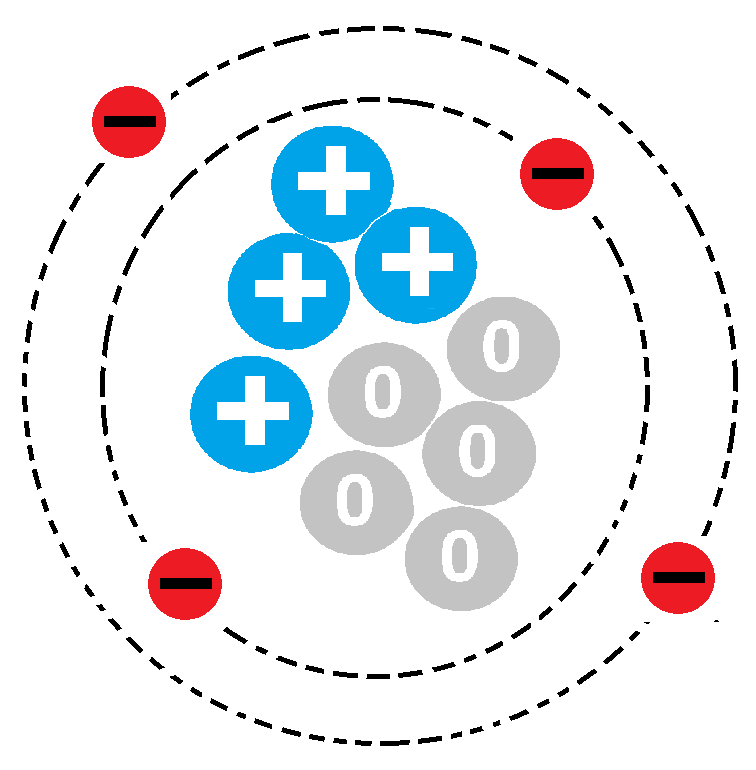
What is the nucleon number of this atom?
a)
4
b)
5
c)
9
d)
none of the above
8.
What is the proton number of this atom?
a)
4
b)
5
c)
9
d)
none of the above
9.
What happens during radioactive decay?
a)
the atom gains electrons
b)
neutrons accumulate in nucleus
c)
the atom looses electrons
d)
the nucleus decays
10.
What is emitted during Beta Radiation?
a)
A high-energy Electron.
b)
Protons.
c)
Neutrons.
d)
Nuclei
11.
What is the most penetrating radiation?
a)
gamma
b)
alpha
c)
beta
d)
positron
12.
TRUE or FALSE: gamma changes the atomic number.
a)
True
b)
False
13.
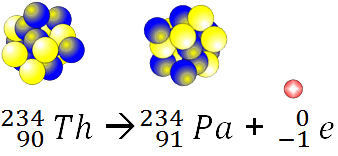
Which type of nuclear radiation is being emitted here?
a)
Alpha
b)
beta
c)
gamma
d)
none
14.
Solve this equation for alpha decay.
85209At = ___ + 24He
85209At = ___ + 24He
a)
83205Bi
b)
86209Rn
c)
81207Tl
d)
85208At
15.
Balance the following equation:
146C --> 0-1e + ________
146C --> 0-1e + ________
a)
145B
b)
146C
c)
147N
d)
42He
100 %

