
 Worksheets
Erosion, Weathering and Deposition
Total questions: 20
Worksheet time: 14mins
Which description best describes the term 'erosion'?
The breakdown or decay, but not the removal, of rocks and minerals at or near the surface.
The process by which the land surface is worn down by running water, ice, wave action or wind.
The movement and pressure which causes the shape of the land to change
The geological process in which sediments, soil and rocks are added to a landform or land mass
Which description best describes the term 'weathering'?
The breakdown or decay, but not the removal, of rocks and minerals at or near the surface.
The process by which the land surface is worn down by running water, ice, wave action or wind.
The movement and pressure which causes the shape of the land to change
The geological process in which sediments, soil and rocks are added to a landform or land mass
Which description best describes the term 'deposition'?
The breakdown or decay, but not the removal, of rocks and minerals at or near the surface.
The process by which the land surface is worn down by running water, ice, wave action or wind.
The movement and pressure which causes the shape of the land to change
The geological process in which sediments, soil and rocks are added to a landform or land mass
Over long periods of time, deposition may change the Earth’s surface by .... (complete the statement)
forming new land features.
breaking down large rocks into smaller ones.
washing away beaches.
moving topsoil.
Deposition changes the Earth’s surface because bits of broken rock and soil .... (complete the statement)
stop rivers from flowing.
make rich farmlands.
are deposited in new places.
move very slowly.
Erosion has helped to form many interesting features of the Earth's surface including .... (complete the statement)
mountain peaks, valleys, and coastlines
deserts and plains
islands and islets
mountain and mountain ranges
Water, ice, acids, salts, plants, animals, and changes in temperature are all agents of .... (complete the statement)
weathering
deposition
erosion
tectonic activity
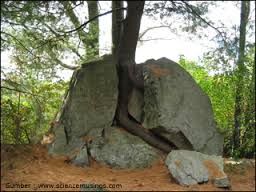
What is the term given to broken up pieces of rock?
dirt
weathering
sediments
delta


Muddy water being carried away by a fast-moving river. This is an example of:
Weathering
Erosion
Deposition

Layers of sediment forming at the bottom of the ocean. This is an example of:
Weathering
Erosion
Deposition

Waves dropping sand at the beach. This is an example of:
Weathering
Erosion
Deposition

Water getting into cracks, freezing, and breaking the rocks or pavement apart. This is an example of:
Weathering
Erosion
Deposition

A farmer's topsoil is blown away. This is an example of:
Weathering
Erosion
Deposition

