
Font size
 Worksheets
13-2 Discoveries and Inventions
Total questions: 20
Worksheet time: 10mins

In 1492 Columbus set sail for Asia using one of _______________ maps. Instead of finding Asia he landed in the Americas.
Artistotle's
Ptolomy's
Copernicus's
Kepler's

in 1543 Nicolaus Copernicus wrote the book On the Revolution of the Celestial Spheres in which he made the claim that the _________ revolved around the ___________.
sun, earth
earth, moon
sun, moon
earth, sun

Tycho Brahe was a Danish astronomer who emphasized the importance of careful observation and accurate records so........
other scientists could use what has previously been learned.
to force other astronomers to do their own research.
University professors could write books about him.

German Johannes Kepler discovered all the following except.....
planets orbit the sun in elliptical orbits
planets orbit the sun in circular orbits
planets move faster when they are closer to the sun
the human eye sees images reversed like a camera

Galileo Galilei was the first person to study the sky with a ......
microscope
astrolabe
telescope
abacus

Galileo was the first scientist to routinely use _____________ to test his theories.
telescopes
university texts
reason
experiments

Sir Isaac Newton was an English scientist who is most famous for his two laws, which are???
attraction
gravity
intertia
motion

In 1643 Italian scientist Evangelista Torricelli invented the _____________ which measures air pressure.
telescope
barometer
microscope
thermometer

Dutch lens maker Zacharias Janssen invented a _____________ to examine particles not visible to the naked eye.
telescope
barometer
microscope
thermometer
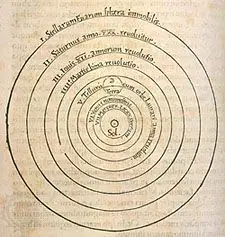


According to Medieval Catholic teaching, which was reliant on ancient teachings of Ptolemy and others, it was believed that the ___ was the center of the universe.
sun
moon
Jupiter
Earth

Who believed that the planets’ orbits are elliptical?
Copernicus
Newton
Kepler
Harvey

How did the Catholic Church influence the Scientific Revolution?
They preserved ancient Greek and Roman texts
They invented algebra
They charged scientists with heresy
They debated Muslim scientific ideas leading to the creation of scientific method
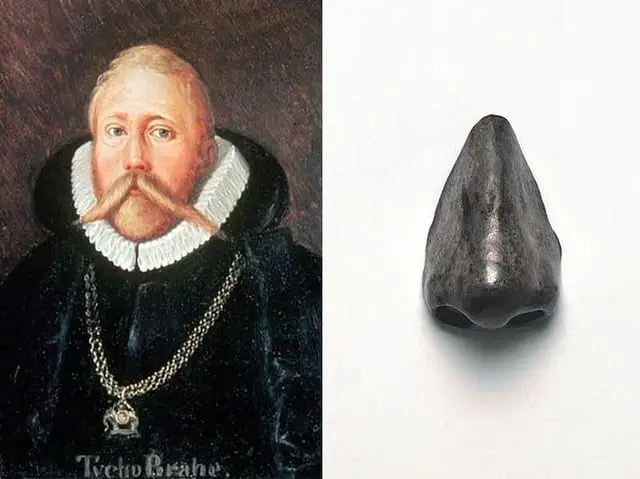
What caused Tycho Brahe to lose part of his nose?
A sword fight with his cousin.
A laboratory accident.
A rare disease.
A hunting accident.

What was unique about Tycho Brahe's Geo-Heliocentric model of the cosmos?
The Sun orbited the Earth, but other planets orbited the Sun.
All planets, including Earth, orbited the Sun.
The Earth was at the center, and all other planets orbited Earth.
The Moon orbited the Sun, and all other planets orbited Earth.
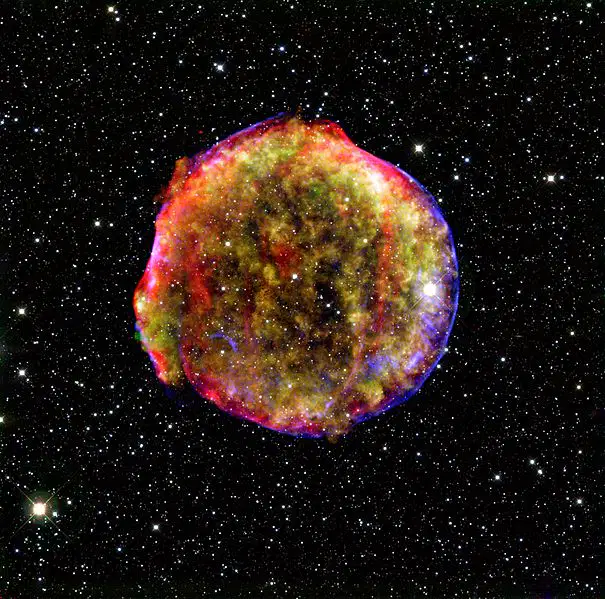
What did Tycho Brahe's observation of a 'Nova Stella' (supernova) in 1572 challenge?
The idea that the Earth was flat.
The belief that the heavens were perfect and unchanging.
The existence of other galaxies.
The concept of gravity.

What does Kepler's 1st Law of Planetary Motion state?
All planets have perfectly circular orbits around the Sun.
Every planet has an elliptical orbit with the Sun at one of the two foci.
Planets move at a constant speed throughout their orbit.
The Earth is at the center of the universe.

What role did Johannes Kepler take on after Tycho Brahe's death?
He became a professor at the University of Tübingen.
He returned to his hometown in Germany.
He was ordered to serve as the Imperial Mathematician.
He became a full-time astrologer for the Emperor.

