
 Worksheets
LockeD! - 4.7C - Renewable and Nonrenewable Resources #1
Total questions: 20
Worksheet time: 14mins
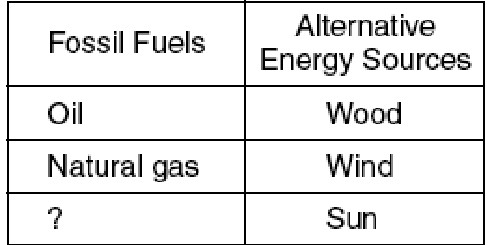
Which of these best completes this chart?
Water
Soil
Coal
Sand
Which of the following is best classified as a nonrenewable resource?
Grass
Aluminum
Sunlight
Oxygen
Which of these is a renewable resource?
Diamonds
Coal
Oil
Wind
Petroleum is considered a nonrenewable resource because—
it cannot be replaced easily
it can be replaced easily
it is made into gasoline
it is very thick and black
Solar energy is—
a renewable resource
an inexhaustible resource
a nonrenewable resource
not very abundant on the Earth
Resources that can be replaced once they are used are called –
nonrenewable resources
renewable resources
kilowatt resources
unusable resources
Texas is a source of which of the following important nonrenewable resources?
Oil and natural gas
Solar and wind energy
Forests and timber
Diamonds and emeralds
Water is an important natural resource found all over the Earth. Where is most of the Earth’s fresh water located?
In glaciers
In lakes
In oceans
In houses
Water that evaporates from lakes and rivers is constantly being replaced by precipitation. Therefore, the water in lakes and rivers is –
a fossil resource
a renewable resource
a nonrenewable resource
an exhaustible resource
A renewable resource can be replaced in a relatively short period of time. A nonrenewable resource takes thousands or millions of years to be replaced. Which of the following is a nonrenewable source of energy?
Solar power
Petroleum
Wind
Moving water
Coal is formed when organic materials are buried undergrounds and subjected to great pressure. If coal replaces itself naturally, why is it considered a nonrenewable resource?
Coal is very hard to find on the surface of the Earth
It is very difficult to mine coal from under the ground
It takes millions of years for new deposits of coal to form
Coal is burned in order to generate electricity
Which of the following is a renewable resource?
Wood, because trees grow again fairly quickly
Coal, because more can be made in about 100 years
Petroleum, because it can be made into gasoline
Gold, because more can be taken out of the ground
What are the various things made by nature and used by people called?
Energy
Metals
Resources
Minerals
Which of the following resource categories best describes fossil fuels?
Recyclable
Renewable
Nonrenewable
Inexhaustible
Which of the following is a renewable resource?
A chicken
Petroleum
Dr. Pepper®
Diamonds
Which statement about renewable resources is true?
Coal and water are both renewable resources
Water is a renewable resource, but coal is not
Minerals and oil are both renewable resources
Oil is a renewable resource, but minerals are not
All of the following are considered to be nonrenewable natural resources EXCEPT—
animals
petroleum
natural gas
minerals
The custodian just finished mowing the yard in front of the school. Which of the following resources in the school yard is NOT considered renewable?
The gasoline used in the mower
The soil in which the grass grows
The grass and other plants in the yard
The water from the sprinkler that keeps the grass alive
Electricity to play your radio can be made using renewable or nonrenewable resources. Which of the following resources are renewable?
wind and oil
wind and sunlight
natural gas and oil
natural gas and coal
A student is making a poster about conserving nonrenewable resources. Which of the following resources might she include on her poster?
Wind
Sunlight
Plants
Petroleum

