
 Worksheets
The Cell & Microscope - JCT Science
Total questions: 20
Worksheet time: 10mins
The job of this organelle is to direct activities of the cell?
Ribosome
Cytoplasm
Mitochondria
Nucleus
Thick fluid between the nucleus and cell membrane is called?
Cytoplasm
Cell Membrane
Nucleus
Vacuole
In a plant cell only, a ridged outer layer that surrounds the cell membrane?
Nucleus
Cell Wall
Cytoplasm
Cell Membrane
What is the organelle found only in plants and some protists. Contains the pigment chlorophyll that absorbs sunlight?
Ribosomes
Chloroplasts
Cell Wall
Mitochondria
A membrane bound sac that is filled with fluid. It stores water, food, waste and other substances.
Lysosome
Vacuole
Mitochondria
Nucleus

What organelle is letter A? (the powerhouse of the cell)
Mitochondria
Nucleus
Lysosome
Vacuole

What organelle is letter E (the director or brain of the cell)
Mitochondria
Nucleus
Vacuole
Ribosomes

What organelle is letter G? (this forms the outer boundary in an animal cell)
Cell Membrane
Endoplasmic Reticulum
Golgi Apparatus
Cell Wall
Tiny organelles scattered throughout the cell that assemble (build) the compounds called proteins.
Vacuole
Endoplasmic Reticulum
Golgi Apparatus
Ribosomes

What microscope part is letter F?
Eyepiece
Diaphragm
Stage
Objective lens

What microscope part is letter A (Holds the objective lenses)
Stage
Nosepiece
Diaphragm
Body Tube
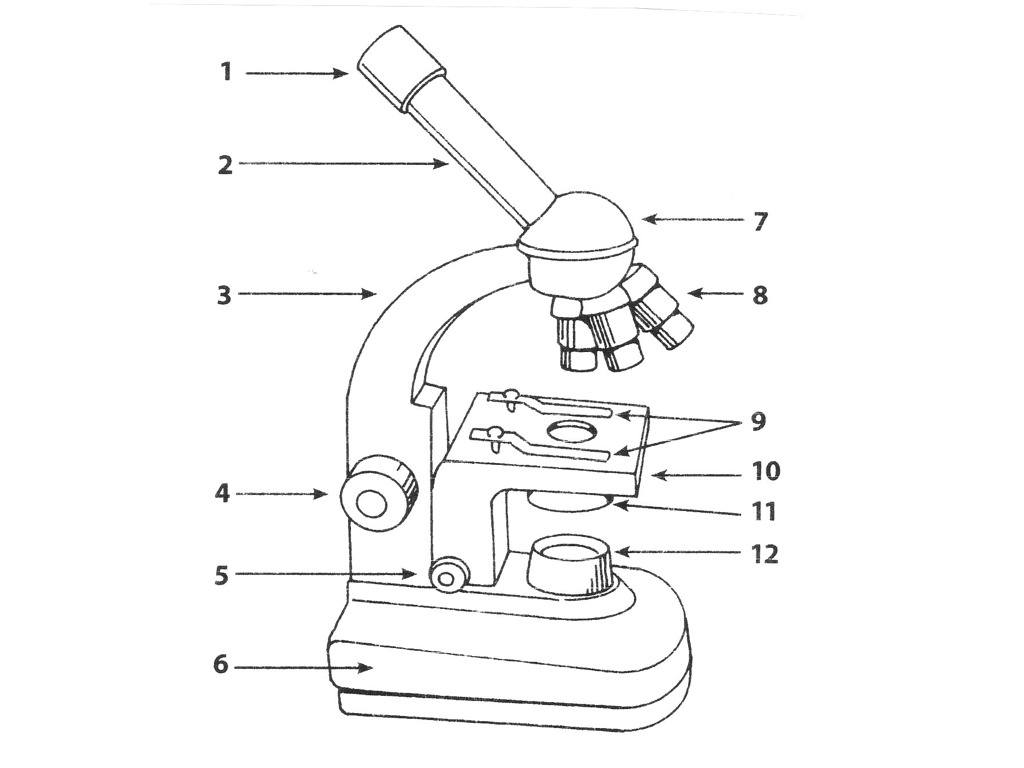


Who first used the term "cell" to describe the empty "rooms" he saw in his microscope?
Leeuwenhoek
Virchow
Pasteur
Hooke

What is the basic unit of life in all living things?
atoms
molecules
cells
elements

