
 Worksheets
Natural Selection and the Peppered Moth
Total questions: 19
Worksheet time: 13mins
What caused the soot to cover the trees in Great Britain from 1780 to 1830?
burning coal
setting fires
black wind
dead moths
Why did the number of white peppered moths decrease so much by 1895?
they did not blend in with the trees and birds ate them
they tasted better to the birds than the black moths
they were easier to reach on the trees
white moths flew away to find better trees to blend in with
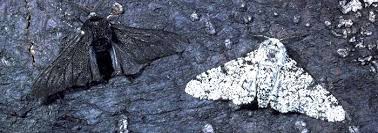
The phenomenon that refers to the evolution of dark body colors in animal species that live in habitats blackened by soot is known as
industrial revolution
industrial melanism
pollution selection
Kettlewellanism
Where was the first black form of the peppered moth found?
Pupae
Kettlewell
Scientific American
Manchester
What word describes a trait that helps an organism survive in its environment?
natural selection
mutation
camouflage
adaptation
Why do moths and other organism reproduce so many eggs or offspring?
so that their babies can have friends to play with
the more offspring the more likely the offspring will survive
the more offspring the less likely offspring will survive
the more offspring the less competition
Do organisms "decide" to evolve and change?
Yes, they know they need to change to survive
No, they change because of natural selection
Moths that have more dark spots than the average moth are called what?
carbonaria
black moths
pepperoni moths
Carbon Dioxide
What was being built during the Industrial Revolution, and what happened to the surrounding trees?
Factories and turned them black
Factories and cut them down
Factories and mined underneath the trees and the forest collapsed
Factories saw how they were polluting the environment and planted more trees
Why did dark moths have a survival advantage when they were near factories?
They could hide in the birds shadow.
They could push the white moths into the flames.
They did not have a survival advantage.
They blended in with the dark tree trunks.
Who suggested that peppered moths were an example of natural selection?
J.W. Tutt
JJ Watt
JJ Redick
Phil Jackson
Where did Kettlewell publish his findings, and where his predictions correct?
He published an article in Scientific American.
He published an article in Entomologist's Digest
He published an article in TV Guide
He published an article in American Scientists for Butterflies

