
Font size
 Worksheets
Disparites in Development
Total questions: 77
Worksheet time: 42mins


What does the core periphery model state?
Economic, political, and cultural power is distributed in a series of rings
How price and demand changes as distance towrds CBD increases
Population is increasing faster than food being produced
The four different stages for economic development and as time increases, development increases from rural to urban
What does the bid-rent theory state?
The declining intensity of any activity as distance increases.
Political events in one country will cause similar events in neighboring countries
How the price and demand and real estate changes as the distance towards the CBD increases.
Population is increasing faster than food being made
Which is NOT a criticism of the Rostow’s stages of economic growth?
all countries will go through all the stages at same speed
the model encouraged exploitation of LDCs
the model was based on the USA and Europe countries
the model suggest a linear in approach yet countries can regress due to pandemics
ignores the size, resources, relative location, political systems and climates of a country.
What is a model (in general)?
A simplified version of something.
A unique picture of an atom.
A image of an atom.
A fun puzzle
Models can only be “proven” false, NEVER true
True
False
What is the GNI per capita?
people who can read and write
the jobs people do
average income per person
children per woman
Which is NOT a good indicator of development?
population growth
birth rate
death rate
population density
Which country is the odd one out in terms of level of development?
USA
UK
Haiti
Japan
Which country would you expect to have the longest life expectancy?
Haiti
Mexico
Japan

Which of the following is NOT an indicator of standard of living?
Literacy rate
Population age distribution
Infant mortality
Cultural heritage
A country with a HDI of __________ has a relatively _________ level of development compared to a country with a HDI of 0.450.
0.950, higher
0.950, lower
0.324, higher
0.535, lower
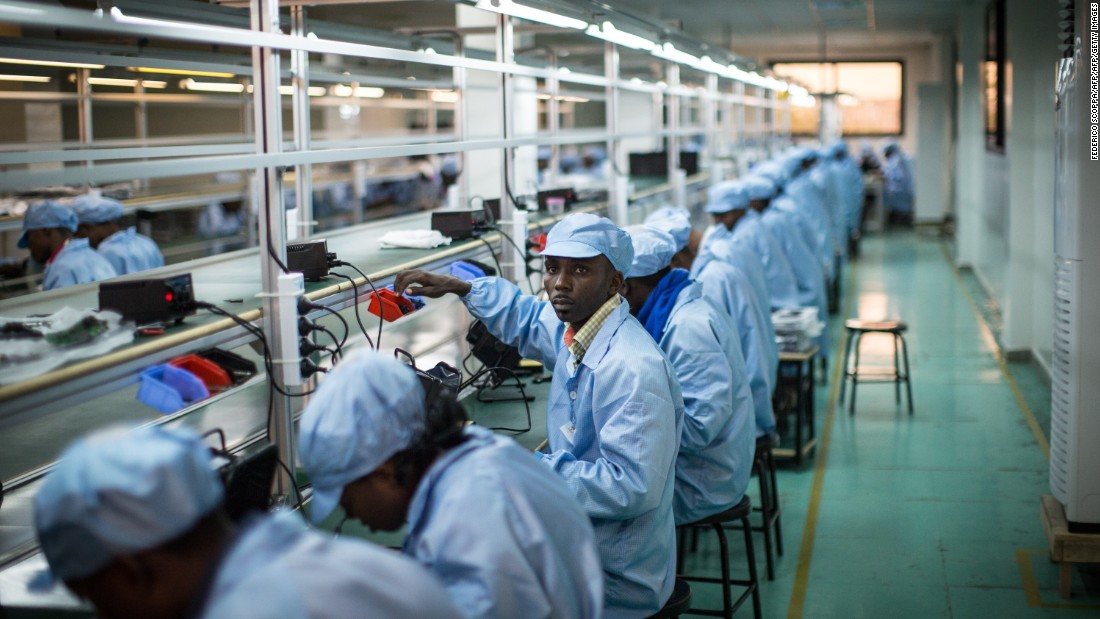
Country where there are factories that make products mainly for export are in which level of economic development.
More Developed
Newly Industrialized
Less Developed
What is sustainable development?
Development that meets the needs of the present without compromising the ability of future generations to meet their own needs
Development that considers the needs of the present generation so that they are able to live comfortably.
Development that requires communication between intermediaries such as site managers and labour unions before it can go ahead.
Development that is exploits resources in such a way that future generations cannot meet their own needs
In terms of human geography, what is the definition of development?
An area in which residential, industrial or commercial buildings are being built
Development is the ability to improve one's capacity to achieve something
This is term 4, I am over doing these quizzes
Development is the improvement in the quality of people's lives and their social well-being
What is HDI and how is it measured?
HDI is the Human Development Index and it is a composite indicator that measures a country's development using total education enrolment ratio, life expectancy at birth, GDP and adult literacy
HDI is the Human Developing Index and it is a theoretical model used to display the transitions humans go through when developing into an adult.
HDI is the Humanity's Development Indices and it is a composite indicator that sequences countries in an order from "poverty stricken" to "really fancy"
HDI is the Human Developer's Idea and it is an idea that developers possess when they consider building a residential, commercial or industrial project within a space.

What model is this and what does it reveal?
The model of sustainable development and it shows the effects that development has on a country's economy, society and ecology.
The model of sustainable development and it shows the interrelationships between the 3 elements of development and how development can be achieved sustainably.
The development model and it shows how social development cannot improve unless a country's economy is prosperous.
The development model and it shows how to utilise resources from the environment in such a way that it improves a country's development
What are the four development indicators and which of these indicators are classified correctly?
Economic - GDP, Demographic - Daily calorie supply, Social - life expectancy, Ecological - Air and water quality
Economic - PPP, Political - voting participation rates, Social - Population per doctor, Ecological - Deforestation rate
Economic - GDP, Demographic - Age/Sex pyramid, Social - Political and civil freedom, Ecological - Carbon output
Economic - GNP, Political - Corruption rate, Social - Literacy rate, Ecological - Carbon output
What is a MDC and a LDC?
Multiple development criteria and less development criteria
More developed country and less developed country
I know what KFC is
Most developed country and least developed country
What is GDP and PPP?
GDP is gross domestic product and represents the total monetary value of all final goods and services produced in a country over a year whereas PPP is purchasing power parity and compares the costs of purchasing a basket of goods in countries.
GDP is the greater domestic privacy which measures a household's freedom score whereas PPP is population privacy power which measures a country's relative freedom from governmental restriction
GDP is the gross domestic product and represents the total monetary value of all final goods and services produced in a country over a year whereas PPP is purchasing power parity and it compares how many units of a country's currency it takes to by the same basket of goods and services in USD
What are the 2015 United Nations Millennium Goals?
Eradicate extreme poverty and hunger, achieve universal primary education, promote a patriarchal society, reduce child mortality, improve mental health, combat HIV/AIDS, malaria and other diseases, ensure environmental sustainability, global partnership for development
Eradicate extreme poverty and hunger, achieve universal primary education, promote gender equality and empower women, increase child mortality, decrease mental health, combat HIV/AIDS, malaria and other diseases, ensure environmental sustainability, global partnership for development
Eradicate extreme poverty and hunger, achieve universal primary education, promote gender equality and empower women, reduce child mortality, improve mental health, combat HIV/AIDS, malaria and other diseases, ensure environmental sustainability, global partnership for development

List the three terms next to each relevant sustainable development heading
Economic - Maximise profit, exploit resources, improve PPP . Social - Satisfy basic human needs, increase equality, guarantee participation and accountability. Ecological - Introduce sustainable practices, respect carrying capacity, conserve and recycle resources.
Economic - Maximise profit, expand markets, sustain economic growth. Social - Satisfy basic human needs, increase equity, guarantee participation and accountability. Ecological - Reduce waste, respect carrying capacity, conserve and recycle resources.
Economic - Maximise profit, expand markets, maximise economic growth. Social - Satisfy basic human needs, increase equality, guarantee participation and accountability. Environmental - Introduce sustainable practices, respect carrying capacity, conserve and recycle resources.
What does the acronym NGO stand for? How are they related to development?
Non-governmental Office - A position held by someone in government that coordinates relief work
Non-governmental Opinion - An opinion made by a non-governmental aid agency regarding the well-being of a country
Not Geographically Obvious. This is an acronym used to describe something that is not related to the field of geography
Non-government organisation. Usually NGOs help by providing aid to less developing countries

Definition of GLOBALISATION
Exploitation of local resources by the multinationals
Greater mobility of people
Development aid from states and world organisations
Increase of trade around the world among different countries

Three indicators of development of a country
GDP per capita, literacy rate and life expectancy.
Richness, industrial production and business
Multinationals and industry
Technology, trade and research

What is a major objective of the UN? (Choose two)
To be a global parliament under the Security Council's rule.
To make sure the nuclear powers rule the world.
To prevent the outbreak of a new world war.
To make sure Human Rights are observed.
Why might birthrates in developing nations tend to be higher than those in developed nations?
Birth control is more available in
developing nations.
Large families are needed for subsistence
farming.
More child-care assistance is available in
developing nations.
Military concerns dictate the need for
larger populations.
Which of the following is a true statement about the economic development of nations?
Resources and technology influence the economic development and quality of life in nations.
Although important, the economic development of nations has little effect on the quality of life of its people.
Modern technology is so widespread today that most people around the world have an acceptable quality of life.
All but a few countries are developed
nations today.

Countries with low level of literacy are in which level of economic development?
More Developed
Newly Industrialized
Less Developed

Which level of economic development are countries where people are beginning to move from rural to urban areas in search of factory jobs?
More Developed
Newly Industrialized
Less Developed
The type of aid given after a disaster like a hurricane or earthquake
Tied aid
Bilateral aid
Emergency aid
Development aid
What is multilateral aid?
Lots of different kinds of aid all given at the same time
Food parcels for the poorest countries
When government contribute to other organisations (like the UN) for global development programmes
When a group of people get together to give money to a charity working in the developing world
Which global agency helps coordinate aid programmes across the developing world?
NATO
The Commonwealth
The UN
The Walt Disney Corporation
Which of these is an example of an NGO that helps deliver aid in the developing world?
Oxfam
Amnesty International
The United Nations
The African Union
What is bilateral aid?
When a country gives aid directly to another country
When more than one country gives aid to a poorer country
When a poor country gives aid back
When an organisation like Oxfam or Christian Aid distributes aid

According to the data and your knowledge, which country is the LEAST DEVELOPED?
Ethiopia
Rwanda
Kenya
Uganda
Which of the following is an indicator of economic development?
High illiteracy
Unskilled labor force
Gross domestic product per capita
Under developed tertiary sectors
The greater the country’s level of economic development, the —
higher the quality of life
higher the agricultural labor force
lower the cost of living
lower the urban population
Appropriate technology is
is a highly skilled approach
designed to a country's need
is very costly to implement
creates disparites in development
Who formulated the theory of circular and cumulative causation which explains the perpetuation of underdevelopment through growing inequalities between developed and the underdeveloped countries?
Lewis
Myrdal
Rostow
Friedman

