
 Worksheets
Nuclear Energy
Total questions: 26
Worksheet time: 24mins
Name
Class
Date
1.
Nuclear power uses ____ for fuel.
a)
steel
b)
coal
c)
uranium
d)
hydrogen
2.
Nuclear energy uses _____ to turn turbines to power a generator.
a)
wind
b)
water
c)
steam
d)
solar
3.
Splitting a uranium atom is called -
a)
fission
b)
fusion
4.
Energy is stored in the ___ of an atom.
a)
proton
b)
neutron
c)
electron cloud
d)
nucleus
5.
What is an advantage of nuclear energy?
a)
radioactive waste
b)
no pollution
c)
we will never run out
d)
it is the safest way to make energy
6.
What are the two major forces involved with nuclear energy?
a)
Fission and Fusion
b)
Alpha and Beta particles
c)
Gamma and Fission
d)
Radioactivity and Alpha Decay
7.

What type of radioactive decay is in this picture?
a)
Alpha
b)
Beta
c)
Gamma
d)
Fission
8.

What type of radioactive decay is in this picture?
a)
Alpha
b)
Beta
c)
Gamma
d)
Fusion
9.
What decay emits (releases) a He atom (2 protons and 4 neutrons?)
a)
Alpha
b)
Beta
c)
Gamma
d)
Fission
10.
What type of decay emits an electron?
a)
Alpha
b)
Beta
c)
Gamma
d)
Fusion
11.
Solve this decaying equation:
4He2 + ______ ---> 238U92
4He2 + ______ ---> 238U92
a)
234Th90
b)
236Th90
c)
236Ra88
d)
234U90
12.
Solve this decay question:
14C6 -----> ____ + 0β-1
14C6 -----> ____ + 0β-1
a)
14C7
b)
13C6
c)
14N7
d)
15N7
13.
What happens in a chain reaction?
a)
An isotope that releases several million times more energy per reaction than compared to a chemical reaction
b)
An isotope that reacts to a nuclear explosion from an atomic bomb
c)
Same element, different mass
d)
Various isotopes exploding at all once
14.
Takes two small nuclei and combines them into a larger nucleus
a)
fission
b)
fusion
15.
Where does fusion occur naturally?
a)
Underwater
b)
All around us
c)
In the radioactive waste
d)
On the sun
16.

This is an example of...
a)
Fission reaction
b)
Fusion reaction
c)
Decomposition reaction
d)
Combustion
17.
Two atoms of the same element but with different mass numbers are called________
a)
electrons
b)
isotopes
c)
ions
d)
reaction partners
18.
What do these isotopes of carbon all have in common?
126C, 136C, 146C
a)
they all have the same number of neutrons & mass number
b)
they all have the same atomic number and neutrons
c)
they all have the same atomic number and electrons
d)
they all have the same number of protons, atomic number, and mass number
19.

In order of most to least penetrating radiation we have
a)
Alpha , Beta, Gamma
b)
Beta , Gamma , Alpha
c)
Gamma, Beta, Alpha
d)
Gamma, Alpha, Beta
20.
What is the charge of the neutron?
a)
Negative
b)
Positive
c)
electrical charge
d)
Neutral (no charge)
21.
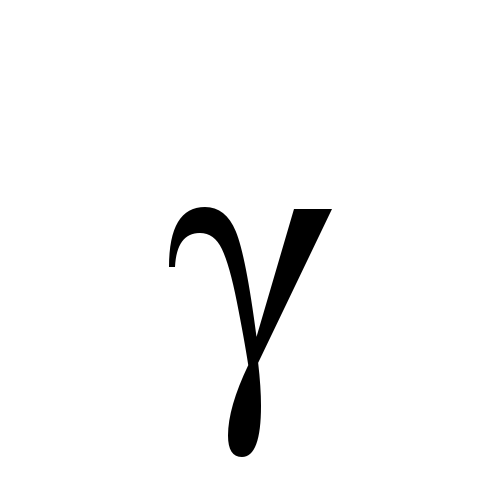
Has the symbol
a)
Alpha
b)
Beta
c)
Gamma
22.
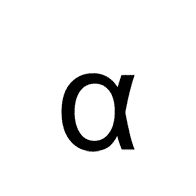
Has the symbol
a)
Alpha
b)
Beta
c)
Gamma
23.
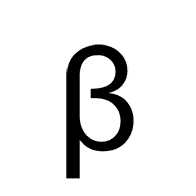
Has the symbol
a)
Alpha
b)
Beta
c)
Gamma
24.

Which of the following best describes the process of nuclear fission?
a)
Splitting an atom's nucleus apart
b)
Separating an atom's electrons from its nucleus
c)
Fusing two atomic nuclei together
d)
Splitting an atom's electrons in half
25.

Which type of power plant is this?
a)
Coal Power Plant
b)
Nuclear Power Plant
c)
Solar Power Plant
d)
Hydroelectric Power Plant
26.

What is the difference between a nuclear bomb and a nuclear power plant?
a)
Bomb releases energy all at once, power plant release is slow and controlled.
b)
Nothing much... pretty much the same.
c)
Power plant releases more energy, faster.
d)
One uses nuclear energy, one uses coal.
100 %

