
 Worksheets
Unit 3: Environmental Chemistry
Total questions: 33
Worksheet time: 29mins

The study of the environment is called:
biology
chemistry
environmental science
geology

True or False? Humans affect the environment but the environment does NOT affect us.
True
False
The practice of growing, breeding, and caring for plants and animals that are used for food, clothing, housing, etc.
Farming
Agriculture
Horticulture
Zoology
Pollutant that CAN be broken down
biodegradable
edible
invisible
non-biodegradable
The process by which toxins are concentrated as they move up the food chain is called?
pollution
biomagnification
web magnification
biomass stratification

Which of the following conclusions can be made from the graph?
Vinegar is more basic than lye
Ammonia is more acidic than apple juice
Baking soda is more basic than human blood
Tomato juice is more acidic than lemon juice

According to the graph, an increase in the concentration of road salt in pond water from zero to 0.10ppm results in a decrease in the number of
Organism 1
Organism 2
Organism 1 and 3
Organism 2 and 3
Which of the following roles is played by carbohydrates in human nutrition?
Act as an energy source
Assist enzyme function
Storage form of unused chemical energy
Structural component of cells in the body

Bromothymol blue will appear yellow when mixed with
lemon juice
baking soda
drain cleaner
distilled water

Which of the following describes what can happen to the oxygen concentration and the variety of organisms at the point in the river where the warm water is returned?
Oxygen concentration will increase, variety of organisms will increase
Oxygen concentration will increase, variety of organisms will dncrease
Oxygen concentration will decrease, variety of organisms will decrease
Oxygen concentration will decrease, variety of organisms will increase
The presence of a species of large trout in a particular lake indicates a
high dissolved oxygen concentration
low dissolved oxygen concentration
high water temperature
low water temperature

Which volume of solution B must be used to neutralize solution A?
15 ml
25 ml
35 ml
45 ml

Considering the information, a study of the mayfly can be useful to scientists since it is a
species influenced by biomagnification
species influenced by predation
tolerant invertebrate species
biological indicator species
An undesired change in air, water, or soil that adversely (badly) affects the health, survival, or activities of any organism.
loss of biodoversity
pollution
resource depletion
Stronger acids have a pH closer to...
7
0
14
9
Weaker bases have a pH closer to...
8
0
14
4
A pH level of 7 indicates
acid
base
neutral
none of the following
What would be considered the weakest base?
3
14
8.2
11.6
You test a solution with pH paper, and the paper turns blue. The solution is ______.
neutral
an acid
a base
an acid & a base
What is precipitation?
Sweat from our bodies on hot days
Warm rain but not cold snow or sleet
Gas that we use in furnaces or ovens
Any form of water that falls from the sky

What does the prefix "bio-" mean?
non living
abiotic
living
sugar
Kim Kardashian decides to go get a procedure done that is called liposuction. What biomolecule is she manipulating the most in her body?
lipids
proteins
carbohydrates
nucleic acids
Which compound is inorganic?
SO4
C2HON2
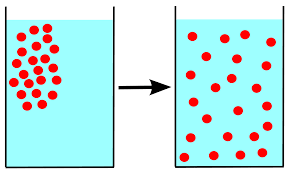
Which of the following is a sample of active transport?
movement of oxygen from alveoli into red blood cell
movement of water across cell membrane
plant root absorbing mineral ions from the soil
uptake of water by the root hair of the plant
Which one is the definition of Osmosis ?
movement of particles through the cell membrane from a region of lower concentration to a region of higher concentration using energy in the form of ATP.
passage of water molecules from a region of their higher concentration to a region of their lower concentration through a partially permeable membrane
net movement of molecule from a region of higher concentration to region of lower concentration. Molecule down a concentration gradient
net movement of molecule from a region of lower concentration to region of higher concentration. Molecule down a concentration gradient

