
 Worksheets
TRANSPORT IN PLANTS (A)
Total questions: 25
Worksheet time: 8mins
The plant tissue that carries organic food materials DOWNWARD from the leaves to the rest of the pant is the ______.
Phloem
Stomata
Chlorophyll
Xylem
Vascular tissue that transports water and minerals ions UPWARDS from a plant's roots is know as ______.
Chlorophyll
Phloem
Stomata
Xylem
The plant transport system are made up of ____ types of vascular tissue.
1
2
3
many
How do water enter the roots from the soil water?
diffusion
osmosis
transpiration
active transport
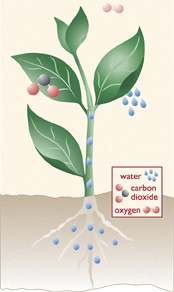
Water vapour lost from the surface of the leaves through...
the stomata
the epidermis
the palisade cells
the spongy mesophyll
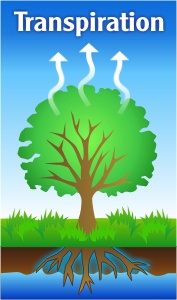
Transpiration is...
the movement of water through a plant from the roots up the stem
the loss of water in the form of water vapour from the surface of the leaves of a plant by the process of evaporation
the flow of water into plant roots by osmosis from the soil
the process of minerals and sugars moving through plant veins
What does xylem transport?
Water and mineral ions
Water only
Sugar
Food
Is mature xylem alive or dead?
Alive
Dead
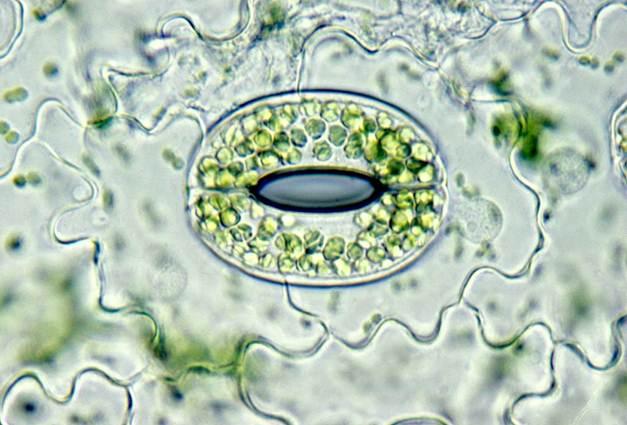
What do the guard cells do?
Control active transport
Control nutrients moving into the cell
Controls the rate of transpiration (loss of water through stomata)
controls the size of stomata
Which environmental condition lowers the rate of transpiration?
Abundant sunshine
High humidity
Windy day
High temperatures
Are phloem cells alive or dead when matured?
Alive
Dead
The most common sugar made by plants is?
Sucrose
Gluten
Cellulose
Carbohydrates

Students are instructed to place leafy celery stalks into red colour water in a beaker overnight. The following day, the students observed the colour of the celery leaves changed from green to red. The students cut across the edge of the celery and observed the small tube openings along the edge are also red.
How do the plant systems work together to make the movement of the liquid possible?
The roots absorb the water and minerals move up the stem, while the stem moves food produced in the leaves down to the roots.
The roots anchor the plant into the soil and the stem holds the leaves up.
The roots absorb their own water and minerals and the leaves push out CO2.
The roots lose water vapour to the soil and the stem loses water vapour through the leaves.

The diagram shows the internal structure of a leaf.
Which region contains cells that are responsible for the transport of organic food substances?
A
B
C
D

A leafy shoot was placed in the apparatus shown. The rate of movement of the air bubble was measured.
Which change would make the air bubble move faster?
blowing dry air over the shoot
decreasing the air temperature around the shoot
increasing the humidity around the shoot
removing some leaves from the shoot

The diagram shows a section through a typical leaf.
How does water move from point X to point Y?
diffusion and evaporation only
evaporation only
osmosis, evaporation and diffusion
osmosis only

